 By st20113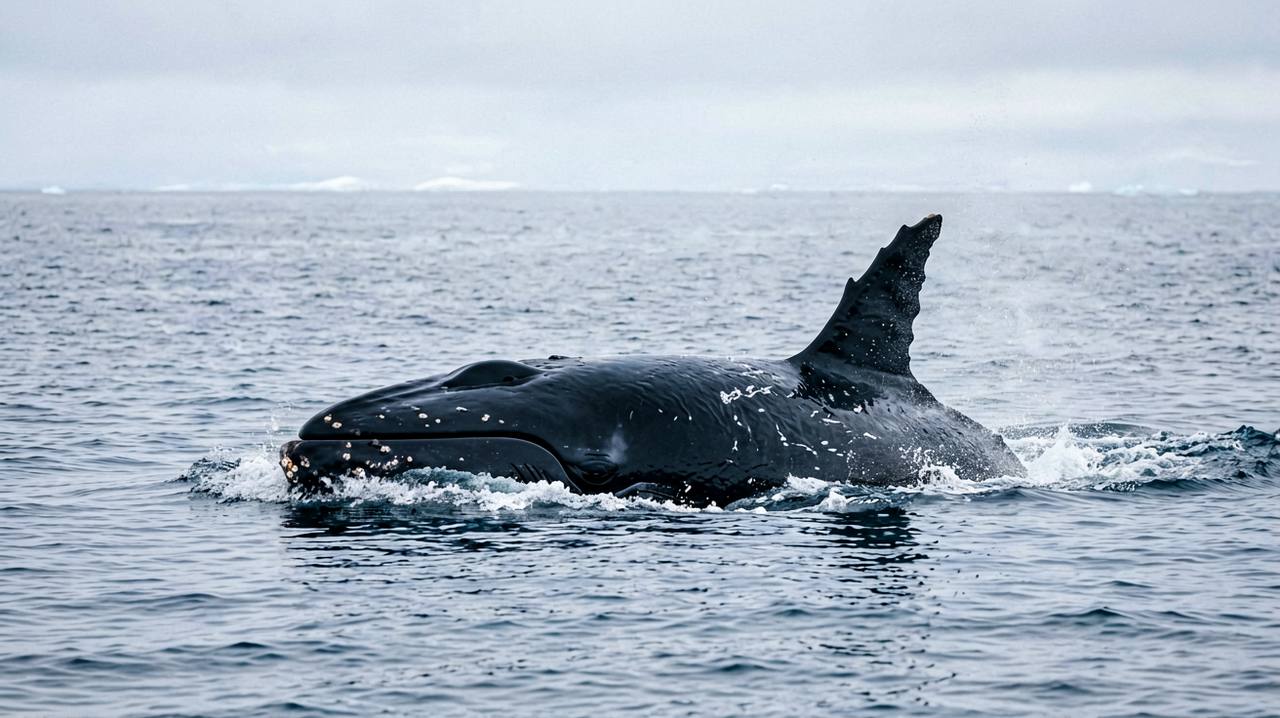
Balaenoptera acutorostrata | Minke Whale
Species Profile · Balaenopteridae
Minke Whale
The smallest rorqual: ten metres of whale that feeds by lunging open-mouthed into shoals of fish.
IUCN: Least Concern
Range
Size
Weight
Life
Status
The smallest giant
A rorqual in miniature
The minke whale is the smallest of the rorqual whales. That family includes giants such as the blue whale and the humpback. Even so, the minke is no small animal. Adults reach about 7 to 10 metres long. They weigh between five and ten tonnes. Females grow larger than males.
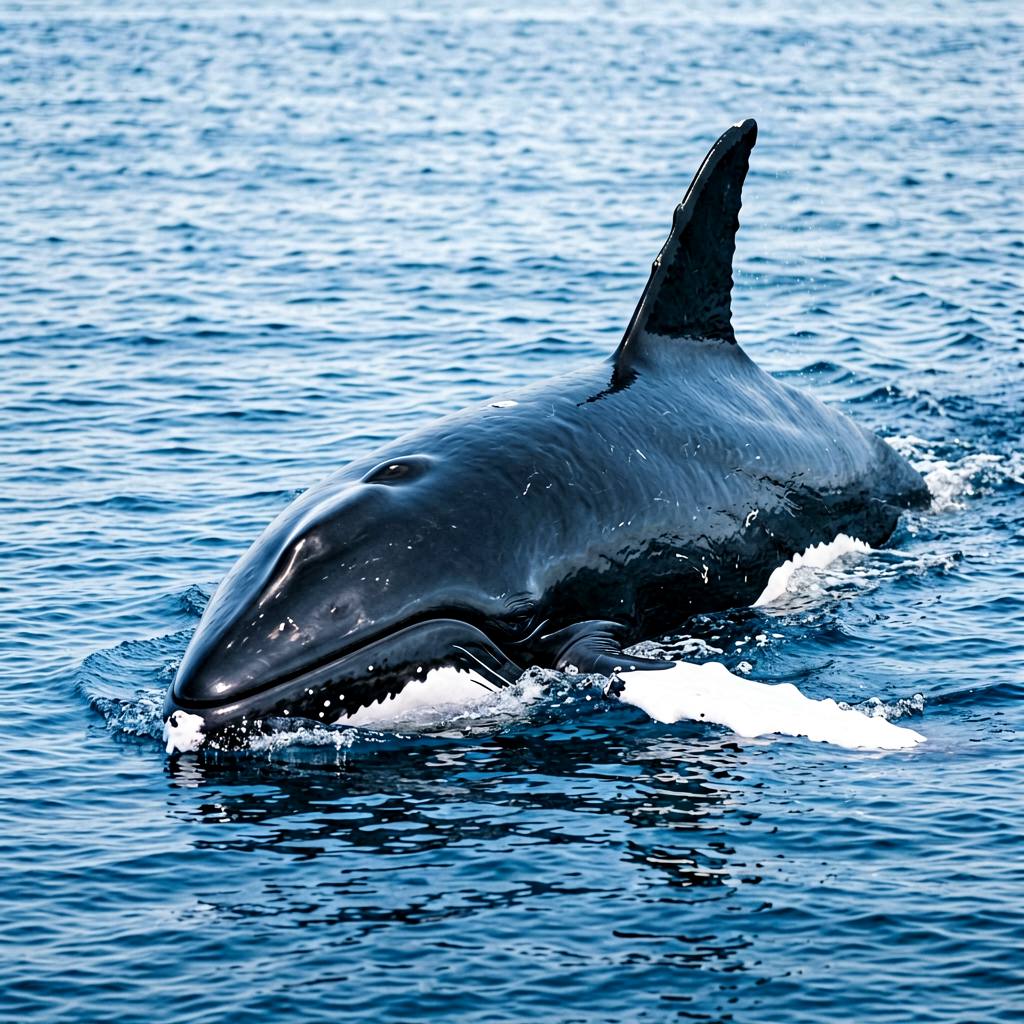
Its back is dark grey or black. Its belly is bright white. In the North Atlantic it shows a striking white band on each flipper. That band is one of the easiest ways to identify it. The minke whale feeds on small schooling fish. It swallows great mouthfuls of water and filters out the catch.
It often swims alone or in small groups. Unlike many whales it does not migrate across whole oceans. It is curious, though. It sometimes approaches slow-moving boats and circles them. It is the most numerous rorqual whale in the world.
Family tree
Cousin of the blue whale
The minke whale sits in the genus Balaenoptera. It belongs to the family Balaenopteridae, the rorquals. Rorquals are the whales with throat pleats. Those deep folds let the mouth stretch wide open. The family holds the largest animals that have ever lived. A famous relative is the Blue Whale, the biggest animal on Earth.
The minke is a fraction of its size. The two share the same feeding method. Both are filter feeders with baleen plates instead of teeth. Scientists recognise two species of minke whale. The common minke whale lives in the North Atlantic and North Pacific. The Antarctic minke whale lives in the Southern Ocean.
The two look similar but differ in size and in the shape of their baleen. The common minke is the one seen around Europe. Its scientific name, acutorostrata, means sharp-snouted. That refers to its pointed head.
Pleats and baleen
Built to strain the sea
The minke whale has a slim, pointed head. A ridge runs along the top of its snout. Its blowhole sits behind that ridge. It has 50 to 70 throat pleats. These folds open like a bellows when it feeds. Each side of the mouth holds 240 to 360 baleen plates.
The plates are cream or white and fringed with bristles. The dorsal fin is tall and curved. It sits about two-thirds of the way back along the body. The tail is wide and strong. In the North Atlantic, a white patch crosses each flipper. That marking is absent in the southern species.
Its body is smooth and streamlined. A thick layer of blubber keeps it warm. Females reach about one metre longer than males. A large female may weigh ten tonnes. Young animals are darker grey than adults.
1
2
3
Cold seas worldwide
Feeding in summer bays
The minke whale lives in cool and temperate seas worldwide. In the North Atlantic it ranges from the Arctic ice edge to the tropics. It is common around Iceland, Norway, and the British Isles. It also lives off eastern Canada and New England. In the North Pacific it occurs from the Bering Sea to Japan. The Antarctic minke whale lives south of the ice front.
The species prefers water over the continental shelf. It often feeds in bays, fjords, and coastal channels. It also swims far offshore in some seasons. It does not make the long ocean crossings of other rorquals. Northern animals move between summer feeding and winter breeding grounds. Those movements are shorter than those of the humpback.
The whale can be found alone or in loose groups. In rich feeding areas several may gather in one bay. Sightings peak in late spring and early summer. That is when the whales feed hardest. They must build up fat for the months ahead. By autumn many have moved on toward warmer water.
What it eats
Lunging into shoals
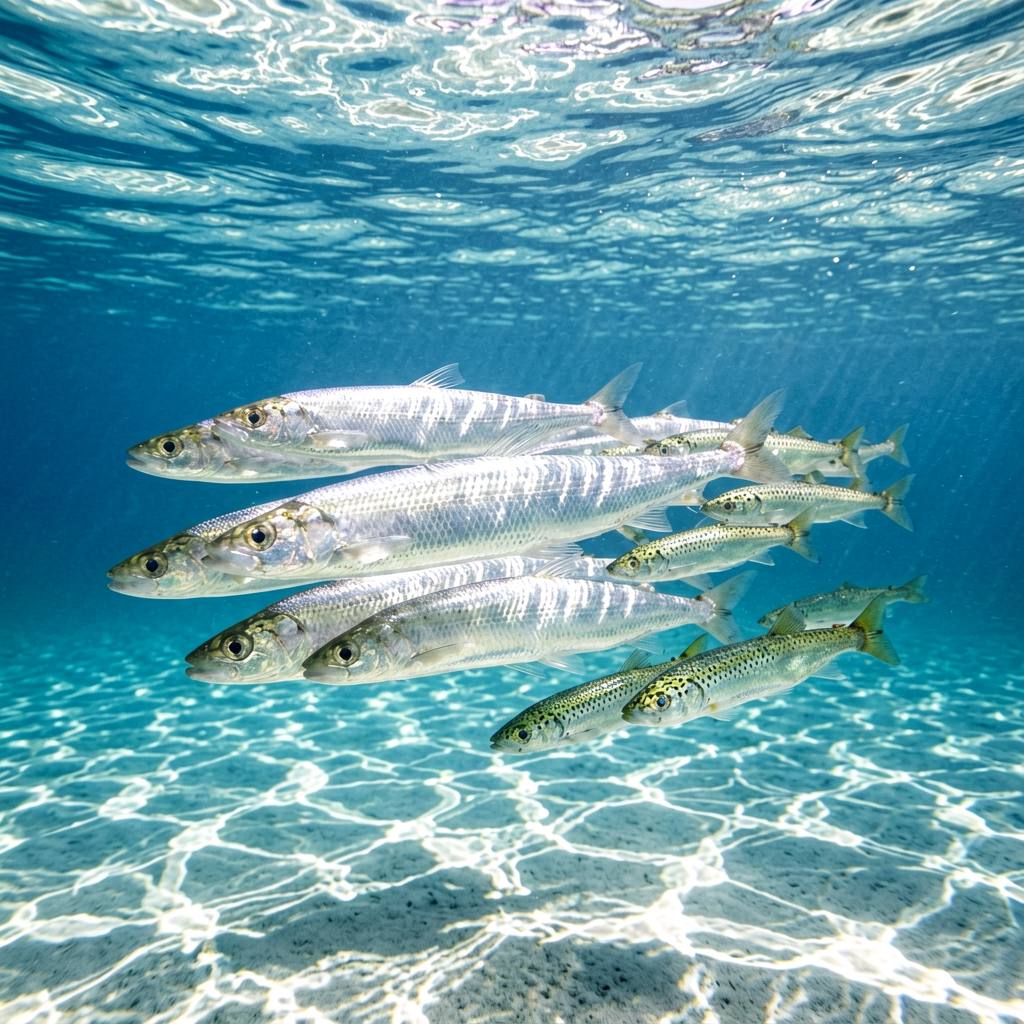
The minke whale feeds on small schooling animals. Its main prey are small fish. Sand lance, also called sand eel, is a favourite in the North Atlantic. Herring, capelin, sprat, anchovy, and mackerel are taken too. In the Southern Ocean it eats large amounts of krill. It feeds by lunging into a school of prey. The mouth opens wide, and the throat pleats expand. Water and fish rush in together.
Then the whale closes its mouth and pushes the water out. The baleen plates trap the fish inside. It swallows the catch and repeats the process. A single lunge can take in a huge volume of water. It often feeds at the surface, where seabirds gather above it. Those birds are a useful clue for whale watchers. It feeds mainly in summer, when prey is abundant. In some northern seas the whale also feeds at night.
Sand lance rise from the seabed after dark. The whale follows them into shallow water. Seabirds such as gannets and kittiwakes dive on the same shoals. Their activity marks the spot from far above. Whale watchers learn to watch the birds, not the water. A flock of diving gannets often means a minke is feeding underneath. That partnership between birds and whales is easy to see on a summer boat trip.
One calf, warm water
Breeding in the tropics
Minke whales breed in warmer water in winter. Females give birth about ten months later. The single calf is born in tropical or subtropical seas. It is roughly 2.4 to 2.8 metres long at birth. It nurses for about four to six months. During that time it grows quickly on rich milk.
Females reach maturity at about six or seven years old. They usually produce one calf every year or every two years. That is a faster rate than most large whales. The species lives for around 30 to 50 years. Some individuals may reach 60. Calves stay near their mothers during the first year.
They learn feeding grounds by following her. The species may not form lasting pairs. Instead, males compete for access to females. Little else is known about its breeding behaviour.
Still hunted today
Whaling, nets, and ship strikes
The minke whale is listed as Least Concern by the IUCN. It is the most abundant rorqual in the world. Several hundred thousand are thought to survive. That does not mean it is safe everywhere. It has been hunted for centuries, and hunting continues. Norway, Iceland, and Japan all take minke whales.
Japan left the International Whaling Commission in 2019. It then resumed commercial whaling in its own waters. Supporters of whaling call it a sustainable use of a common species. Critics argue that the meat is not needed and that the hunt is cruel. Accidental capture in fishing nets kills many animals each year. Ship strikes are a further risk in busy seas.
Pollution and falling fish stocks also affect the species. In the Antarctic, the minke depends heavily on krill. Warming seas may reduce that food supply. Scientists watch both species closely for that reason.
Quick hits
Five things to remember
- It is the smallest rorqual whale, yet still reaches ten metres and ten tonnes.
- A white band across each flipper identifies the North Atlantic form.
- Its scientific name means sharp-snouted, after its pointed head.
- It feeds by lunging open-mouthed into schools of fish, then filtering them out.
- Seabirds gathering over the water often reveal where a minke is feeding.
[…] a Mediterranean shore. The name cavirostris means hollow beak. The whale shares its order with the Minke Whale, a much smaller rorqual. That animal feeds near the […]