 By st20113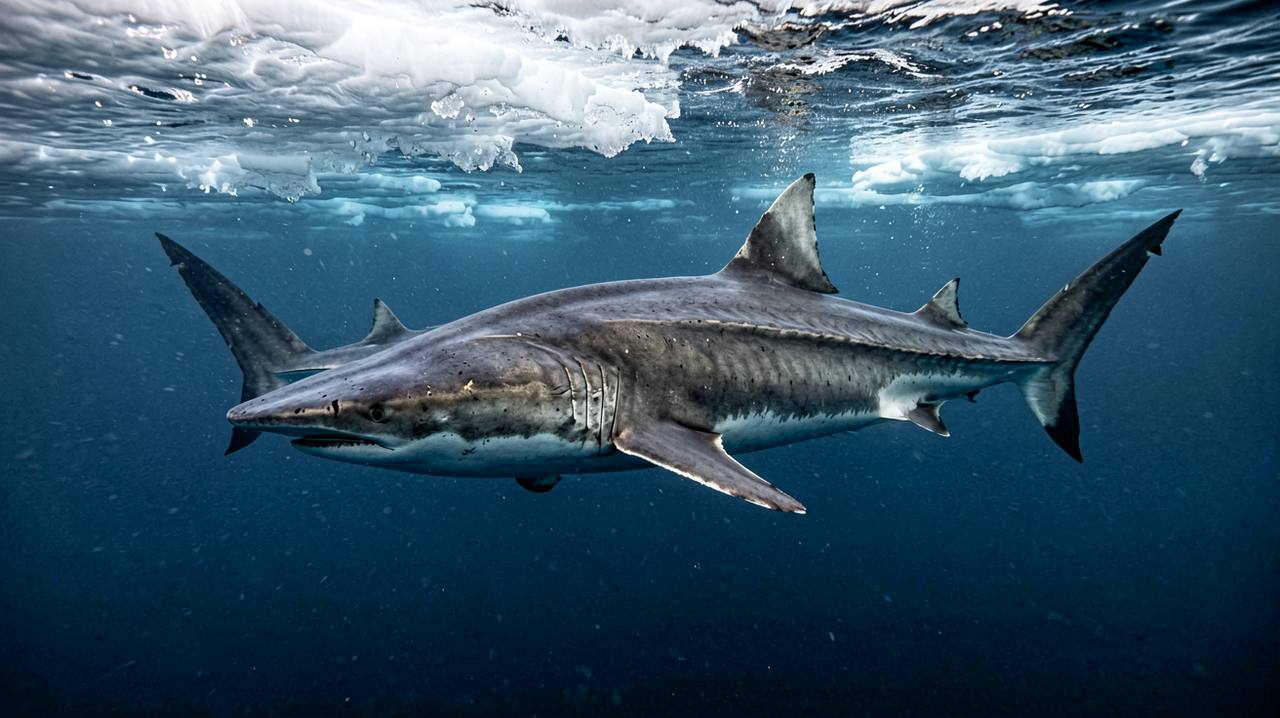
Somniosus microcephalus | Greenland Shark
Species Profile · Somniosidae
Greenland Shark
A six-metre Arctic shark that grows about a centimetre a year, and may live for four centuries.
IUCN: Vulnerable
Range
Size
Depth
Life
Status
The slow giant
A shark older than nations
The Greenland shark is a huge, slow shark of the cold North Atlantic. Adults can reach six metres or more. That makes it one of the largest sharks alive. It shares the icy water with few other sharks. It swims very slowly, barely faster than a walking person. Its flesh is poisonous when fresh.
Eating it can make a person drunk and sick. Yet the animal itself is not aggressive. It lives far deeper and farther north than most people expect. Some individuals carry a small parasite on the eye. That parasite damages the eye and leaves the shark nearly blind. It finds its way with smell and with its sensitive skin.
This shark also holds a record. It is the longest-lived vertebrate known. One female was estimated at nearly 400 years old. That means she was alive before modern science began.
Family tree
Among the sleeper sharks
The Greenland shark sits in the genus Somniosus. It belongs to the family Somniosidae, the sleeper sharks. The name sleeper comes from their slow, drowsy movement. The family is placed among the dogfish sharks. All members of the group are cold-water animals.
Many live in deep water and are rarely seen. A relative that shares its deep, dark world is the Frilled Shark. That fish also lives in deep water and is seldom caught. Both have soft bodies and simple shapes. Both are ancient-looking compared with fast open-water sharks.
The frilled shark is much smaller and much rarer. The Greenland shark is far bigger and more widespread in the Arctic. The two are not close relatives, but they share a similar way of life. Both grow slowly and live in cold, dim water.
Heavy, cold, and half-blind
A body for the deep
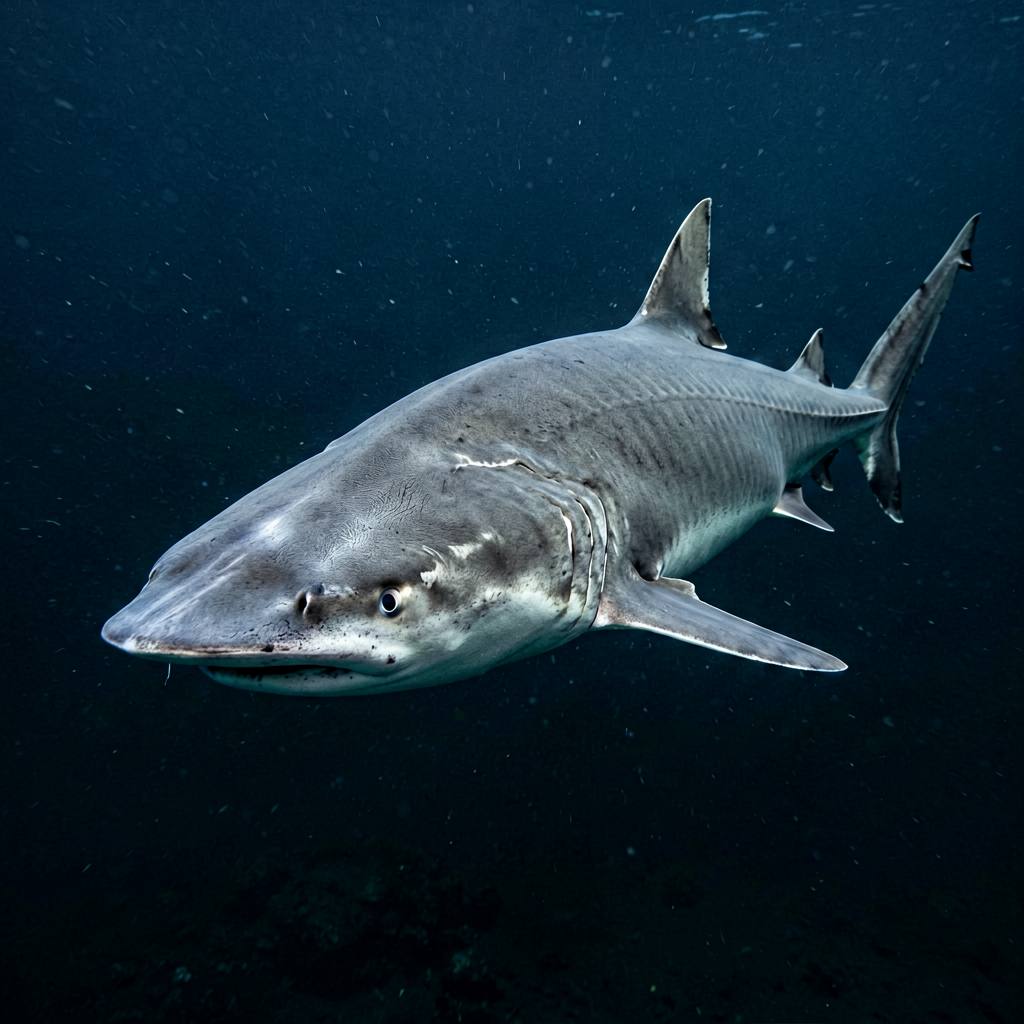
The Greenland shark has a heavy, cylindrical body. Its head is short and rounded. Its skin is rough and covered in tiny scales. The colour is usually grey, brown, or dark olive. Many sharks carry small pale spots on the back. Its dorsal fins are small and set far back. The tail is small for such a big animal.
The pectoral fins are short and stiff. This shark grows extremely slowly. Scientists think it adds about one centimetre a year. A six-metre shark is therefore very old. Females do not breed until they are about 150 years old. Its flesh holds a chemical called trimethylamine oxide. That compound protects the shark from the cold.
When the shark dies it breaks down into trimethylamine. That is what makes fresh meat toxic. Its eyes are small. A parasitic copepod often attaches to the cornea. The parasite leaves the shark partly blind.
1
2
3
Icy water, great depth
Where the sleeper drifts
This shark lives in the cold waters of the North Atlantic and Arctic. It ranges from Canada and Greenland across to Norway and Russia. Records also come from the St Lawrence River and the Barents Sea. It prefers water between about minus one and ten degrees Celsius. Most sightings are from 200 to 1,200 metres deep.
Some come from far deeper, down to 2,200 metres. In winter it sometimes rises into shallow water. It has been seen at the surface in Arctic fjords. It can live under sea ice for long periods. It tolerates very low oxygen levels in deep water.
Its liver is large and rich in oil. That oil once made it a target for hunters. Tagging studies show it moves slowly but travels long distances. One shark swam over a thousand kilometres in a year.
What it eats
Almost anything it meets
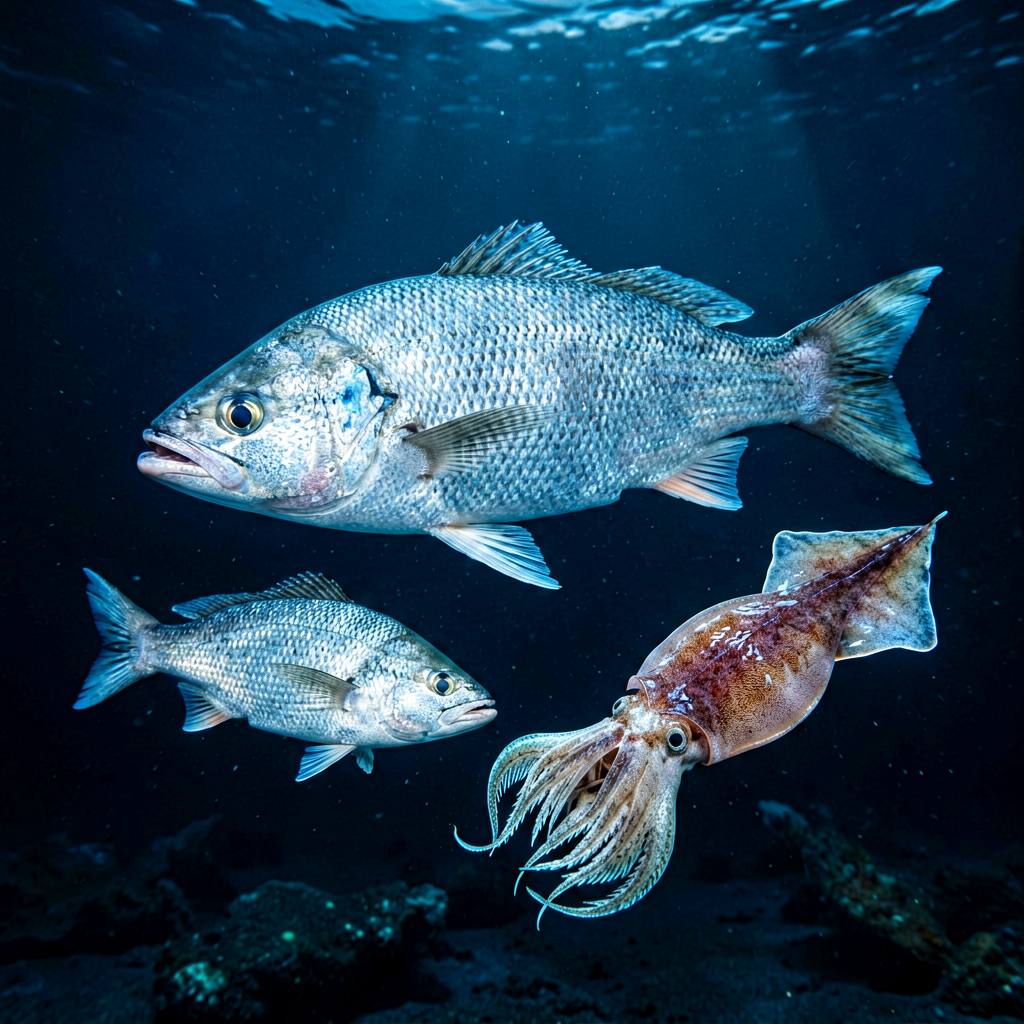
The Greenland shark eats almost anything it can catch or find. Its main prey are fish. Cod, halibut, redfish, and skates all appear in its stomach. It also takes squid and other deep-water animals. Seals form part of the diet in some areas.
It has even been found with reindeer and other land animals inside. Those were probably scavenged from the water. It is a slow hunter, so it relies on surprise. One idea is that it sneaks up on sleeping seals. Another is that it simply takes whatever drifts down from above.
Its sense of smell is good, which helps it find carrion. It has few natural enemies. Only humans and perhaps large toothed whales threaten it. Its slow metabolism means it needs little food. It can survive on very few meals each year.
Ten pups, once in a while
A very slow cycle
We know very little about how the Greenland shark breeds. It does not lay eggs. Instead, the young develop inside the mother. Females are thought to carry about ten pups at a time. Where the pups are born is still unknown. No one has ever seen a birth. Mating probably takes place in deep water. The sharks grow so slowly that females may breed only a few times in centuries. That makes the species very slow to recover.
Each new generation takes well over a century to replace itself. Because of this, even a small loss of adults is serious. Scientists use the lens of the eye to estimate age. The lens grows in layers through life. Measuring those layers gives a rough age. That method produced the estimate of nearly 400 years. It also showed how late the females mature. Little is known about where the species gives birth. No nursery ground has ever been found.
Some scientists think the young stay in deep, cold channels. Others suggest they follow the retreating ice edge. Tagging has shown that the sharks move slowly but steadily. One animal travelled far along the Canadian coast. Another crossed deep water between islands. Their slow pace means a journey of a thousand kilometres takes months. Studying such a long-lived animal is difficult. A single research project may last far longer than a career.
Vulnerable and unstudied
Bycatch it cannot replace
The Greenland shark is listed as Vulnerable by the IUCN. Its numbers are thought to be falling. The species was once hunted for its liver oil. That fishery has largely ended, but other dangers remain. It is caught by accident in trawl and longline fisheries.
Because it grows so slowly, it cannot replace lost adults. Its low breeding rate makes every death count. Deep-sea fishing is expanding into its cold-water range. Climate change may alter the fish it feeds on. Pollution may also build up in its fatty tissues.
Some countries now protect it, but rules vary. There is no global ban on catching it. Biologists argue that the species needs careful watching. Its very long life means a population takes centuries to recover. For that reason, even limited fishing can do lasting harm.
Quick hits
Five things to remember
- It is the longest-lived vertebrate known, with one female estimated at nearly 400 years old.
- It grows about one centimetre a year and may not breed until it is 150 years old.
- Its fresh flesh is toxic, so Icelandic cooks ferment it for months before eating it.
- A small parasitic copepod often attaches to its eye and leaves the shark partly blind.
- Despite its size, it swims slower than a person walks and is harmless unless provoked.