 By st20113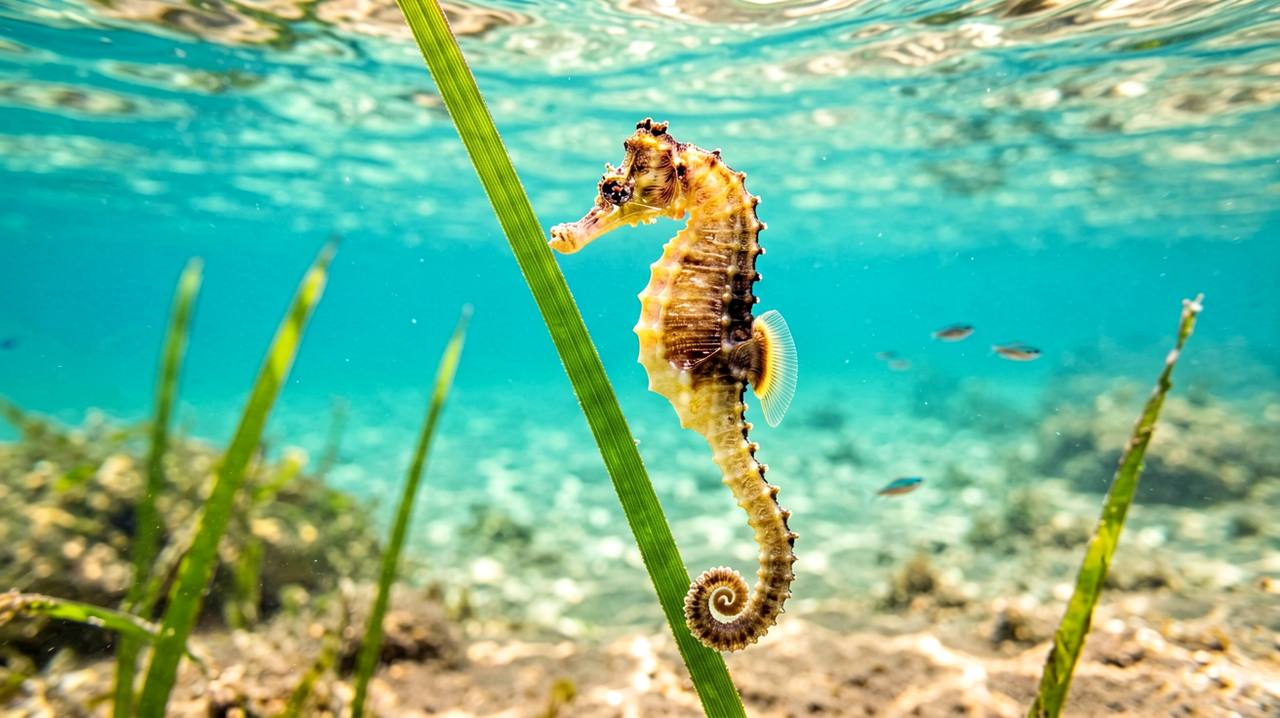
Hippocampus erectus | Lined Seahorse
Species Profile · Syngnathidae
Lined Seahorse
A tiny fish that stands upright, changes color, and lets the fathers give birth. It ranges farther north than almost any other seahorse.
IUCN: Vulnerable
Range
Size
Life
Diet
Status
A fish like no other
The little horse of the sea
The lined seahorse is a small fish. It swims upright, and its face looks like a tiny horse. Most adults are about 15 centimeters long. That is barely more than a finger.
It is the only seahorse that breeds along the coasts of North America. It lives in the western Atlantic. Its range runs from Canada’s cool water to the warm coasts of Brazil. Few fish are as strange, or as easy to love.
Family tree
Who is it related to?
The lined seahorse sits in the genus Hippocampus. It belongs to the family Syngnathidae, the same group as pipefishes. The name joins the Greek words for horse and sea monster.
Its close kin include the Spotted Seahorse, an Indo-Pacific cousin. That fish shares the same upright body and bony plates. Both are true seahorses, not soft-scaled fish. The family also holds the pipefishes and the leaf-like seadragons of southern Australia. About 45 seahorse species swim the world’s shallow seas.
Built odd and armored
A body in bony rings
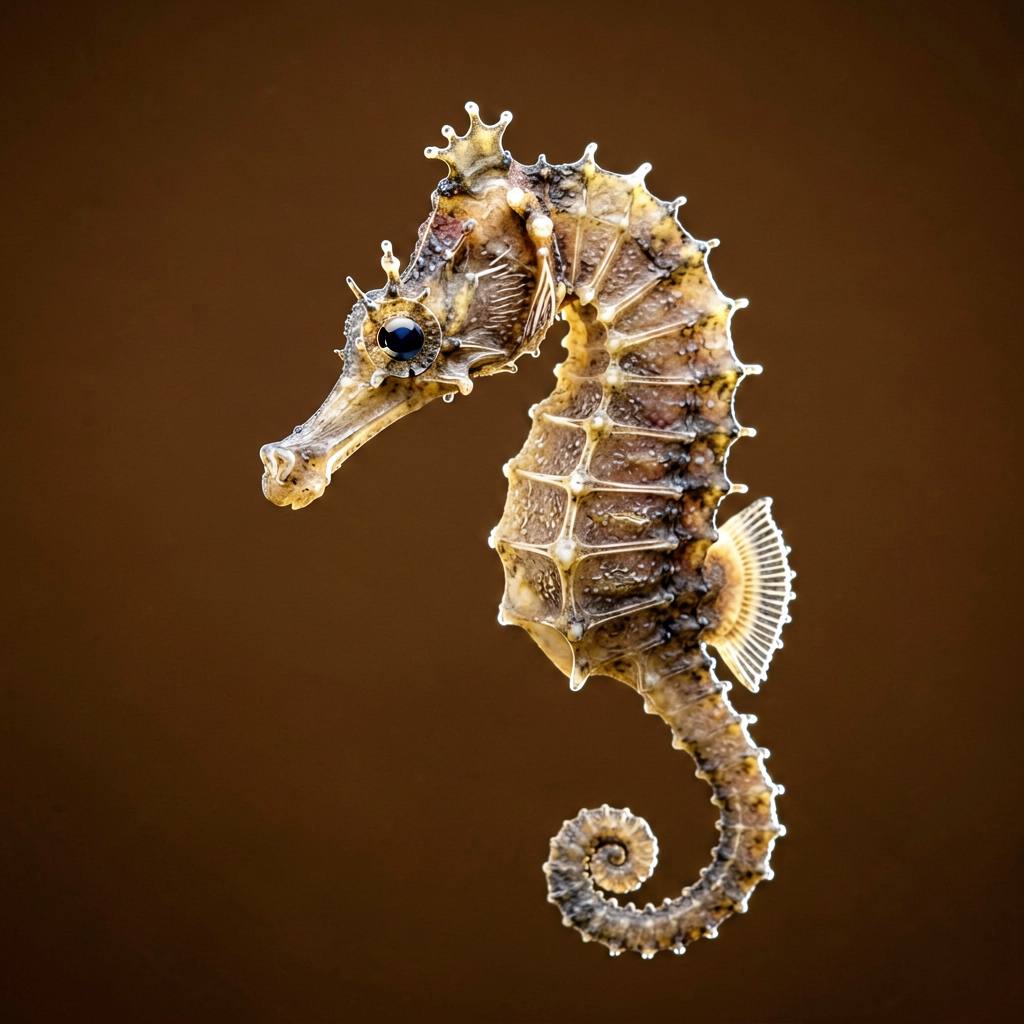
The lined seahorse stands almost straight up. Its head bends above a slim trunk, and its tail curls forward. Its body is wrapped in bony rings instead of scales. That makes it feel stiff to the touch.
A long snout ends in a tiny mouth with no teeth. It is made for sucking up food. Thin lines run down the head and neck. Those lines give the fish its name. Color shifts with mood and background, from pale yellow to deep brown or red. Each eye moves on its own. So it can watch a shrimp with one eye while the other scans for a predator.
1
2
3
Life in the weeds
Shallow water, fixed holdfasts
This seahorse stays in shallow water. It rarely goes deeper than 20 meters. There, plants give it something to hold. It favors seagrass meadows, mangrove roots, and patchy reefs. All of these are rich in the small prey it eats.
Along the Atlantic it ranges from Nova Scotia and the Gulf of Maine. It reaches Florida, the Gulf of Mexico, and the Caribbean. It also lives as far south as Venezuela and Brazil. This fish swims poorly. So it leans on its tail to grip a blade of grass. Then it waits for food to drift past. It likes water warmer than about 15°C. It often returns to the same patch of grass across seasons.
What it eats
A grazer that never stops
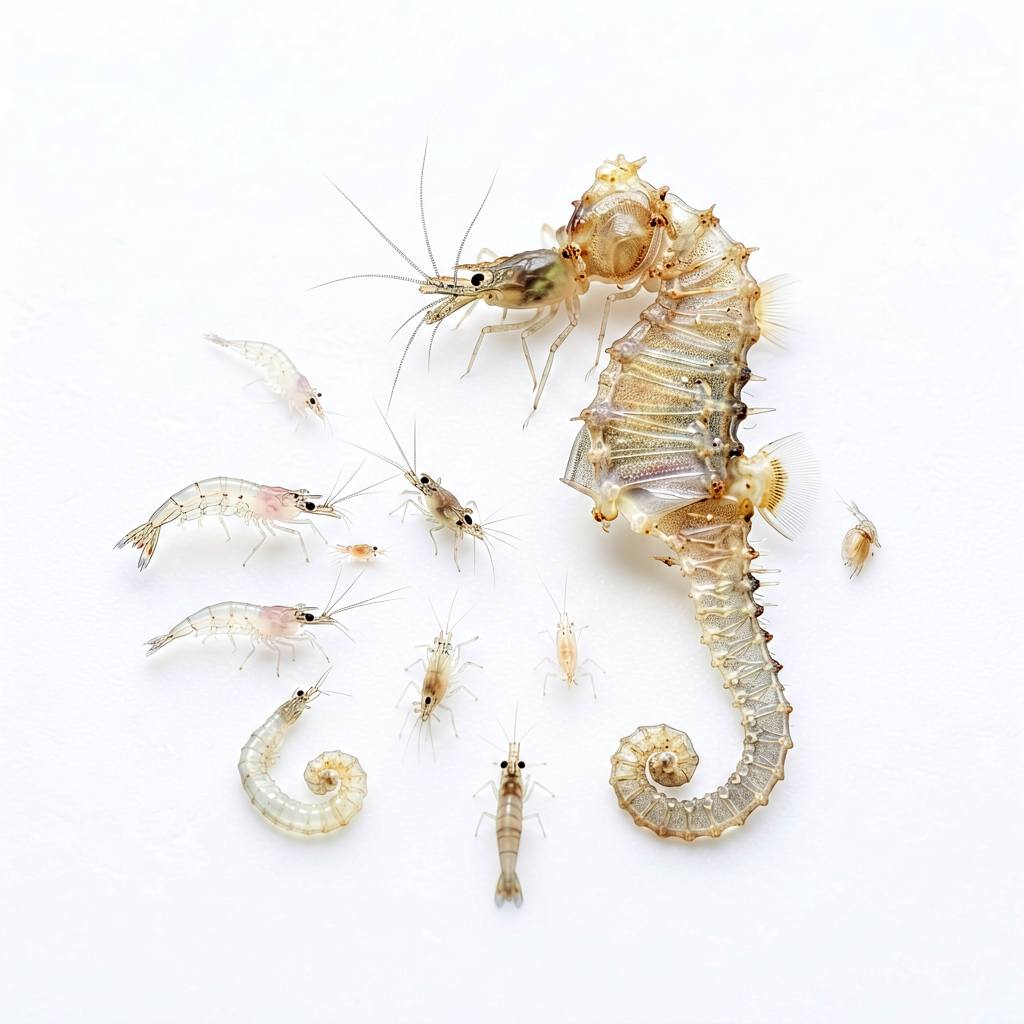
The lined seahorse is a patient hunter. It waits in ambush for prey to come close. It eats tiny drifting animals. These include copepods, amphipods, and small shrimp. It also takes the larvae of fish and crabs.
It has no teeth. So it sucks prey whole through its snout. The strike is quick, and almost invisible. Because it lacks a true stomach, food passes straight through. So it must eat almost all day. Its prey is smaller than a grain of rice. It makes hundreds of strikes a day just to meet its needs.
The pregnant father
Males carry the young
The lined seahorse flips the usual script. Males, not females, carry the young. A pair meets, and the female places her eggs into the male’s brood pouch. She may give him several hundred eggs, or more than a thousand.
He fertilizes them there. Then he shelters them for about two to four weeks. When the time comes, he contracts his body. He releases fully formed fry no bigger than rice grains. The young are independent at once. Neither parent feeds or guards them. Fewer than one in a thousand fry survives the first weeks.
Under pressure
Trade, nets, and lost homes
The lined seahorse is rated Vulnerable by the IUCN. Numbers are falling across its range. The biggest driver is trade. Millions of dried seahorses are sold each year for medicine and as curios. Many more are taken live for the aquarium hobby.
Trawl and shrimp nets also catch seahorses by accident. Trapped, they drown. Loss of seagrass and mangrove homes strips the cover they need. The species is listed on CITES Appendix II. That listing controls international trade. Recovery is slow, because this fish grows and reproduces late.
Quick hits
Five things to remember
- The male seahorse becomes pregnant and gives birth — one of the few cases in the animal world.
- Its tail can lock around a single seagrass blade and hold on through a strong current.
- It has no stomach, so it must feed almost all day just to keep from starving.
- Its eyes move on their own, letting one watch for food while the other scans for threats.
- It can shift color to blend with the weeds and corals around it.