 By st20113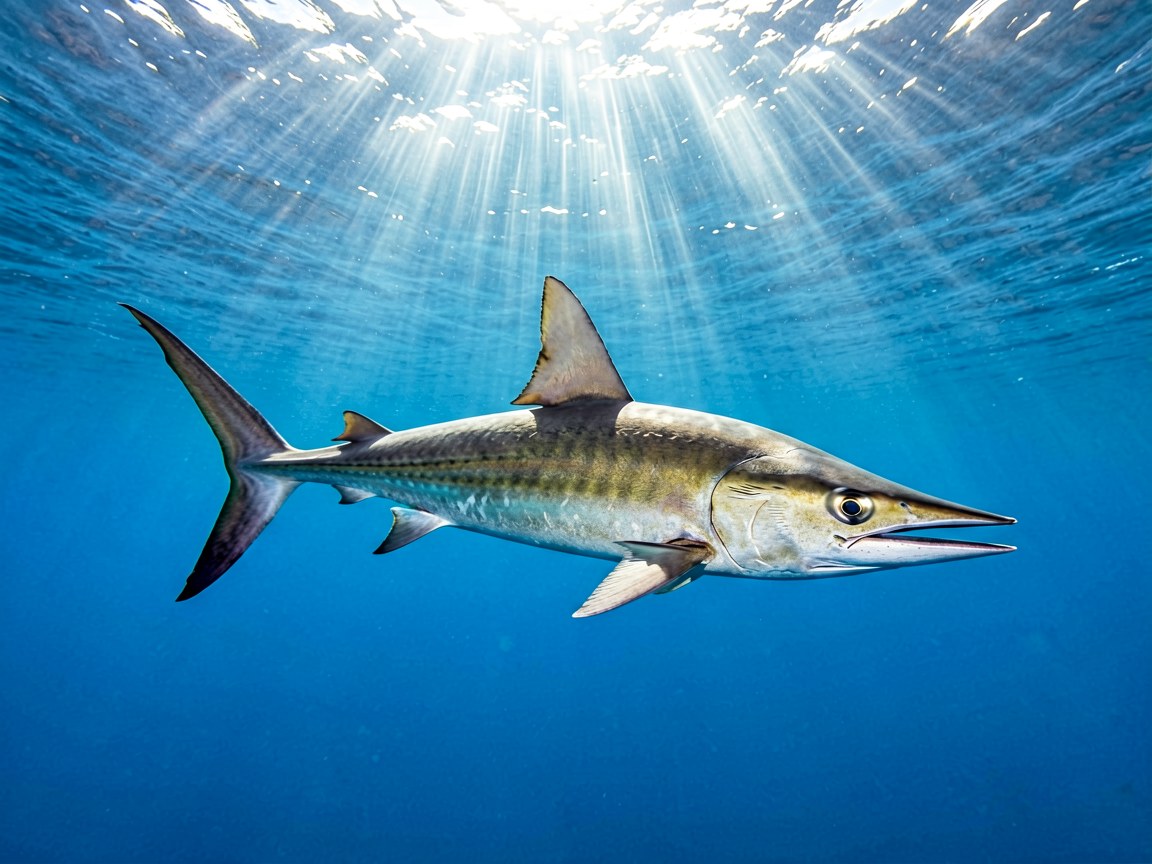
Alopias vulpinus | Common Thresher Shark
Introduction
The common thresher shark, Alopias vulpinus, is a large mackerel shark best known for an extraordinarily elongated upper tail lobe that can equal the length of its body. This scythe-like tail, making up roughly half the animal’s total length, is a weapon the shark uses to stun schooling fish before capturing them. Found in temperate and tropical oceans worldwide, the common thresher is a fast, agile pelagic predator that migrates seasonally in pursuit of prey and warmer water. Unlike many deep-water relatives it often enters coastal shelves, bays, and shallow surf, bringing it into regular contact with fisheries. Though it rarely interacts with people and is not considered dangerous, the species faces growing pressure from overfishing. Its unmistakable silhouette, with the long tail trailing the streamlined body, makes it one of the ocean’s most recognizable sharks.
Taxonomy
Alopias vulpinus belongs to the family Alopiidae, the thresher sharks, within the order Lamniformes, the mackerel sharks, which also includes the great white, the shortfin mako, and the extinct megalodon. The genus name Alopias comes from the Greek for fox, a nod to the long tail, while vulpinus means foxlike. Three thresher species are recognized: the common thresher, the bigeye thresher (Alopias superciliosus), and the pelagic thresher (Alopias pelagicus). Like the [Blue Shark](https://www.gloencyc.com/prionace-glauca-blue-shark/), a closely related lamniform that also roams the open ocean in large numbers, the common thresher is built for sustained swimming and a pelagic life, though the two differ sharply in hunting anatomy. Walbaum first described the species in 1792 from Arctic and North Atlantic specimens. Later molecular work confirmed the Alopiidae as a distinct group and clarified relationships among the three living species.
Physical Characteristics
The common thresher is a robust, fusiform shark whose most striking feature is the elongated upper caudal lobe, which may alone reach half the total length. Adults typically measure 4.5 to 5.5 meters, with the largest verified specimens near 6 meters; females generally grow larger than males. Weight commonly ranges from 230 to 500 kilograms, with exceptional fish exceeding 600. The body is countershaded, a metallic blue to dark gray or brownish above fading to white below, hiding the shark from prey above and predators beneath. The snout is short and conical, the eyes moderately large, and the small mouth bears tiny blade-like teeth in roughly 18 to 22 rows per jaw. The first dorsal fin is tall and falcate, set about two-thirds back from the snout, ahead of a much smaller second dorsal and anal fin. The pectorals are long and sickle-shaped. Unlike the bigeye thresher, the common thresher lacks enlarged eye musculature, and its pectorals are longer than those of the pelagic thresher. Newborns of 1.0 to 1.5 meters already show the proportional tail that defines the genus.
Habitat
Common threshers occupy temperate and tropical seas in all major oceans, favoring surface waters of about 15 to 25 degrees Celsius. They are mainly epipelagic, most common over the shelf and slope to 200 to 500 meters and recorded as deep as 550. In summer they move onto cooler, productive shelves to feed, then shift offshore to warmer water in winter; this pattern is documented in the western North Atlantic, the Mediterranean, and the Pacific off California and Japan. They tolerate wide salinity ranges and occasionally enter brackish estuaries and shallow bays. In the eastern Pacific they range from British Columbia to Chile; in the Atlantic from Newfoundland and the North Sea south to South Africa and Argentina; in the Indo-Pacific from Australia and New Zealand through Southeast Asia to the western Indian Ocean. Tagging shows single-season travels of hundreds to thousands of kilometers along coasts and across open ocean. They stay near the surface and rarely enter cold deep water as bigeye threshers do, making them among the most observable large lamniforms.
Diet
The common thresher specializes in schooling bony fishes and squids, using one of the ocean’s most unusual hunting methods. It herds prey with its elongated tail and strikes, stunning or killing several fish at once with a powerful sideways swipe. Principal prey includes herring, mackerel, sardines, anchovies, lanternfish, and small tunas, plus squid and occasionally octopus. In the Pacific, juveniles feed heavily on northern anchovy and market squid while adults take larger clupeids and carangids. The small, dense teeth grip slippery prey rather than cutting, so the shark usually swallows items whole or in pieces. Feeding often occurs near the surface at dawn and dusk, when schools are densest. Cooperative hunting has been seen, with several threshers driving a baitball up before tail-striking in turns. Because their diet overlaps commercially valuable forage fish, threshers are sensitive to climate-driven and harvest-related shifts in prey abundance.
Reproduction
Common threshers are ovoviviparous: embryos develop in eggs retained in the uterus, fed first by yolk and later by uterine secretions, a form of matrotrophy. Litters are small, usually two to four pups, with records of one to six. Gestation lasts about nine to twelve months, and females are thought to breed only every two to three years, a slow cycle that limits recovery. Newborns of 1.0 to 1.5 meters are independent at birth, with no parental care. Males mature at roughly 3 to 4 meters and about 6 to 7 years; females mature later, at 4 to 5 meters and 7 to 8 years. Females may live 20 to 30 years, males somewhat less. In the North Atlantic, mating and pupping likely occur in warmer southern nurseries in late winter and spring, including shelf waters off the southeastern United States and the Mediterranean. Small litters, late maturity, and infrequent breeding make the species especially vulnerable to fishing mortality.
Conservation
The common thresher is assessed as Vulnerable by the IUCN, with some regional populations considered Endangered. Its main threat is incidental catch in gillnets, longlines, and purse seines targeting tunas and swordfish, plus directed recreational and artisanal fisheries valuing its meat, fins, and sport. Because threshers mature slowly and produce few young, even moderate bycatch can cause steep declines, as seen in the Mediterranean. Some protection now exists: the species is on Appendices II of both CITES and the Convention on Migratory Species, and the U.S. National Marine Fisheries Service manages it under plans with quotas and a finning ban. The European Union has restricted thresher landings and discards in parts of its waters. Enforcement is uneven, however, and unreported bycatch remains a problem in many developing fisheries. Catch-and-release sport fishing has grown as a conservation-friendly alternative, and tagging programs keep refining the migration corridors needed for cross-border protection.
Fun Facts
- The common thresher’s upper tail lobe can be as long as the rest of its body, making up nearly half its total length.
- It uses its elongated tail like a whip to stun schooling fish, sometimes knocking several prey out at once.
- Female threshers grow larger than males and can reach six meters and more than six hundred kilograms.
- Despite belonging to the same order as the great white shark, the thresher is shy and almost never implicated in unprovoked attacks.
- Thresher sharks are among the few fish that leap clear of the water, a breach that may dislodge parasites.