 By st20113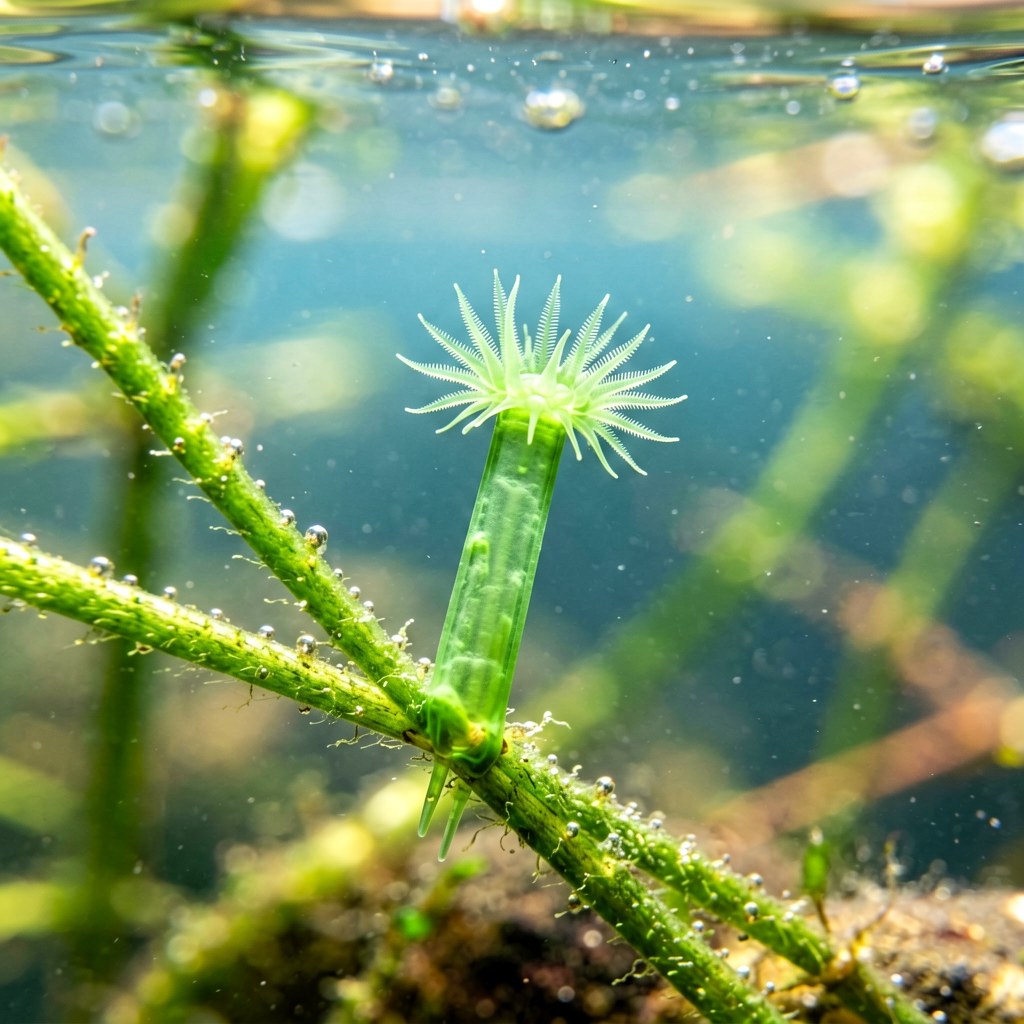
Hydra viridissima | Green Hydra
Introduction
The green hydra, Hydra viridissima, is a tiny freshwater animal that rarely exceeds fifteen millimetres in length, yet it has become one of the most studied creatures in biology. A member of the same group as corals and jellyfish, it lives attached to underwater plants in clean ponds, ditches, and slow streams across temperate regions of the Northern Hemisphere. Its body is a slender, translucent tube crowned with a ring of delicate tentacles, and it appears green because of the microscopic algae living inside its tissues. Despite lacking a brain, eyes, or any organised organs beyond a simple gut and a nerve net, the green hydra can catch prey, move, regenerate lost parts, and reproduce. It has fascinated naturalists since the eighteenth century and remains a favourite model for studying regeneration, symbiosis, and the question of biological aging, because under the right conditions it seems to escape senescence almost entirely.
Taxonomy
Hydra viridissima is placed in the phylum Cnidaria, the same radical group that includes sea anemones, [Staghorn Coral](https://www.gloencyc.com/coral-acropora-millepora/), and true jellyfish, all of which share the defining stinging cells called nematocysts. Within Cnidaria it belongs to the class Hydrozoa and the genus Hydra, a handful of mostly freshwater polyps. The species name viridissima means “most green,” a reference to its vivid colour. Although corals build vast calcium carbonate skeletons and jellyfish drift as medusae, the hydra stays in the simple polyp stage for its whole life, never producing a free-swimming adult form. Its close relationship to reef-building corals is more than superficial: both rely on symbiotic partnerships and both deploy cnidocyte batteries to capture small prey, traits that unite the entire phylum across habitats from tropical reefs to backyard ponds.
Physical Characteristics
The green hydra’s body is a hollow cylinder anchored at one end by a sticky foot and open at the other into a mouth surrounded by six to twelve tentacles. The tentacles, which can extend several times the body length, are densely packed with nematocysts that fire microscopic harpoons tipped with toxin to stun prey. Its green colour comes from Chlorella-like algae living in the cells of the epidermis; these symbionts photosynthesise and pass sugars to the host. The animal has no circulatory, respiratory, or excretory systems—diffusion handles everything. A diffuse nerve net coordinates movement and feeding, and remarkable powers of regeneration mean that a fragment containing only a few hundred cells can rebuild a complete, functional hydra. Under a microscope the tentacles shimmer with discharged and reloaded stinging capsules, an arsenal rebuilt continuously throughout life.
Habitat
Green hydras occupy shallow, unpolluted freshwater: the margins of ponds, the quiet backwaters of streams, drainage ditches, and the vegetated edges of lakes. They attach by their basal disc to the underside of leaves or to submerged stems, where gentle water movement delivers both oxygen and drifting food. Because they depend on photosynthetic algae, they favour well-lit shallows but retreat into shade when temperatures rise. They are sensitive indicators of water quality, disappearing quickly from eutrophied or chemically contaminated habitats. In the wild they are most visible in late spring and summer, when populations peak, though in mild regions they persist through winter as dormant cysts or as small, hardy adults clinging to sheltered vegetation.
Diet
The green hydra is a carnivore that feeds on the smallest members of the plankton: water fleas, copepods, mosquito larvae, and other tiny crustaceans that brush against its tentacles. Contact triggers the nematocysts, and the paralysed prey is manoeuvred to the mouth and swallowed whole into the gastrovascular cavity, where enzyme-secreting cells digest it. Unusually for an animal, the hydra gains a second food source from its algal symbionts, which supply carbohydrates produced by photosynthesis; in bright light a well-fed hydra may derive a meaningful share of its energy from its partners rather than from captured prey. This double nourishment helps explain how such a tiny predator can thrive in food-poor water. Digestion is efficient, and indigestible remains are expelled back through the mouth.
Reproduction
Green hydras reproduce both asexually and sexually, often within the same population. Asexual reproduction occurs by budding: a small bulge on the body wall develops into a miniature hydra that detaches and begins an independent life, allowing rapid population growth in favourable conditions. Sexual reproduction involves the formation of temporary gonads—testes and ovaries appear on the same individual, since the species is hermaphroditic—and eggs are fertilised internally before being shed. The resulting embryos are enclosed in resistant cysts that can survive freezing, drying, and other harsh conditions until conditions improve. This combination of fast cloning and durable dormant stages makes the green hydra exceptionally resilient, capable of colonising and recolonising ephemeral freshwater habitats with ease.
Conservation
The green hydra is not considered threatened at the global level, and it remains widespread wherever clean freshwater persists. Its principal vulnerability is habitat degradation: agricultural runoff, sewage, and chemical pollutants degrade the ponds and ditches it requires, and because it is highly sensitive to such changes, ecologists use hydra populations as a biological monitor of freshwater health. Climate pressures on small, temporary wetlands also matter locally. There are no targeted conservation programmes for the species, nor any need for one, but its presence is a quiet signal that a body of water is still functioning as a healthy ecosystem. Protecting ordinary ponds and reducing chemical inputs is the most effective way to keep green hydras—and the myriad organisms sharing their habitat—thriving.
The green hydra’s outsized scientific importance is hard to overstate. For decades it has been a model organism in studies of pattern formation, stem-cell behaviour, and the molecular basis of regeneration, helping biologists understand how complex animals rebuild lost parts from simple tissue. Its apparent escape from aging—maintained by a population of continuously dividing stem cells—has made it a touchstone in research on why most animals, including humans, do age. Because it is easy to keep in laboratory aquaria and reproduces readily, it remains a standard teaching and research animal. Ecologically, dense hydra populations help suppress mosquito and midge larvae in ponds, a modest but useful form of natural pest control in the very freshwater habitats where the species thrives.
Beyond the laboratory, the green hydra has even entered citizen science, with amateur aquarists and school biology clubs maintaining cultures that contribute casual observations on regeneration timing and symbiosis stability, a small but useful bridge between formal research and public engagement with freshwater ecology. Its hardiness and ease of culture also make it an ideal ambassador for teaching the public why clean, unpolluted ponds matter.
Fun Facts
- The green hydra’s colour is not its own but comes from algae living inside its cells, a partnership called endosymbiosis that supplies it with photosynthesised sugars.
- It has no brain and no organised organs, yet it can regenerate an entire body from a tiny fragment, a feat that has made it a cornerstone of regeneration research.
- Laboratory strains have been kept for years with no signs of aging, fuelling debate about whether hydras are effectively biologically immortal.
- Its tentacles fire microscopic, venom-tipped harpoons that can paralyse prey many times its own size relative to the tiny animals it actually eats.
- To survive winter or drought, it can form a tough resting cyst that withstands freezing and drying until conditions improve.
[…] refers to the stinging cells shared by the whole group. Our animal shares its genus with the Green Hydra, a close relative that looks almost the same. That species carries tiny algae inside its cells. The […]