 By st20113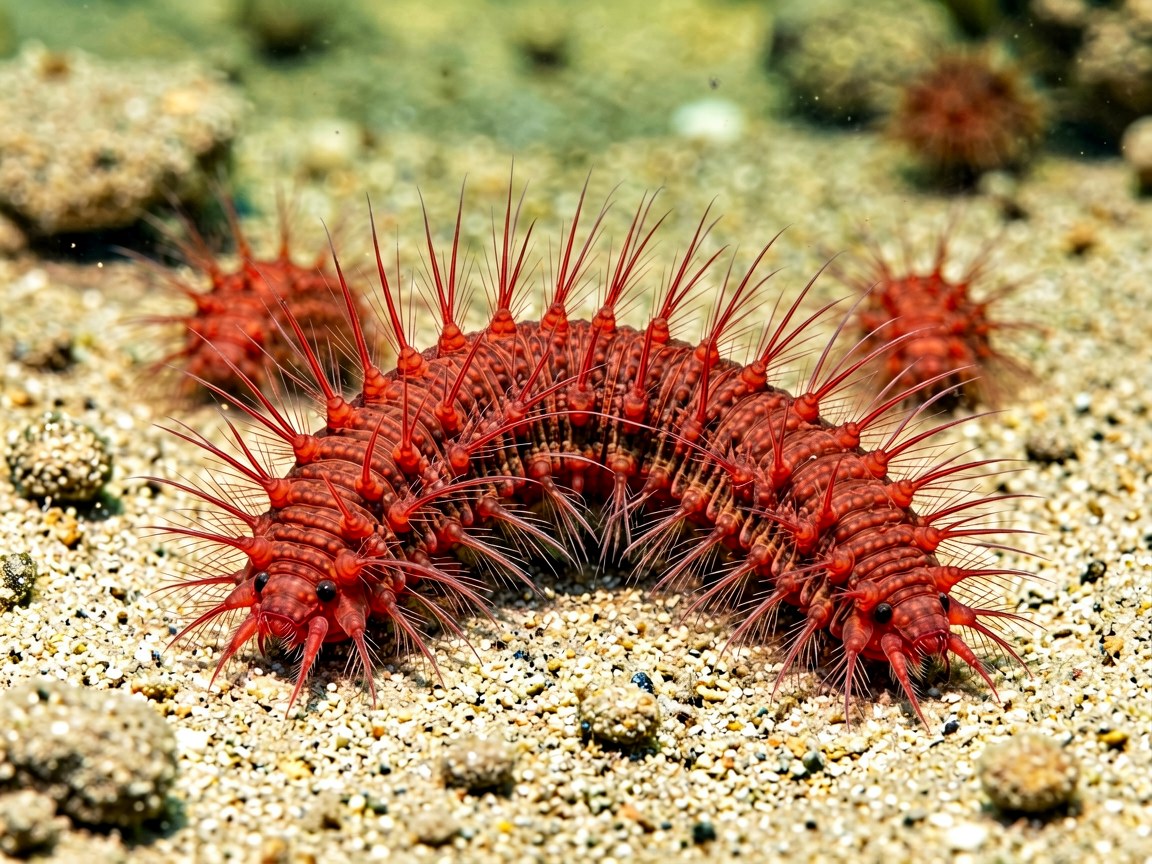
Cirratulus cirratus | Bristleworm
Introduction
Cirratulus cirratus is a small, sedentary polychaete worm of muddy and sandy seabeds, easy to overlook but ecologically important as a patient recycler of the seabed. It belongs to the bristleworm group, like its larger ragworm cousins, but instead of hunting it lives half-buried in a tube of mucus and mud, waving a remarkable fan of fine, thread-like tentacles from its front end to gather detritus from the surface around it. Reaching five to fifteen centimetres, it is reddish brown, soft and unassuming, and it is a familiar find for anyone turning over stones or cores on the lower shore and in shallow sublittoral mud. As a segmented worm it shares the annelid body plan with the common earthworm, though it has traded the earthworm’s soil-swallowing for a sedentary, filter- and deposit-feeding life in marine sediment, and it wears its bristles externally in the form of tentacles as well as body chaetae. It occurs around the coasts of north-west Europe and neighbouring seas wherever soft sediment settles, and its tireless grazing of the detrital film makes it a quiet but vital recycler of the seabed. Though easily mistaken for a fragment of root or weed when its tentacles are withdrawn, a closer look reveals a finely built worm that has perfected a patient, sedentary way of life, and its abundance places it among the routine catches of any sediment survey.
Taxonomy
The species lies in the family Cirratulidae, a group of mostly small, tube-dwelling polychaetes named for the cirri — the slender tentacle-like appendages — that arise from the front of the body. Its genus Cirratulus and species name cirratus both point to these “curled” threads. Cirratulids are deposit feeders rather than active predators, and they are distinguished from ragworms by their hidden, sedentary habit and the anterior crown of feeding filaments. Among polychaetes they sit with the broadly “sedentary” lineage that builds tubes or burrows and extends feeding structures into the water or sediment. Several similar cirratulids coexist in the same habitats, but C. cirratus is recognised by the abundance of its long, pale tentacles arising from many of the front segments and by its smooth, rounded, unsegmented-looking anterior when the tentacles are withdrawn.
Physical Characteristics
The worm is 5–15 cm long and a few millimetres wide, with a soft, reddish to brownish body that appears smooth because the segments are not sharply ringed on the surface. From the first several segments arises a profusion of very fine, pale, thread-like tentacles — sometimes dozens — that can be longer than the body and are used in feeding. The anterior end is rounded and lacks the obvious head of a ragworm; there are no jaws or proboscis, and the mouth lies ventrally among the tentacle bases. The rest of the body bears rows of fine chaetae that help anchor the worm in its mucous tube and assist slow movement. When undisturbed the tentacles spread out over the sediment like a fan; when touched, the worm retracts them and pulls back into its tube with surprising speed. The posterior end tapers to a point and is usually buried deepest in the sediment.
Habitat
Bristleworms of this kind inhabit muddy sand, sandy mud and silty bottoms from the lower shore down into the shallow subtidal, and they are common around the coasts of north-west Europe and neighbouring seas. They prefer sheltered sites where a film of organic detritus settles on the surface — estuaries, lagoon margins, sheltered bays and the shady undersides of stones — rather than clean, wave-scoured sand. Each worm occupies a simple U- or J-shaped tube of mucus and incorporated sediment, open at the surface, from which it extends its tentacles. They tolerate a degree of reduced salinity and mild pollution better than many sensitive species, which is why they are often abundant in somewhat disturbed estuaries, though they disappear from severely anoxic or heavily contaminated mud. Their abundance makes them a routine component of the infaunal community sampled by ecologists.
Diet
Cirratulus cirratus is a deposit and surface-detritus feeder. It extends its fan of tentacles across the sediment around the tube mouth and uses them to trap and sweep up the fine layer of organic matter, microbes and the decaying remains of algae and animals that settle there. Tiny cilia and mucus on the tentacles move the particles to the mouth. By harvesting this thin detrital film the worm acts as a crucial recycler, converting material that would otherwise accumulate into its own tissue, which is then available to the predators that eat it. Unlike a predator it does not chase prey; instead it waits and grazes the sediment surface, processing large amounts of mud-rich material relative to its size. In doing so it helps mix and aerate the upper sediment and returns locked nutrients to the food web, much as earthworms do on land.
Reproduction
Reproduction is typically sexual, with separate male and female worms releasing gametes into the water where fertilisation occurs; the resulting larvae are planktonic for a period before settling to the seabed and developing into the burrowing juvenile form. Some cirratulids can also reproduce asexually by fragmentation, where a piece of the worm regenerates a new individual, and C. cirratus is reported to show regenerative ability, which helps local populations persist and spread within suitable sediment. Because the adults are sedentary and hidden, spawning is not the dramatic mass event seen in swimming ragworms; instead it is a quieter, continuous or seasonal contribution to the larval pool. The combination of sexual larvae and occasional asexual regrowth makes the species resilient to the disturbance of its soft-bottom habitat.
Conservation
The bristleworm is common and widespread, and it is not a conservation concern. Its tolerance of variable salinity and its role in recycling sediment mean it often remains abundant even where more sensitive species decline, and it forms part of the diet of flatfish, crabs and wading birds that probe the mud. The main threats would be severe, chronic pollution or the physical destruction of seabed habitat by intensive trawling, which can strip the surface layer it grazes. Because it is small and sedentary, it is rarely targeted by people, and it benefits simply from the protection of healthy estuaries and the control of gross contamination. Ecologically it is a quiet workhorse, and its presence in good numbers is a sign of a functioning, recycling sediment community rather than of rarity.
Fun Facts
- It gathers food with a fan of dozens of fine, thread-like tentacles longer than its own body.
- The worm has no jaws or eyes; it simply grazes the film of detritus on the seabed.
- It can regrow from fragments, helping local populations persist in disturbed mud.
- Despite living buried in marine sediment, it is a segmented worm kin to the garden earthworm.
- Its tentacles retract instantly into a mucus tube when the worm is disturbed.