 By st20113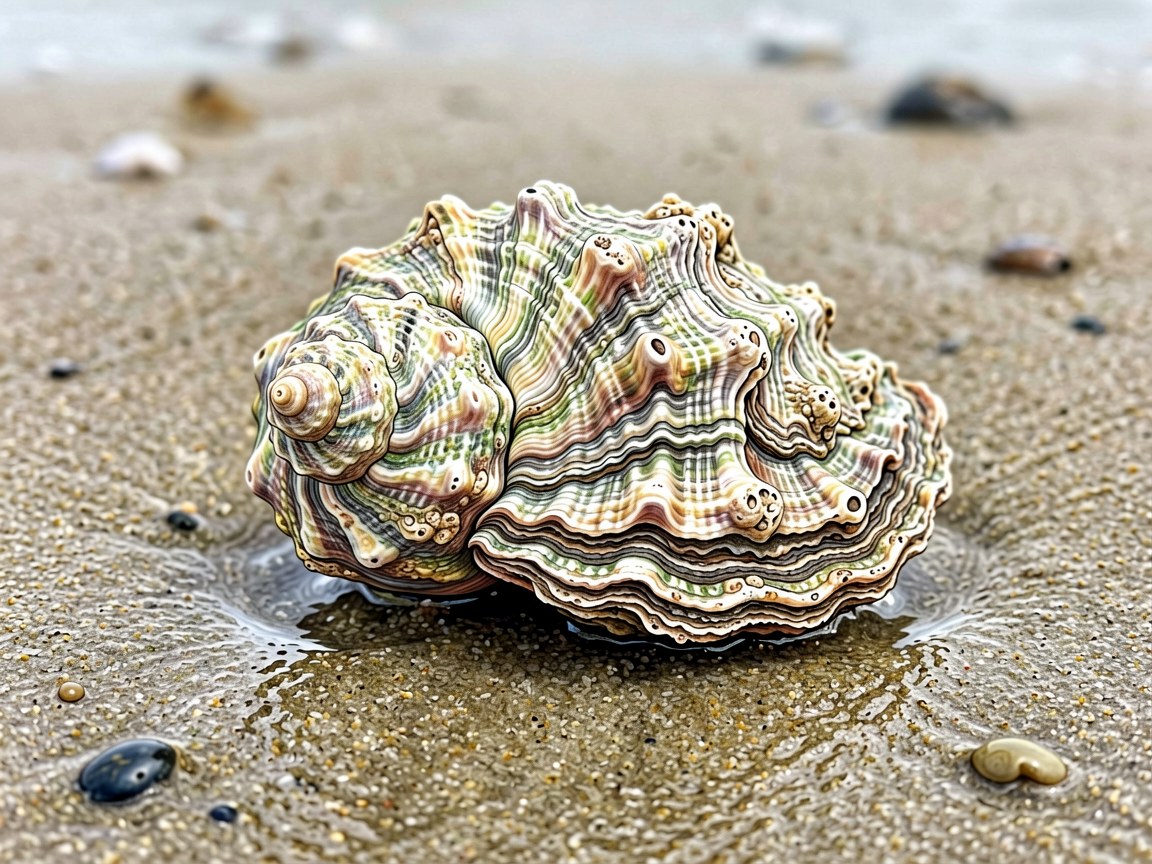
Venus verrucosa | Warty Venus
Introduction
Venus verrucosa, the warty venus, is a sturdy, handsome bivalve of the north-east Atlantic that has been gathered for food since antiquity. A member of the venus clam family, it is built like a small thick-shelled vault: a rounded, heavily sculpted shell with strong commarginal ridges and a rough, warty surface that gives the species its name. It lives buried in sand and muddy sand from the low shore down into the sublittoral, where it filters phytoplankton from the water and shelters from waves and predators. Tasty and firm-fleshed, it supports small fisheries across southern and western Europe and is a familiar item in Mediterranean and Atlantic seafood. Although not currently considered threatened, it is slower to mature than many clams, so sensible management matters where it is harvested heavily. As a bivalve mollusc it shares the basic body plan of the common mussel, filtering food from the sea rather than chasing it. Along the Atlantic and Mediterranean coasts it supports small-scale fisheries and is a staple of local markets, prized for its firm, sweet flesh. Archaeological shell middens show it has been eaten since the Neolithic, and its tough shell preserves well in the record of past shorelines. Though less famous than the oyster, it is a dependable, flavourful bivalve that has fed coastal people for thousands of years and still does today.
Taxonomy
The warty venus sits in the genus Venus, a group of solid, rounded clams in the family Veneridae that are among the most important edible bivalves worldwide. Its specific name verrucosa is Latin for “warty”, a direct description of the shell texture. Veneridae are characterised by a strong, often triangular shell with well-developed hinge teeth and a pallial sinus reflecting the siphons. The genus Venus itself includes several commercially important species around Europe. Like all bivalves the animal is a mollusc with a body compressed between two calcareous valves, a hatchet foot for burrowing, and paired gills that do double duty in feeding and breathing. Its closest relatives in European waters include the carpet shells and the smooth venus, but the warty sculpture and rounded outline make V. verrucosa distinctive once cleaned of encrusting algae.
Physical Characteristics
The shell is 4–8 cm long, roughly circular to slightly triangular, with a thick, heavy wall and a pronounced rounded outline. The exterior carries coarse concentric ridges crossed by a network of finer radial threads, producing the characteristic warty or nodular feel, and the colour ranges from dull brown and grey to pale yellow, often masked by adhering sand and epiphytes. Inside, the shell is porcelain white with a deep pallial sinus and strong hinge teeth. The animal within has a pale orange or cream mantle, a muscular hatchet foot used to dig, and two short siphons that project to the surface to draw in and expel water. The adductor muscles that close the shell are powerful, leaving the classic paired muscle scars on the inner shell. The whole clam is built for a buried, sedentary life, resisting both crushing predators and shifting sediment.
Habitat
The warty venus inhabits clean to muddy sand and sandy mud, from just below the low tide line down to roughly a hundred metres, favouring gently sheltered coasts rather than the most exposed surf. It burrows a few centimetres below the surface, leaving only the siphon tips protruding to filter the water above. It is found throughout the Mediterranean and along the Atlantic coast from the British Isles and Brittany south to West Africa, and it prefers salinities that stay near full seawater. Because it needs reasonably clean, oxygenated sediment, it is absent from heavily polluted or anoxic mud, and it is a useful, if rough, indicator of moderately healthy soft-bottom habitat. Populations form loose beds rather than the dense reefs of some other bivalves, and individuals may stay in the same spot for years, slowly growing as they filter the passing water.
Diet
Like other suspension-feeding bivalves, the warty venus eats by filtering. Seawater is drawn in through the inhalant siphon, passed over the gills where tiny phytoplankton, diatoms and organic particles are trapped in mucus and moved to the mouth, while the cleaned water is expelled through the exhalant siphon. The gills thus act as both lung and sieve, extracting oxygen and food in a single stream. Because the clam cannot move to find food, its growth depends entirely on the seasonal abundance of plankton in the overlying water, so it fattens in the productive spring and summer and rests through leaner winter months. By removing particles from the water column it also helps keep the coastal environment clearer, linking its own nutrition to the broader health of the planktonic food web.
Reproduction
The warty venus is a broadcast spawner. As water warms in spring and early summer, adults release eggs and sperm directly into the sea, where fertilisation takes place. The resulting larvae are planktonic for a week or two, drifting with currents and feeding on even smaller plankton before they are large enough to settle, metamorphose and sink into the sediment to begin a buried life. This pelagic stage lets the species colonise new areas and replenishes beds that have been fished. Individuals are slow growers and may take two to three years to reach a harvestable size, and they can live for several years, so a population’s recovery after heavy take depends on enough spawners surviving each season to seed the next generation.
Conservation
Across most of its range the warty venus is common and not globally threatened, but it is vulnerable to over-exploitation because of its slow growth and late maturity. In several countries it is subject to minimum-size limits and seasonal closures during the spawning period, and some beds are protected from dredging that would damage the seabed. The chief wider risks are habitat degradation from trawling, pollution that smothers clean sand, and coastal eutrophication that can trigger anoxic patches. Because the clam is a long-lived, sedentary filter feeder, local stocks respond slowly to both pressure and protection, so precautionary management — leaving broodstock in place and avoiding repeated heavy dredging — is the simplest way to keep beds productive for the future.
Careful quotas and closed seasons let fishermen and the warty venus share the same healthy, productive seabed.
A thriving bed is in itself a sign of clean, well-oxygenated sand and careful local management.
Fun Facts
- Its shell is covered in a warty, ridged sculpture that gives the species its Latin name *verrucosa*.
- It has been eaten since Roman times and remains a favourite in Mediterranean seafood.
- The clam filters plankton through its gills, which double as its breathing organs.
- It spawns by releasing eggs and sperm into the open sea, with drifting larvae that later settle.
- A warty venus can take two or three years to reach a size worth harvesting.