 By st20113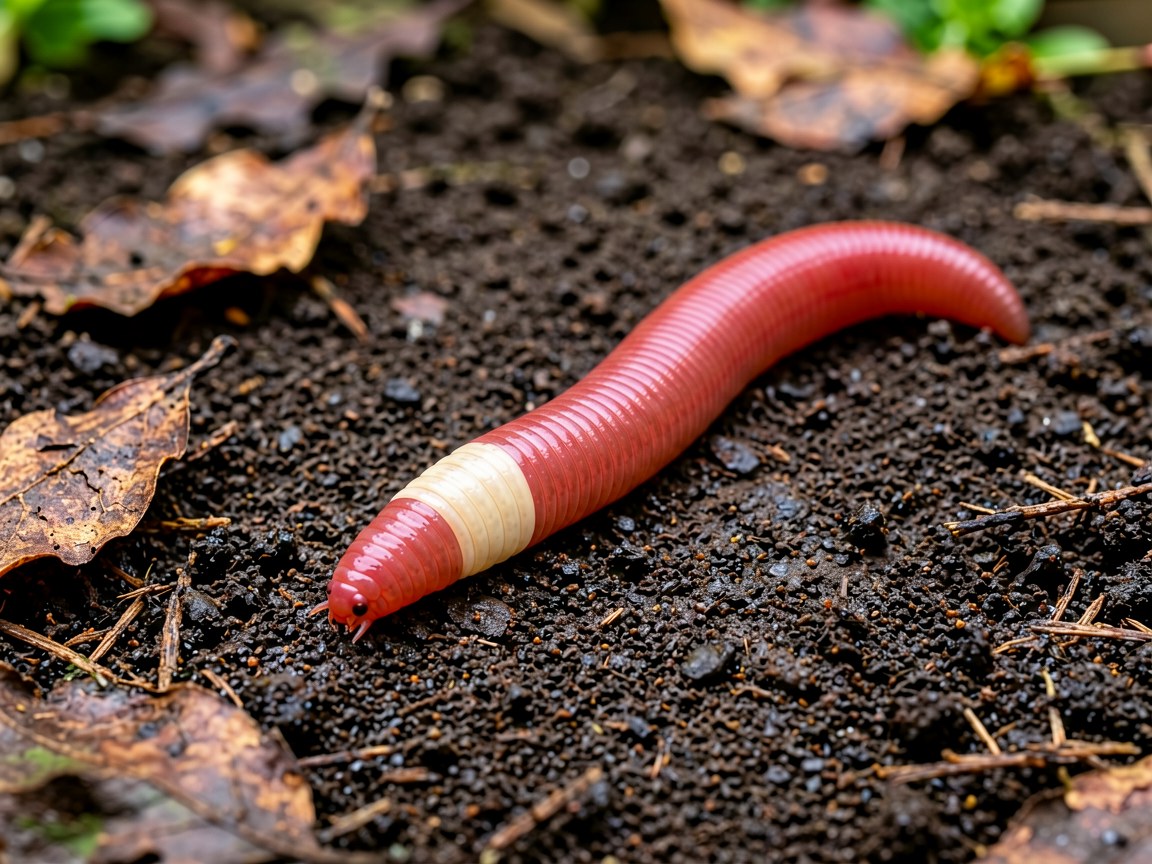
Lumbricus rubellus | Red Earthworm
Introduction
Lumbricus rubellus, the red earthworm, is one of the common earthworms of the temperate world, a medium-sized, reddish-pink worm of soils and compost that is familiar to gardeners, anglers and anyone who turns over a spade of earth. It is a member of the same genus as the common earthworm, a segmented, bristle-bearing annelid that lives by swallowing soil and organic matter and enriching the ground as it goes. The red earthworm is distinctive for its colour, a deep red or reddish-brown on the back fading to a paler, sometimes yellowish, underside, and for its habit of living in the upper soil and in surface litter, where it forms middens of castings and pulls leaves down into its burrows. It is native to Europe but has travelled with human activity to many parts of the world, and it is a key worker of the soil, much like Lumbricus terrestris, the common earthworm, though it keeps more to the surface and to richer, more disturbed ground.
Taxonomy
The red earthworm is an annelid in the family Lumbricidae, the earthworms of the northern temperate zone, and within that family it belongs to the genus Lumbricus, which includes the common earthworm and several other familiar species. The specific epithet rubellus means “reddish” or “ruddy,” a direct reference to the worm’s colour. The Lumbricidae are the “true” earthworms of Europe and, through introduction, of many temperate regions elsewhere, and they are set apart from the tropical and southern earthworm families by details of their reproductive structures and by their adaptation to cool, seasonal soils. The red earthworm is told from the common earthworm by its smaller size, its red colour, its more irregular, mottled body and its preference for the topsoil and litter rather than for deep, vertical burrows; the two are easily confused by the casual observer but are distinct species. The genus Lumbricus is part of the clade of oligochaete annelids, the “few-bristled” worms, which lack the obvious parapodia of the marine bristle worms and instead bear only small bristles, called setae, on each segment for grip. The red earthworm’s place in this group marks it as one of the soil-dwelling descendants of the ancient worms, a lineage that has made the land its own.
Physical Characteristics
The adult is a cylindrical, segmented worm, typically six to ten centimetres long though it can reach fifteen, and about three to five millimetres thick, with a body that is deep red or reddish-brown on the upper surface and paler, often pinkish or yellowish, on the underside. The colour comes from the haemoglobin in its blood showing through the transparent skin, and the body is slightly tapered at both ends, blunter at the head. The segments are numerous and bear tiny, paired bristles, the setae, that the worm uses to anchor itself as it moves and to resist being pulled from its burrow. Near the front, about a third of the way back, is the clitellum, a pale, swollen, glandular band that produces the cocoon in which the eggs are laid; in the red earthworm the clitellum is usually a clear, slightly lighter ring. The skin is moist and smooth, and the worm has no eyes, ears or lungs, breathing instead through its skin, which must stay damp. It is softer and more fragile than the common earthworm and is more often found in the open on the soil surface or in litter, especially after rain or at night, when it is less exposed to drying and to predators.
Habitat
The red earthworm favours the upper layers of the soil and the layer of leaf litter above it, and it is most abundant in rich, organic, moist but well-drained ground such as garden beds, compost heaps, grassland and the topsoil of woodland and arable land. It is less of a deep-burrower than the common earthworm and more of a surface and shallow-soil dweller, building a network of slanting, branching burrows in the top few centimetres and pulling leaves and other debris down into them. It tolerates disturbance and enrichment better than many earthworms, which is why it thrives in gardens, farms and parks, and is among the species most likely to be found in compost. Across its native Europe and its introduced range in North America, Australia, New Zealand and parts of Asia it is common in cool to temperate climates, and it is less at home in acid, waterlogged or very dry soils, where other earthworm species take over. Because it lives near the surface, it is more exposed to birds, mammals and to drying, and it is chiefly active when the soil is moist and the air is cool or dark.
Diet
The red earthworm is a detritivore and a soil ingester, feeding on the dead plant material in the litter and the topsoil, along with the microbes and the fine organic matter coating soil particles. It swallows soil and decaying leaves, extracts the digestible organic content in its gut, and excretes the rest as casts, the small coils of processed soil seen on the surface and in the burrows. In doing so it mixes the soil, incorporates organic matter into it, and improves its structure, aeration and drainage, work that is of enormous benefit to plants and to the soil ecosystem as a whole. It also pulls leaves down from the surface into its burrows, burying and rotting them and feeding the fungi and bacteria that complete the decomposition. The red earthworm is a recycler of the land, and it is itself a major food for birds such as robin, thrush and blackbird, for mammals such as moles, hedgehogs and badgers, and for amphibians and invertebrates. In this way it links the dead leaves of the surface to the living soil and to the animals above it.
Reproduction
Earthworms are hermaphrodites, each carrying both male and female reproductive organs, and the red earthworm is no exception; two worms mate by lying side by side and exchanging sperm, which each stores in special receptacles. The clitellum then secretes a mucous cocoon that slides forward over the worm’s head, picking up the stored sperm and the eggs, and is deposited in the soil, where the young develop. There is no free-living larval stage; the hatchling is a small worm, and it grows by adding segments and by repeated moulting of the skin as it enlarges. The red earthworm can reproduce rapidly in warm, moist, food-rich conditions, and populations can build quickly in compost and good soil, which is why it is so abundant in gardens. It can regenerate lost tail segments to some degree and survives damage better than many animals its size. Because it breeds without a free larval stage it spreads mainly by the movement of soil, plants and compost by people, which explains its near-worldwide spread from a European origin. Its life cycle is simple compared with that of the marine bristle worms, a streamlining suited to a stable, burrowed life in the soil.
Conservation
The red earthworm is abundant and secure across its range and is not considered threatened; it is one of the commonest earthworms of gardens, farms and grasslands in the temperate world and a mainstay of soil fertility. Its main pressures are those that damage soil life: the overuse of some agricultural chemicals, the loss of organic matter from intensively cultivated fields, compaction by heavy machinery and the draining or sealing of ground. Because it is so tolerant of disturbance and enrichment it remains common even in highly managed landscapes, and it benefits from practices that return organic matter to the soil, such as composting, mulching and reduced tillage. It is not legally protected, and there is no conservation action aimed at it specifically, but it is the subject of growing interest as a signal of soil health, since a thriving earthworm population is one of the best signs of a living, productive soil. For the gardener it is an ally, and for the ecologist it is a measure of how well the hidden half of the land is working, turning fallen leaves into the crumb of fertile earth.
Fun Facts
- Its red colour comes from haemoglobin in its blood showing through the skin, the same pigment that makes our blood red.
- It breathes through its skin, which must stay moist, so it comes to the surface mainly at night or after rain.
- It swallows soil and leaf litter, and the casts it leaves behind enrich the ground it lives in.
- It is a hermaphrodite and mates with another worm, then lays its eggs in a mucous cocoon.
- Though from Europe, it has travelled the world in soil, plants and compost and is now a global gardener’s companion.