 By st20113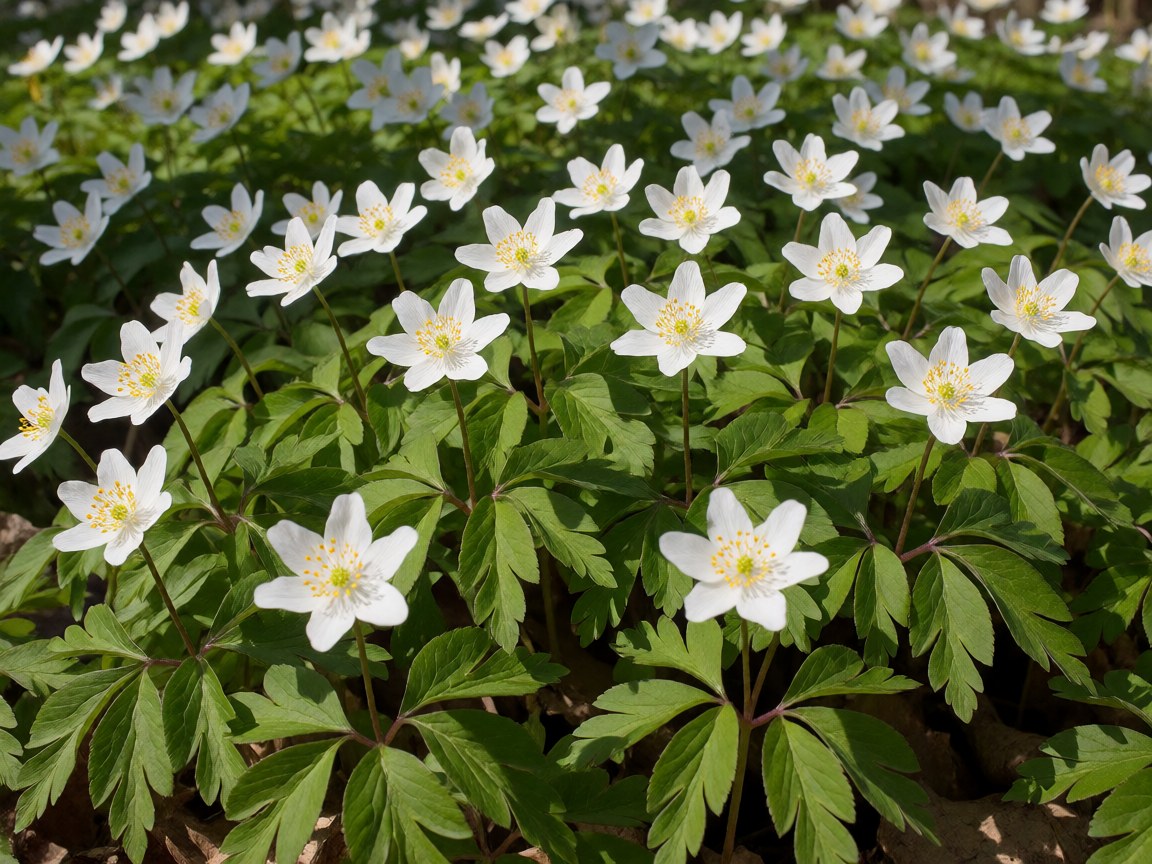
Anemone nemorosa | Wood Anemone
Introduction
The wood anemone (Anemone nemorosa) is the white, pink-flushed flower that carpets ancient woodland floor in spring, opening in sunshine and closing its petals against rain and dark. Each plant is a single nodding flower on a slender stem above a whorl of deeply cut leaves, and where conditions suit they spread in sheets that turn a bare wood white. It is one of the classic indicators of old woodland in Europe.
Taxonomy
Anemone nemorosa is a member of the family Ranunculaceae, the buttercup family, and belongs to the genus Anemone, which also contains the pasque flower and the sea anemone’s namesakes on land. It is a perennial herb growing from a creeping rhizome rather than a bulb. As a green plant it depends on Photosynthesis, and it has evolved to do that work in a great hurry, completing most of a year’s feeding in the few short weeks between the leaves opening and the canopy closing overhead.
Physical Characteristics
Each plant is a single flower, two to four centimetres across, borne on a slender stem five to thirty centimetres tall. The flower has six or seven petal-like sepals, usually pure white but often flushed pink or mauve on the outside, around a boss of yellow stamens. Below the flower sits a whorl of three deeply lobed, toothed leaves on separate stalks. Underground, a brown, branching rhizome creeps through the leaf litter and allows the plant to spread into dense patches.
Habitat
It grows on the floor of deciduous woodland, in hedgerows, and on shady banks and grassy slopes, favouring moist but well-drained, moderately rich soils. It is found across most of Europe and into western Asia. It is strongly associated with ancient woodland, and in northern and upland areas it also grows in open pasture and on moorland edges where trees are absent. It flowers from March to May, before the leaves on the trees fully open.
Diet
The plant is autotrophic, but on a compressed timetable. As soon as it emerges it begins photosynthesising hard in the full spring light, and the sugars it makes are moved down into the rhizome, which stores them to fund the following year’s growth. By early summer, once the canopy has shaded the woodland floor, the leaves die back completely and the plant survives underground on its reserves until the next spring.
Reproduction
The flowers are pollinated by early-flying insects—bees, hoverflies, and small flies—which visit for pollen, since the flower produces little nectar. The flower closes at night and in dull or wet weather, protecting the pollen, and reopens in sun. After flowering, small hairy seeds, or achenes, develop and are carried short distances by ants, which are attracted to a fatty body on the seed. Most spread, however, is vegetative: the rhizome branches steadily and builds a spreading colony.
Conservation
The species is still widespread and locally abundant, but it is one of the wildflowers most closely tied to ancient woodland, and it has declined where such woods have been cleared, ploughed, or replaced by conifer plantation. Because it spreads slowly—by rhizome growth and by ant-dispersed seed—it is very poor at recolonising new sites, so its presence is used as a strong signal that a wood is genuinely old.
Fun Facts
- The flower closes its petals at night and in wet weather, reopening in sunshine.
- It is a classic indicator of ancient woodland, since it recolonises new sites very slowly.
- The whole plant dies back completely by early summer and survives as an underground rhizome.
- Seeds are dispersed by ants, which carry them off for a fatty appendage on the seed.
- The flowers are often flushed pink or purple on the outside, especially in some regions.