 By Iris
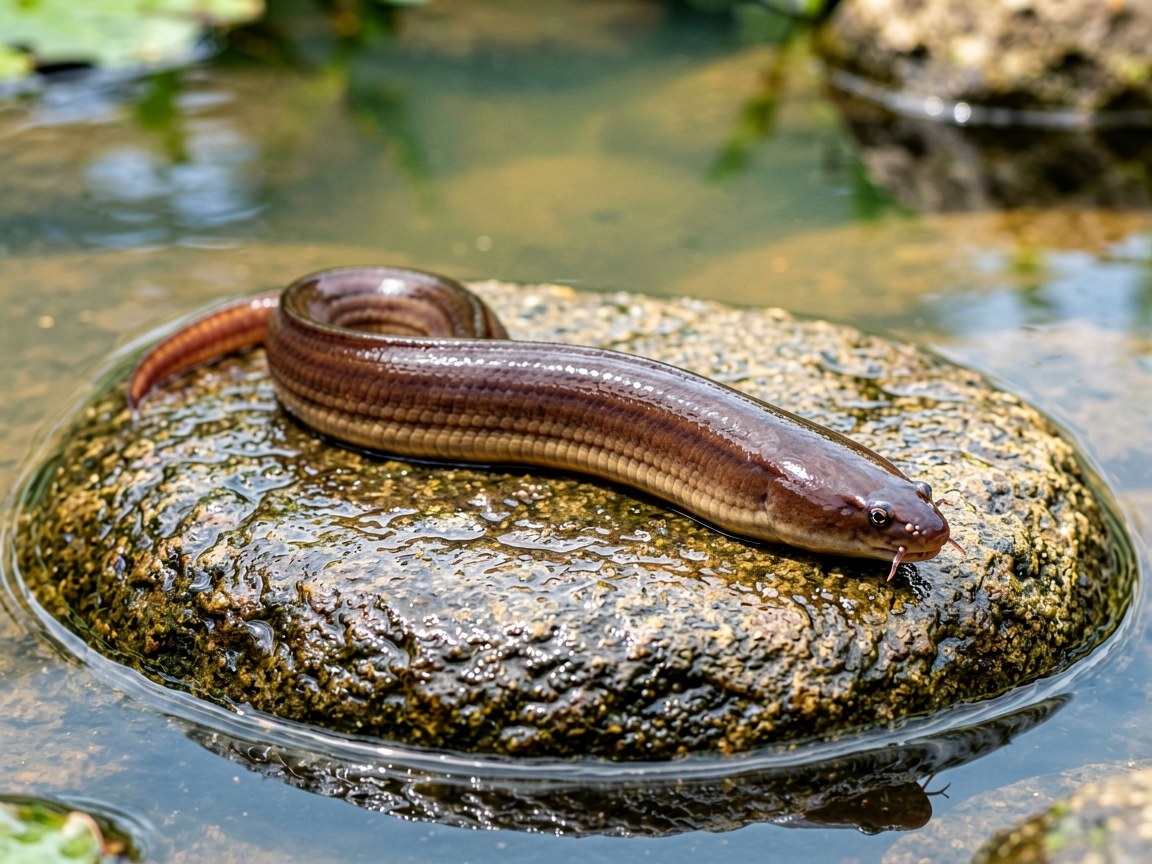
Erpobdella octoculata | Freshwater Leech
Introduction
The freshwater leech (Erpobdella octoculata) is a common, harmless leech of ponds, ditches, and slow streams—one of the small worms that glides through weedy water on a flat, sucker-backed body. Unlike the blood-sucking medicinal leech of legend, most individuals of this species are predators of small invertebrates, not parasites of people. Quietly numerous, it is a small but busy part of the freshwater food web and a relative of the earthworm.
Taxonomy
Erpobdella octoculata is an animal in the phylum Annelida—the segmented worms—within the class Hirudinea, the leeches. It is a close relative of Lumbricus terrestris, the earthworm, and like it is a segmented worm, though the leech’s segments are packed with muscles and topped by suckers rather than bristles.
Physical Characteristics
The freshwater leech is a soft, flattened, worm-like animal 3–6 cm long, usually brown or olive with darker mottling, and a smoother, broader body than an earthworm. At each end is a sucker—a small one at the head, a larger one at the tail—used to hold on and to inch along. It has no bristles; instead it loops by anchoring first one sucker then the other. Its skin is moist and slimy, and it bears several pairs of simple eyes near the head.
Habitat
These leeches live in still or slow fresh water—ponds, lakes, canals, and the margins of rivers—among weed, mud, and leaf litter where small prey hide. They tolerate a range of conditions and are common in both wild and garden ponds. They are most active in warm weather and hide under stones and plants when the water is cold or the pond dries at the edges.
Diet
Most Erpobdella leeches are predators and scavengers rather than blood-feeders. They seize tiny invertebrates—worms, insect larvae, and crustaceans—with their muscular pharynx and swallow them whole, or they scavenge dead animals. A few may take a blood meal from a prey animal, but they do not normally attack people. They are important recyclers of the pond’s small life, keeping the bottom clean.
Reproduction
Leeches are hermaphrodites, each carrying both male and female organs, and they mate by exchanging sperm. The freshwater leech lays small cocoons of eggs, which it fixes to stones, plants, or the pond bottom; the young hatch as miniature leeches. There is no free-swimming larva. Several broods may be produced through a warm season, and the worms can live for a year or more.
Conservation
The freshwater leech is abundant and not threatened; it is a normal, healthy part of ponds and slow waterways. Because it depends on unpolluted, oxygen-rich water and a supply of small prey, very degraded ponds may lack it, but in general it prospers wherever freshwater life does. As both predator and prey it links the tiny creatures of the mud to the fish and birds above.
Fun Facts
- Despite the reputation, this leech is mostly a predator of small invertebrates, not a blood-sucker of people.
- It moves by looping, anchoring first one sucker and then the other like a measuring worm.
- It is a close cousin of the earthworm, both being segmented worms.
- Its eggs develop in little cocoons stuck to stones and plants underwater.
- A single pond can hold large numbers of them among the weed.