 By st20113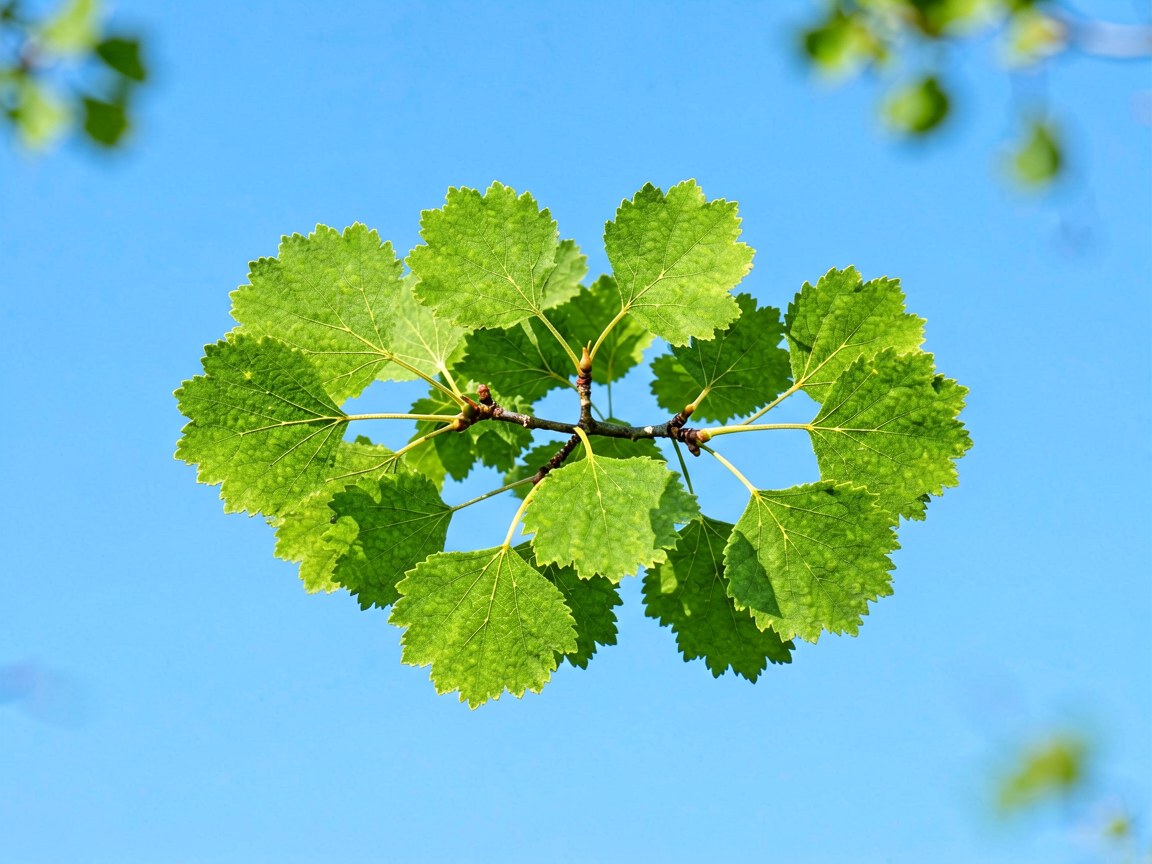
Populus tremula | Aspen
Introduction
Aspen (Populus tremula) is a slender poplar famous for leaves that tremble and rattle at the slightest breath of wind, thanks to their flattened leaf stalks. A tree of light, open woodland and disturbed ground across the cooler parts of Europe and Asia, it spreads not only by seed but by suckers that spring from its roots, forming whole groves that are really one connected clone. Quiet and silvery, it is one of the most distinctive sounds of the northern woods.
Taxonomy
Populus tremula is in the family Salicaceae, the willow family, within the genus Populus that holds the poplars and aspens. It is a close relative of the willows and of the black poplar. As a green plant it depends on Photosynthesis, using its rounded leaves to make the sugars that build its fast-growing wood and root system.
Physical Characteristics
Aspen is a deciduous tree usually 10–20 m tall, with a pale, smooth grey-green trunk and a narrow, open crown. The leaves are nearly round, 3–7 cm across, with a finely toothed edge and a flattened stalk that lets them quake in the wind. In spring the trees bear drooping catkins—male and female on separate trees—and the seeds are borne on cottony tufts like those of its willow cousins.
Habitat
Aspen favours light, well-drained soils and is a pioneer of cleared, burned, or disturbed ground, as well as open woodland and the edges of moor and mountain. It is hardy in cold climates and tolerates poor ground, sending up suckers that let it spread across a hillside. In the north it forms extensive, shimmering stands where few other broadleaves thrive.
Diet
Aspen is autotrophic. Its leaves carry out photosynthesis through the growing season, converting sunlight into the sugars that feed the tree. A wide, shallow root system gathers water and minerals from the soil. It takes no food from animals and depends only on light and moisture to grow.
Reproduction
Aspen reproduces two ways. It flowers in early spring, with wind-pollinated catkins releasing cottony seeds that drift on the wind. More importantly, its roots send up suckers that become new trunks—so a single tree can give rise to a grove of genetically identical stems sharing one root system. Some of these clonal groves are among the oldest and largest living organisms on Earth.
Conservation
Aspen is common and not threatened, though in some lowland areas its open habitats have been lost to farming and conifer planting. It is a valuable wildlife tree: its leaves feed caterpillars of many moths and butterflies, and the dead wood and fungi of old aspens support rare insects. Leaving room for natural regeneration and suckering helps maintain it.
Fun Facts
- Its leaves tremble because the leaf stalk is flat, not round, so even a light breeze sets them shaking.
- A whole aspen grove can be one tree, all stems joined by a single root system.
- Some aspen clones are thousands of years old, among the oldest living things on the planet.
- Its seeds ride the wind on little tufts of white fluff, like tiny dandelions.
- The pale trunk and quaking canopy make it one of the easiest trees to recognise.