 By st20113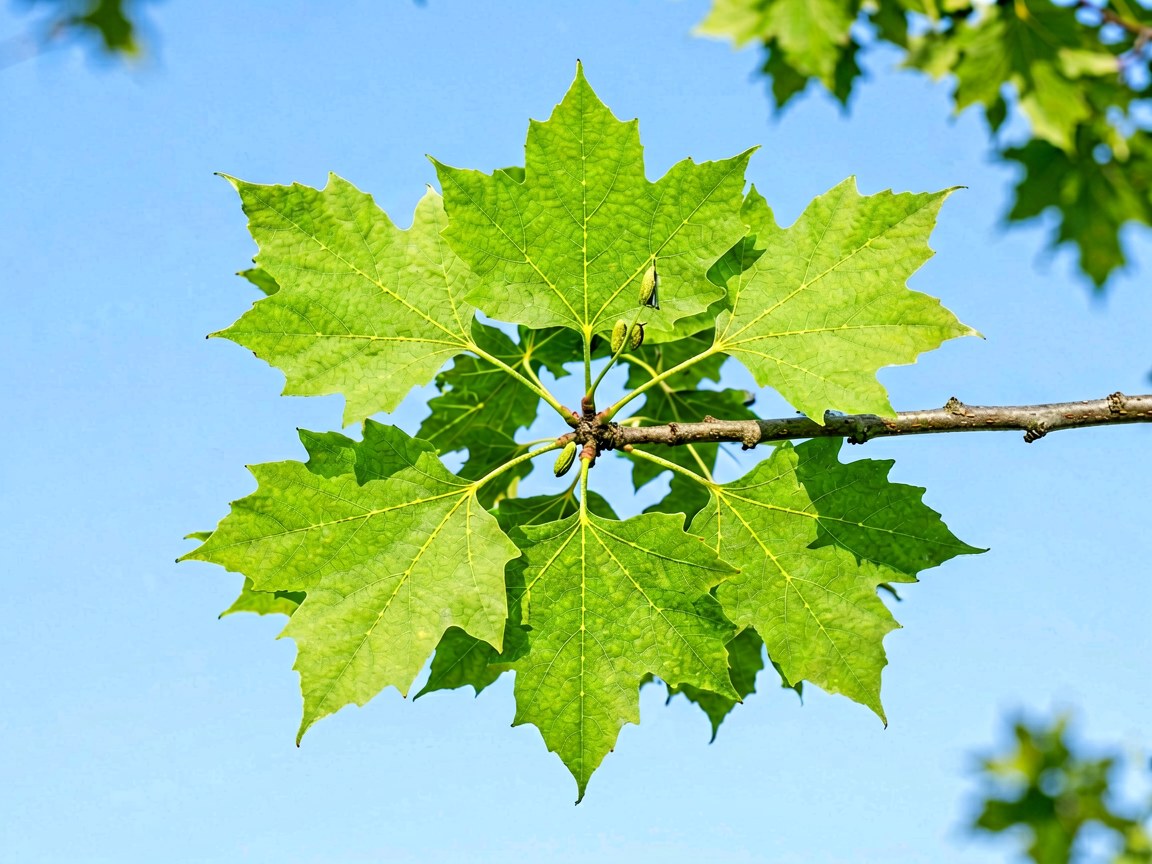
Acer pseudoplatanus | Sycamore
Introduction
Sycamore (Acer pseudoplatanus) is a broad, five-lobed leaf tree naturalised across much of Britain and Europe, prized for its toughness and its ability to grow almost anywhere. Despite the name it is not a true plane tree but a maple, and it is one of the commonest large trees of hedgerows, fields, and towns. Its seeds spin like tiny helicopters, and its dense canopy is a summer home for countless insects.
Taxonomy
Acer pseudoplatanus belongs to the family Sapindaceae, the soapberry family, within the genus Acer that holds the maples. It is sometimes called the “false plane” because its bark and leaves recall the London plane. Like all green plants it lives by Photosynthesis, using its broad leaves to capture sunlight and build the sugars that fuel its fast growth.
Physical Characteristics
Sycamore is a deciduous tree that can reach 20–35 m, with a straight trunk and grey bark that flakes in plates to show creamy patches. The leaves are large, 10–25 cm across, with five toothed lobes and a shiny dark-green upper side. In spring it bears hanging clusters of small greenish-yellow flowers; these ripen into paired, winged seeds—the familiar “helicopters”—that spin as they fall.
Habitat
Sycamore is remarkably unfussy. It grows on fertile lowland soils and on thin, rocky ground, in hedgerows, woodland edges, parks, and gardens, and it tolerates wind, shade, and pollution. It establishes readily from seed and is often one of the first trees to colonise disturbed ground, which is why it is so widespread in the cultivated landscape.
Diet
Sycamore is autotrophic. Through the spring and summer its leaves perform Photosynthesis, turning sunlight, water, and carbon dioxide into the carbohydrates the tree needs. A deep root system draws up minerals and moisture from the soil. It makes no food from animals and asks only for light and a foothold.
Reproduction
Sycamore is wind-pollinated, its dangling flower clusters shedding pollen in late spring. Each fertilised flower forms a pair of seeds, each with a wing that makes it spin like a propeller as it falls, carrying it some distance from the parent. Seedlings grow fast and the tree also sprouts from cut stumps, so a single tree can found a small grove within a few years.
Conservation
Sycamore is abundant and not threatened; in fact it is so successful that in some sensitive habitats it is considered invasive, shading out rare native plants. It is, however, valuable to wildlife, feeding aphids that in turn support ladybirds and birds, and its seeds feed finches. Managing it in the right places—rather than everywhere—is the key to balancing its benefits with conservation.
Fun Facts
- Its seeds are “helicopters” that spin as they fall, driftng farther from the parent tree.
- The name “sycamore” is a mix-up: it is a maple, not a plane tree.
- It can shoot up from a cut stump, so coppiced trees regrow readily.
- Its flowers feed early insects, and its leaves host dozens of species of caterpillars.
- The flaking bark reveals pale patches that make mature trunks easy to spot.