 By st20113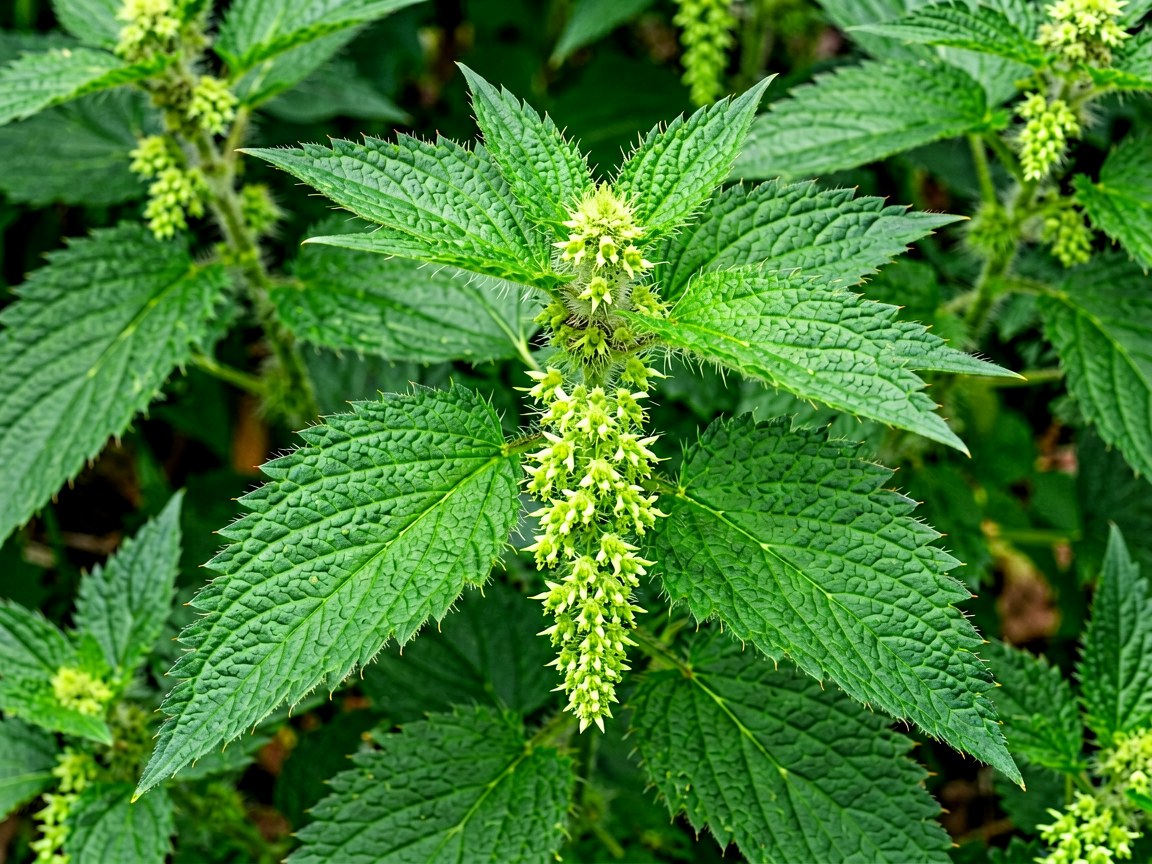
Urtica dioica | Stinging Nettle
Introduction
The stinging nettle (Urtica dioica) is a tall, hardy perennial herb whose leaves and stems are covered in hollow stinging hairs that deliver a painful, itchy rash on contact. Found across Europe, Asia, and much of North America on disturbed, nutrient-rich ground, it is far more than a nuisance: it is one of the most important food plants for butterflies and moths, a traditional source of fiber, tea, and soup, and a plant long valued for its nutritional and medicinal properties.
Taxonomy
Urtica dioica belongs to the family Urticaceae within the order Rosales. The species name “dioica” means “two houses,” referring to its dioecious habit: male and female flowers are borne on separate plants. It is the best known of about 80 nettle species worldwide. Like all green plants, it builds its tissues through Photosynthesis, using the chlorophyll packed into its dark green leaves.
Physical Characteristics
Nettles typically grow 1–2 meters tall from creeping yellow rhizomes that spread into dense stands. The erect, square stems carry opposite pairs of pointed, toothed, heart-based leaves 3–15 cm long, dark green and covered on both sides with stinging hairs. Each hair is a fragile, hollow, silica-tipped tube that breaks on contact and injects a cocktail of histamine, acetylcholine, serotonin, and formic acid. Tiny greenish flowers hang in drooping, branched clusters from the leaf axils.
Habitat
This species thrives on nitrogen-rich soils and is a classic colonizer of disturbed ground: field edges, ditches, hedgerows, waste ground, and woodland clearings. It often forms extensive patches in damp, fertile places, particularly where phosphate levels are high—which makes it a reliable indicator of nutrient enrichment. It grows in partial shade or full sun and is tolerant of a wide range of conditions.
Diet
The nettle is a photosynthetic plant, producing its own sugars from sunlight, water, and carbon dioxide while drawing mineral nutrients—notably nitrogen and phosphorus—from the soil. It requires nothing from other organisms. In the other direction, its leaves feed the caterpillars of many butterflies and moths, including the peacock, small tortoiseshell, red admiral, and comma, making it one of the most ecologically important plants in European meadows.
Reproduction
Because plants are either male or female, cross-pollination is required. The small, inconspicuous flowers are wind-pollinated, the males releasing clouds of pale pollen in summer that are carried to the dangling female catkins. Each fertilized flower produces a single small seed, and a single plant can set thousands. Nettles also spread aggressively by rhizome, so most large patches are effectively clonal and can persist for many decades.
Conservation
The stinging nettle is common and not threatened, but its abundance has declined in intensively farmed landscapes where fertilizers, herbicides, and the loss of field margins have reduced suitable habitat. Its conservation value lies in the butterflies it supports: patches of nettles in gardens, hedgerows, and reserves are now deliberately encouraged as butterfly habitat. Cutting nettles in rotation—rather than eradicating them—keeps both the plants and their caterpillars healthy.
Fun Facts
- The sting comes from a cocktail of histamine, acetylcholine, and formic acid injected through hollow, glass-like hairs.
- Nettle leaves are rich in iron, vitamin C, and protein, and have been eaten as soup and tea for centuries.
- Nettle fibers were woven into cloth in Bronze Age Europe and were still used for German army uniforms in the First World War.
- It is the larval food plant of at least four of Europe’s best-loved butterflies.
- Cooking or drying neutralizes the sting completely, which is why nettle soup and nettle tea are perfectly safe.
[…] plant shares the family with the Stinging Nettle. That family holds many species. Most of them carry stinging […]