 By Iris
Rissa tridactyla | Black-legged Kittiwake
Species Profile · Laridae
Black-legged Kittiwake
A small gull builds its nest on a ledge too narrow for a person to stand on.
Vulnerable
Length
Wingspan
Weight
Clutch
Incubation
Rating
The Black-legged Kittiwake
The gull that cannot perch
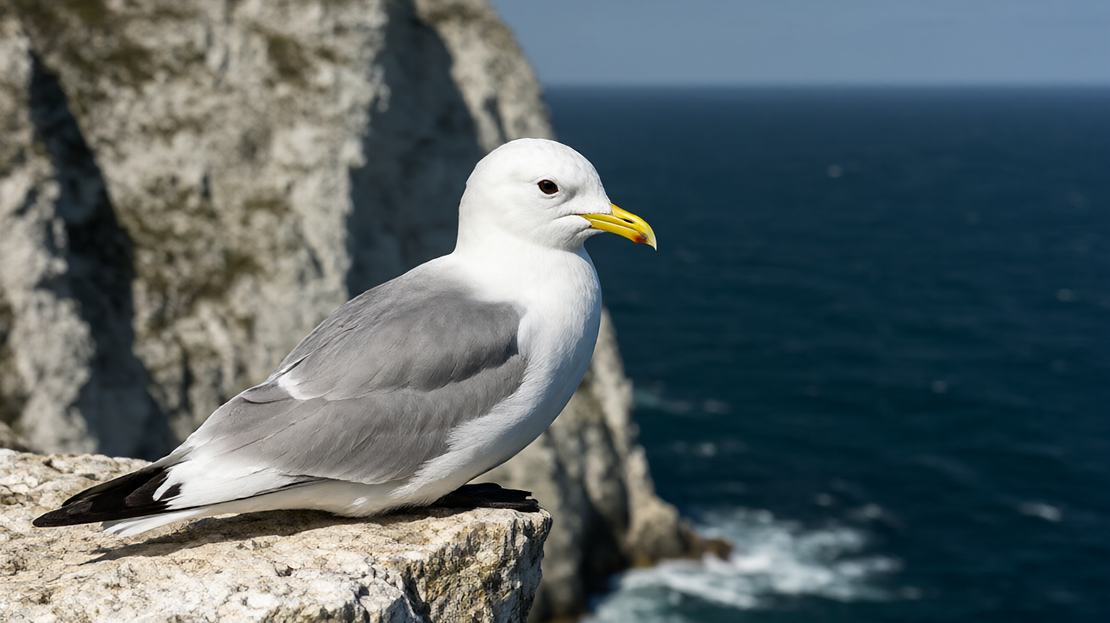
A small gull nests on a ledge no wider than a book. Below it the sea moves against a chalk cliff. The bird sits tight, and the nest holds.
Rock ledges give safety from foxes, though the drop punishes any slip. Kittiwakes spend most of the year over open water, far from any coast. Only in summer do they come ashore, and then only to breed.
Because the bird has almost no hind toe, it cannot perch in a tree. Its whole life on land is spent on a narrow shelf of rock.
Family tree
Laridae, the gulls
Its proper name is Rissa tridactyla, one of two kittiwakes in the world. The name means three-toed gull, and that foot is the group’s clearest mark. Two subspecies are accepted, one in the Atlantic and one in the Pacific. Pacific birds show a darker back and a slightly different wing pattern.
Gulls as a family include the large white-headed birds of harbours and rubbish tips. Kittiwakes split from that group long ago and took to the open sea. Because the family is so varied, the small size of this bird surprises many people.
Black tip, black foot
How to tell one
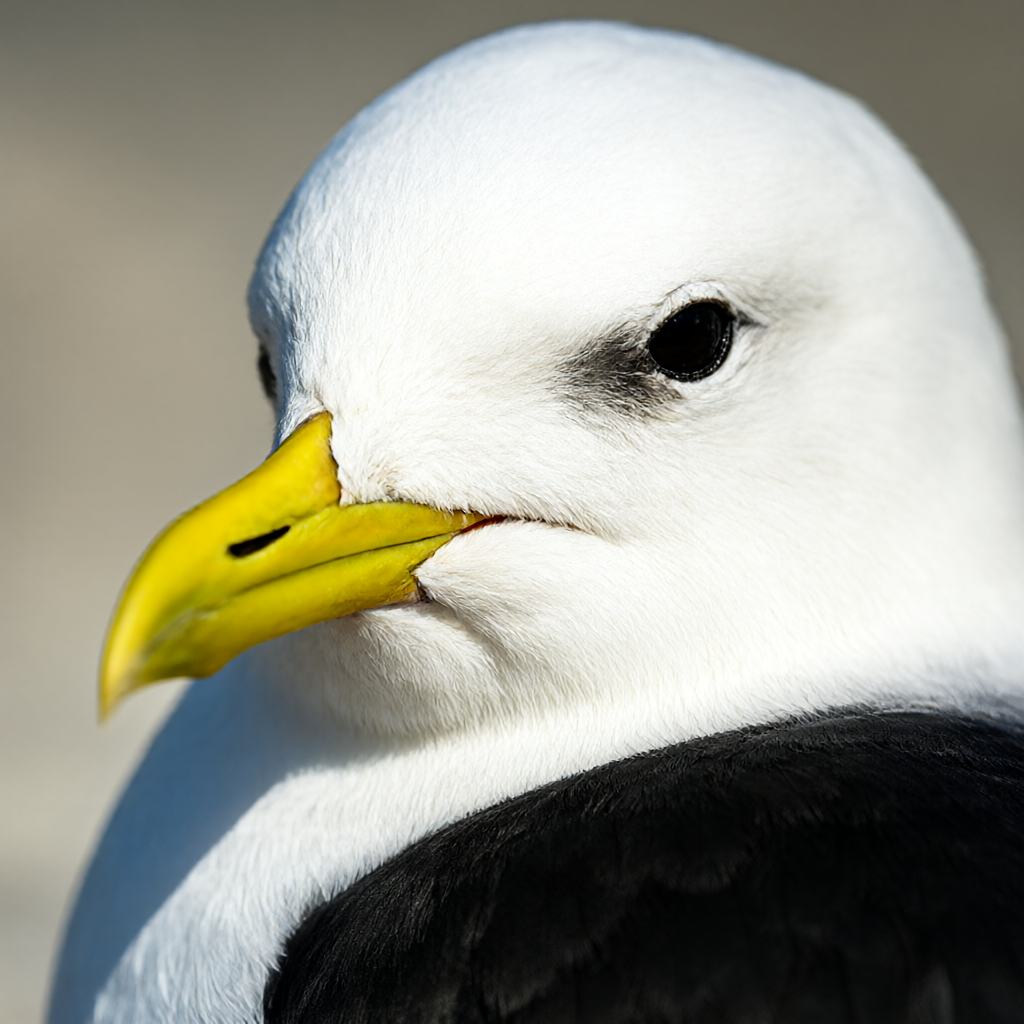
Adults measure 37 to 41 cm from bill to tail. Wings span 91 to 105 cm, which is small for a gull. Weight falls between 305 and 525 g. A pure white head sits above a pale grey back.
Wingtips stay solid black, with no white spots at all. That plain black tip separates it from most other gulls at any distance. The bill is yellow, and the legs run black. A hind toe has shrunk to almost nothing, and the bird cannot grip a branch.
Because the foot offers no anchor, kittiwakes never land on land away from the colony. Feathers stay dense and oily, and they shed water quickly. Young birds show a black band across the neck and a black line on the wing.
1
2
3
Cliff faces
Where it lives
Sea cliffs above cold water are the only nesting habitat. Chalk, basalt and granite all work, provided a ledge faces the open sea, and a single headland can hold tens of thousands of pairs. Winter takes the birds far offshore, sometimes beyond the shelf break.
Because the north Atlantic stays rich in fish, birds gather where cold currents rise. A few colonies sit on buildings and old walls, though this is unusual, and most pairs still choose bare rock above cold water. The penguin also nests on exposed rock in the far south, and both birds accept a hard ledge as home.
Fish at the surface
What it eats
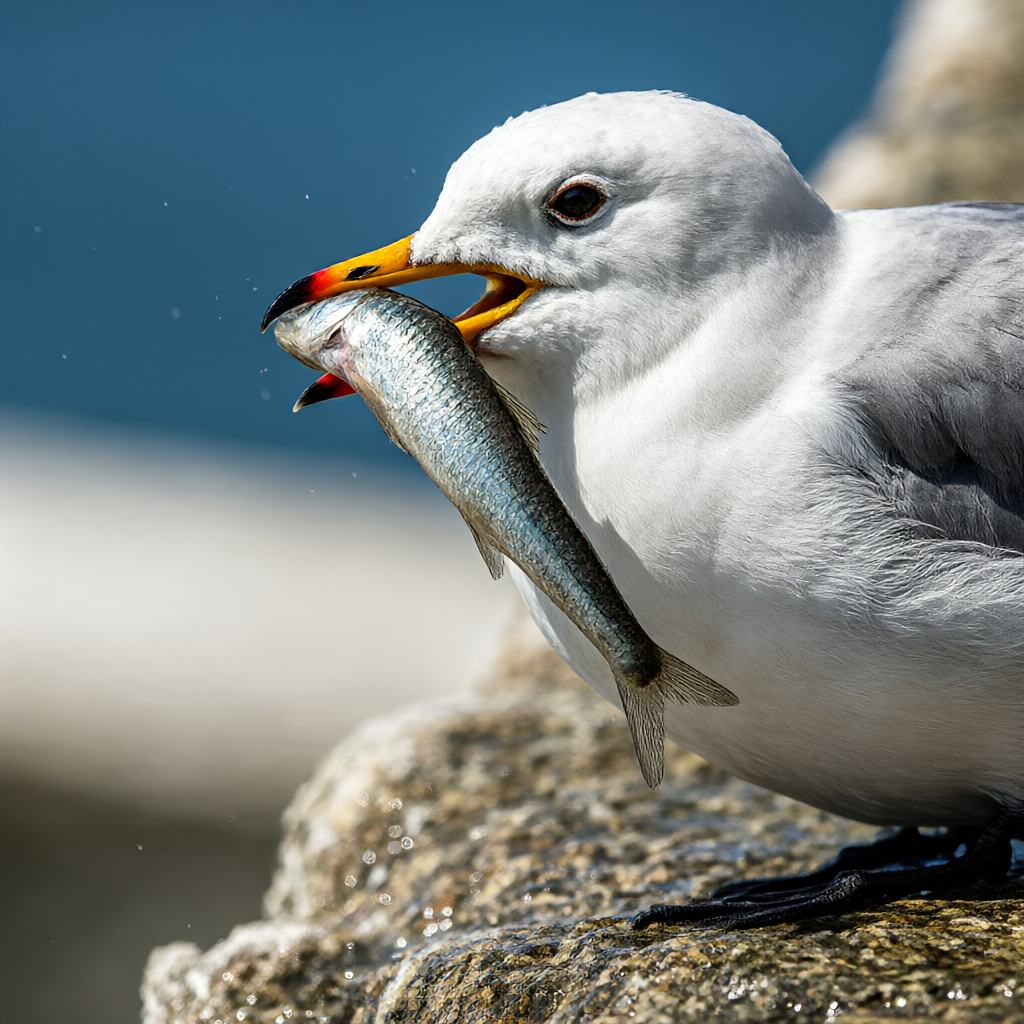
Small fish make up most of the food. Sand eels matter more than any other prey in the northeast Atlantic. Capelin and young cod get taken where sand eels are scarce, and the bird picks food from the surface without diving.
Sometimes it plunges a short way under, though never deep. Fishing boats draw birds, since discarded fish float. Because chicks need oily food, a poor sand eel year can ruin a whole season.
Kleptoparasitism happens often, and a feeding flock attracts skuas. A herring gull takes fish from the same water, though it works the surface and never dives deep.
Mud pressed on a ledge
The breeding cycle
A pair builds a cup of mud, grass and seaweed on the ledge. Mud pellets get carried in the bill and pressed into place, so the nest grows year on year into a solid mound. Two eggs is the usual clutch, sometimes one or three. Incubation lasts 25 to 32 days, shared by both birds.
Chicks hatch grey and downy, and they stay on the nest for five weeks. Fledging takes 34 to 40 days, and young birds then fly straight out to sea. Because pairs keep the same ledge, a colony can last a century.
Warming sea
Conservation
The Red List calls the species Vulnerable across its range. North Atlantic numbers have fallen sharply since the 1990s. Warming seas shift the plankton that sand eels depend on.
Because the fish move north, chicks starve in years when prey arrives late. Overfishing of sand eels removes the main food supply outright. Predation by great skuas and eagles adds pressure at some colonies, and protection covers breeding cliffs but never the open sea.
Side by side
How It Compares
| Trait | Black-legged Kittiwake | Penguin |
|---|---|---|
| Family | Laridae | Spheniscidae |
| Length | 37-41 cm | 40-115 cm |
| Flight | soars on long narrow wings | none, it swims instead |
| Breeding | mud cup on a cliff ledge | colony on open ground or ice |
| Feeding | fish picked at the surface | fish chased under water |
| Rating | Vulnerable | varies by species |
Common misreadings
What People Get Wrong
- Not a harbour gull. This bird feeds at sea and nests on cliff faces. It rarely lands anywhere else, and a kittiwake standing on a beach is usually sick or storm blown.
- Solid black tip. No white spots break the wingtip on this species. That plain panel separates it from most other gulls at any distance, though it shows even in poor light at sea.
- Not hunters. Warming water moves the fish the chicks depend on. When the shoals stay out of range the adults come back with nothing, and the young starve in a nest that no predator reached.
Going further
Sources and Further Reading
Quick hits
Five things to remember
- Its name means three-toed gull.
- It cannot perch in a tree.
- Nests sit on ledges a hand wide.
- It spends winter hundreds of km offshore.
- Colonies can hold 40,000 pairs.