 By Iris
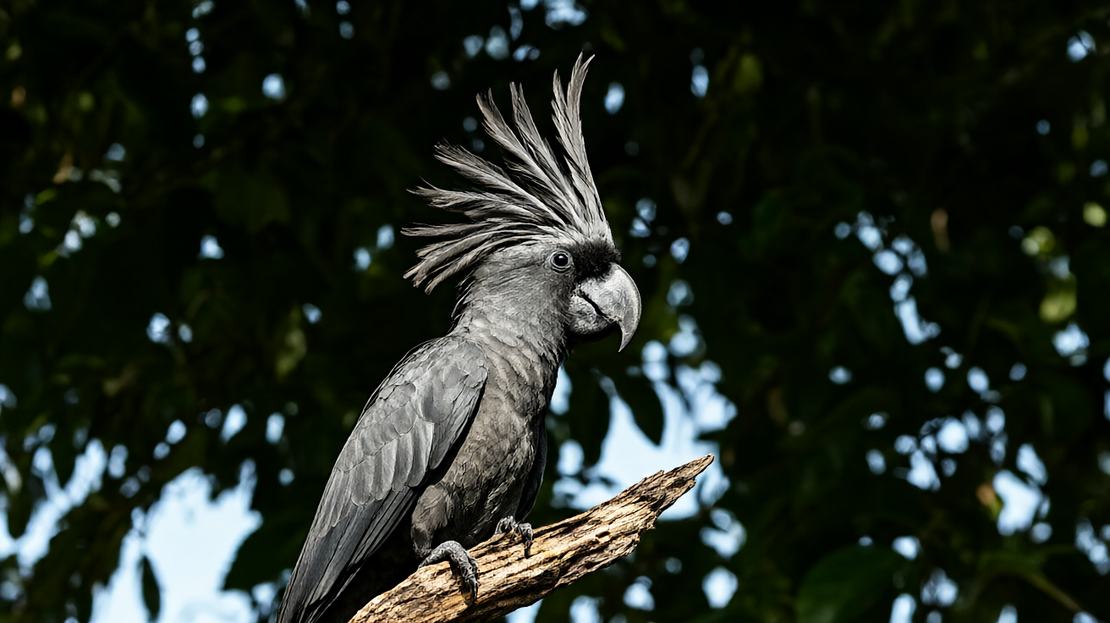
Probosciger aterrimus | Palm Cockatoo
Species Profile · Cacatuidae
Palm Cockatoo
A black cockatoo drums on a hollow limb with a stick it has chosen and carried.
Least Concern
Length
Weight
Clutch
Fledge
Bill
Rating
The Palm Cockatoo
The parrot that plays drums
A black cockatoo picks up a stick and beats it against a hollow limb. The rhythm carries through the forest, and other birds listen from the far side of the next valley. Tool use among birds is rare, and this species uses a drumstick.
Nothing about the bird is small except its range. A huge bill splits the hardest seeds, and bare red skin marks each cheek. Smoke grey plumage covers the whole body, and the crest rises when the bird is alert.
New Guinea holds most of the population, and Australia keeps a small outpost. Because the bird needs very old trees for both, logging removes nest hollows and drumming posts at the same time.
Family tree
Cacatuidae, the cockatoos
Its proper name is Probosciger aterrimus, and it stands alone in its genus. Cockatoos form a family of their own within the parrot order. Four subspecies are described, and they differ in size and bill shape. Cape York birds run smaller than those of the New Guinea lowlands.
Because the genus split from other cockatoos long ago, no close relative survives. Birds of the Aru Islands show the largest bill of all. Field workers still argue over how many of the forms deserve full species rank.
Bill, cheek and crest
How to tell one
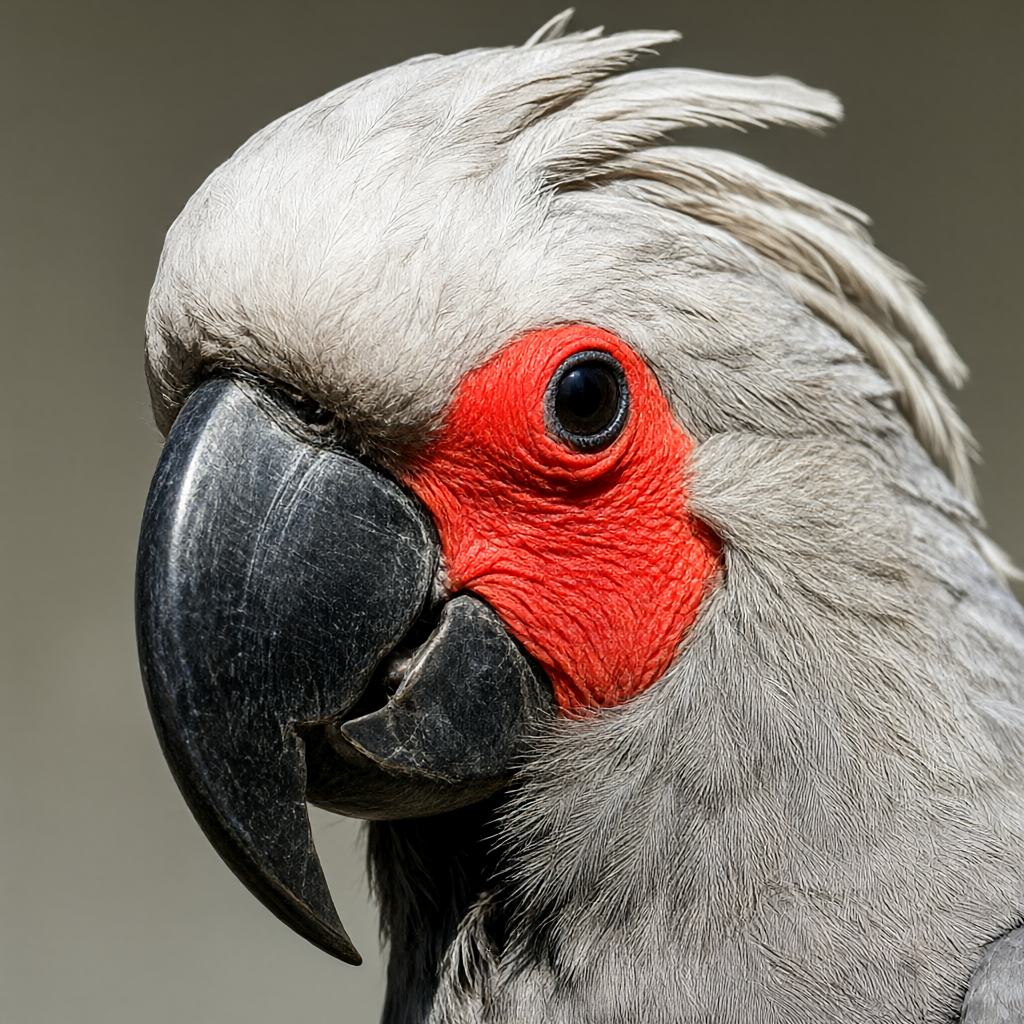
Adults measure 55 to 60 cm from bill to tail. Weight falls between 910 and 1,200 g, which makes it a heavy bird. The upper bill is enormous, and the lower one fits inside it. Bare red skin stretches across each cheek, and it flushes when excited.
A tall crest of narrow feathers stands up at the least disturbance. Plumage appears black at distance, though it is really a smoky grey. The bill works like a clamp, since the bird must hold a hard nut steady while the lower edge cuts through it. Two toes point forward and two back, which gives a strong grip.
Females show a paler bill and a smaller cheek patch than males. Because the bird is so large, it needs a wide hollow in an old tree.
1
2
3
Rainforest edge
Where it lives
Lowland rainforest is the main habitat, and so is forest edge. Gallery woodland along rivers holds birds where big trees remain. Cape York populations live in open woodland with scattered old eucalypts. Because a pair needs a hollow of great size, only ancient trees will do.
Logging also removes the dead limbs used for drumming. Most nests sit below 1,000 m, and the highest records come from hill forest. A sulphur-crested cockatoo feeds in the same open forest, though it never drums on a limb.
Nuts and seeds
What it eats
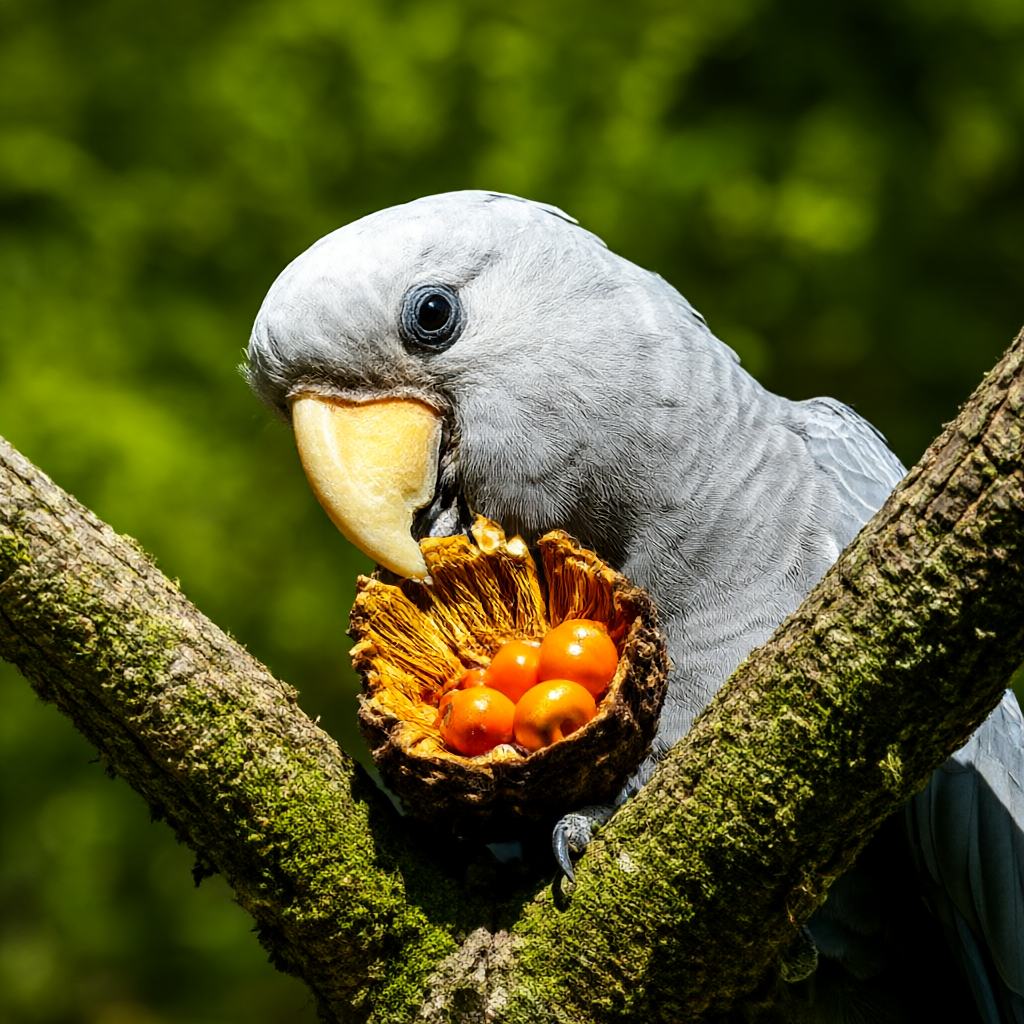
Pandanus fruit is the staple, and palm nuts follow close behind. Hard seeds get split with the bill, and the bird wastes very little. Berries and tree buds add variety in the wet season, while figs fill the gaps between fruit crops. Because the bird feeds high in the canopy, fallen scraps give away its presence.
A fruiting tree draws birds from far away. Few rivals can open them. The peacock is another large bird with a striking display, though it shows colour rather than sound.
One egg in a hollow
The breeding cycle
Pairs keep one hollow for years. The nest sits deep inside a dead or living trunk, well above the ground. One egg is laid on bare splinters.
No lining gets added. Incubation lasts about 30 days, and the female does most of it. Chicks stay in the hollow for over 100 days, which is long for a parrot.
Young birds follow their parents for months. Because breeding is so slow, a pair raises only one young in most years, and rarely two.
Trees lost to clearing
Conservation
The Red List calls the species Least Concern globally. Numbers fall where forest is cleared, and the Australian population is small. Trapping for the cage trade removed many birds in the past century. Because a pair needs a huge hollow, and such trees are cut first, the species cannot recover quickly.
Cape York holds only a few thousand birds at most, and every active nest gets watched through the season. Fire damages old trees that would otherwise last for a century. Protection now covers the trade, though habitat loss continues across New Guinea.
Side by side
How It Compares
| Trait | Palm Cockatoo | Peacock |
|---|---|---|
| Family | Cacatuidae | Phasianidae |
| Length | 55-60 cm | body 90-110 cm with train |
| Display | drums on a limb with a stick | fans the trained tail |
| Voice | whistles and harsh calls | loud far carrying calls |
| Nest | one egg in a deep hollow | scrape hidden in cover |
| Rating | Least Concern | Least Concern |
Common misreadings
What People Get Wrong
- Not random noise. Each male keeps a favourite stick and a steady tempo. He trims the tool before use, and the sound travels through rainforest well beyond the territory he defends.
- Not the same patch. The female carries a smaller cheek patch and a paler bill. Both sexes flush red when excited, which makes the difference easy to miss at a distance in bad light.
- It cannot cut. The pair needs an old tree that already holds a hollow. Once the trunk falls no replacement appears for decades, and breeding stops until another giant reaches the right age.
Going further
Sources and Further Reading
Quick hits
Five things to remember
- It drums on trees with a stick.
- Its cheeks blush when excited.
- One egg is laid in a deep hollow.
- Chicks stay in the nest for months.
- It has the largest bill of any cockatoo.