 By st20113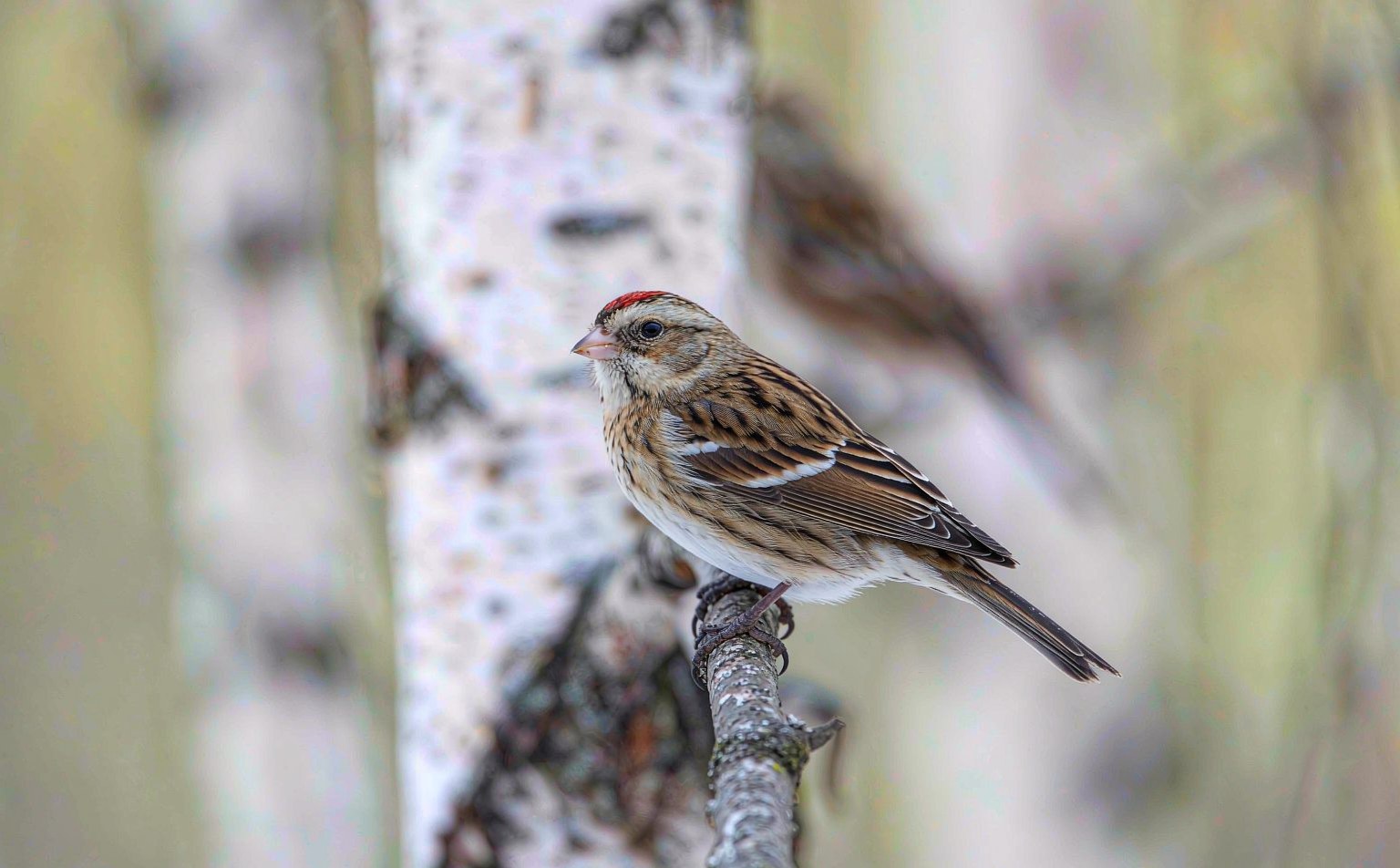
Acanthis flammea | Common Redpoll
Introduction
The Common Redpoll (Acanthis flammea) is a small, cheerful finch belonging to the family Fringillidae, one of the most diverse and widespread families of passerine birds. Measuring approximately 12–13 cm in length with a wingspan of 19–22 cm, this bird is easily recognized by the male’s distinctive red frontal patch, black chin spot, and heavily streaked brown plumage. The Common Redpoll is one of the northernmost breeding birds in the Palearctic, found across boreal and montane habitats from Iceland and Scandinavia eastward across Siberia to Alaska.
The species is strongly associated with open woodland, birch scrub, and heathland, particularly in northern and mountainous regions where it breeds during the summer months. During winter, Common Redpolls undertake irregular irruptive migrations southward, appearing in large numbers across much of Europe and North America in years when food supplies are poor in their northern breeding grounds. These irruptions have made the Common Redpoll one of the most familiar winter birds across temperate regions.
The Common Redpoll has a long history of captivity in Europe, where it was one of the most popular caged birds during the 19th century. The bird’s cheerful disposition, beautiful song, and hardy constitution made it a favorite among bird keepers, and captive-bred individuals were widely traded across the continent. Wild captures continue in some parts of the species’ range, though conservation concerns have led to restrictions on trapping in many countries.
Taxonomy
The Common Redpoll was first described by Carl Linnaeus in his seminal Systema Naturae in 1758, under the binomial name Fringilla flammea. It was later transferred to the genus Acanthis, which encompasses a small group of finches characterized by their conical bills and seed-eating habits. The genus name derives from Greek akanthis (meaning “thistle finch”), referring to the bird’s association with thistle seeds. The specific epithet flammea means “flame-colored,” referring to the red frontal patch of the male.
Historically, the Common Redpoll was considered conspecific with the Greater Redpoll (Acanthis hornemanni), but molecular phylogenetic studies have confirmed that these are distinct species. The Common Redpoll is recognized as monotypic, with no subspecies currently accepted by major taxonomic authorities. However, some authorities recognize the Hoary Redpoll (Acanthis hornemanni) as a separate species, while others maintain it as a subspecies of the Common Redpoll.
For contextual comparison, the Common Redpoll shares habitat preferences with the Common Chaffinch (Fringilla coelebs), though the two species can be distinguished by their plumage, with the Common Redpoll displaying distinctive red forehead and streaked brown appearance compared to the Common Chaffinch’s more colorful male plumage with pink breast and grey crown. Both species are associated with open habitats, but the Common Redpoll is more northerly in its distribution.
Physical Characteristics
The male Common Redpoll in breeding plumage is a strikingly patterned bird, with a red frontal patch, black chin spot, and heavily streaked brown upperparts and underparts. The crown is brown with black streaks, and the face is marked with a bold black cheek patch bordered by white. The wings are brown with two prominent white wing bars, and the tail is square-tipped and brown with white outer feathers. The bill is short, conical, and pointed, with a dusky upper mandible and a paler lower mandible. The legs and feet are dark brown to black, relatively short and adapted for perching on thin branches.
The female and juvenile Common Redpoll are more subdued in coloration, displaying brown streaked upperparts and pale buff underparts with faint streaking on the breast. The female lacks the red frontal patch and black chin spot of the male, instead showing a plain brown head with a weak supercilium. Juvenile birds are similar to females but duller and more heavily streaked, with less distinct coloration and a more variable pattern of brown and buff.
In flight, the Common Redpoll displays broad, rounded wings and a relatively short, square-tipped tail. The white wing bars are conspicuous, particularly in flight, and the tail feathers show faint white edging. The bird’s flight is direct and undulating, with rapid wing beats alternating with brief glides as it moves between perches. The overall appearance is that of a typical finch, with a compact body, relatively short wings, and a conical bill adapted for cracking seeds.
Measurements of adult Common Redpolls typically include a total length of 120–130 mm, a wing chord of 58–68 mm, a tail length of 45–52 mm, and a bill length of 8–10 mm. Body mass ranges from 11 to 17 grams, with males averaging slightly heavier than females during the breeding season. The bird’s sexual dichromatism is moderate, with the male’s red frontal patch providing a distinctive contrast to the female’s more cryptic plumage.
Habitat
The Common Redpoll is associated with open woodland, birch scrub, and heathland, particularly in northern and mountainous regions. The preferred habitat includes birch woodland, juniper scrub, and open heathland where seeds from birch, alder, and other trees are abundant. The vegetation must provide suitable nesting sites, either in dense scrub or low trees, as well as an abundant supply of seeds for foraging throughout the year.
Common Redpolls breed across a vast range that extends from Iceland and Scandinavia eastward across Siberia to Alaska. In Europe, the species is found primarily in Iceland, Norway, Sweden, and Finland, with scattered populations in Scotland and the Cairngorms. The northern boundary of the breeding range extends into the Arctic tundra, while the southern limit follows the tree line across Scandinavia and Russia.
During winter, Common Redpolls undertake irregular irruptive migrations southward, appearing in large numbers across much of Europe and North America in years when food supplies are poor in their northern breeding grounds. These irruptions are unpredictable and can result in mass movements of birds across vast distances, making the Common Redpoll one of the most familiar winter birds across temperate regions.
The conservation status of the Common Redpoll is generally favorable, reflecting its wide distribution across northern habitats. The species is listed as Least Concern on the IUCN Red List, and populations have remained relatively stable across much of its range. However, climate change poses a significant threat, with rising temperatures potentially reducing the extent of suitable boreal and montane habitats across the species’ range.
Diet
The Common Redpoll is a granivorous species that feeds primarily on seeds throughout the year. The diet consists of seeds from birch, alder, birch, and other trees, as well as weeds, herbs, and agricultural crops. During the breeding season, insects form an important supplement to the seed-based diet, particularly for feeding growing chicks. The bird’s conical bill is well-adapted for cracking seeds, and it forages primarily in trees and shrubs, though it also feeds on the ground.
Foraging behavior in the Common Redpoll is characterized by a “seed-gleaning” strategy combined with occasional insect catching. The bird feeds primarily in trees and shrubs, picking up seeds from catkins, seed heads, and low branches. It also gleans insects from leaves and stems during the breeding season, particularly when feeding chicks. The bird’s relatively short legs and strong feet are well-adapted for perching on thin branches, allowing it to hang upside down and access seeds hidden within foliage.
Nesting birds have particularly high energy demands, and the parents must capture large quantities of insects in addition to seeds to feed themselves and their growing chicks. A nesting pair of Common Redpolls may consume thousands of insects during the breeding season, playing an important role in regulating invertebrate populations within boreal and montane habitats. The bird’s preference for larger, more nutritious prey items such as caterpillars and beetles ensures efficient energy transfer through the food web.
During migration and winter, the Common Redpoll relies primarily on seeds from trees and shrubs, particularly birch, alder, and birch. This dietary specialization on tree seeds has made the Common Redpoll both a beneficiary and a victim of habitat change, as fluctuations in seed crops can trigger irruptive migrations southward. The bird’s ability to exploit a range of seed sources is a key adaptation that supports its survival across diverse habitats.
Reproduction
The Common Redpoll is a pair-bonding species that establishes breeding territories within birch scrub and open woodland during spring. Males arrive on breeding grounds in April and May, depending on latitude, and begin singing almost immediately to attract mates and establish territory boundaries. The male’s song is a sweet, warbling melody delivered from a prominent perch within the vegetation, and is repeated incessantly throughout the day during the breeding season.
Nest construction is undertaken solely by the female, who builds an intricately woven cup-shaped structure from grass stems, moss, and plant down, secured firmly within dense birch scrub or low tree. The nest is typically placed 1–3 meters above the ground, hidden deep within the impenetrable tangle of branches and leaves where it is well concealed from predators. The interior of the nest is lined with fine grass, hair, feathers, and plant down, providing insulation and comfort for the incubating female and subsequent brood.
The typical clutch size is 4–6 eggs, though clutches of 3–7 eggs are not uncommon. The eggs are pale blue to whitish with fine reddish-brown speckles, measuring approximately 16–19 mm in length. Incubation lasts 11–13 days and is undertaken solely by the female, who is fed by the male during this period. The chicks are altricial and naked at hatching, with their eyes closed and dependent on parental care for warmth and food.
Both parents feed the chicks, with insects forming an important component of the diet during the nestling period. The nestling period lasts approximately 12–14 days, after which the young fledge and remain dependent on their parents for an additional 1–2 weeks while they learn to forage. Common Redpolls are usually univoltine, producing a single brood per season, though second broods are occasionally recorded in favorable years with abundant food resources. The species typically begins breeding in its second year of life, reaching sexual maturity at approximately 12 months of age.
Conservation
The global population of the Common Redpoll is estimated at 15–25 million individuals, making it one of the more abundant finches across its northern range. The species is listed as Least Concern on the IUCN Red List, reflecting its wide distribution and generally stable population trends across much of its range. However, climate change poses a significant threat, with rising temperatures potentially reducing the extent of suitable boreal and montane habitats across the species’ range.
The primary threat to Common Redpoll populations is habitat loss due to climate change. Throughout the northern range, rising temperatures are causing the tree line to move northward, reducing the extent of suitable birch scrub and open woodland habitats. Changes in precipitation patterns may also affect seed production and the timing of insect emergence that breeding birds depend upon. In southern parts of the range, habitat loss due to afforestation and agricultural intensification may also contribute to population declines.
Conservation efforts for the Common Redpoll focus on the protection and management of boreal and montane habitats. In Scandinavia and Iceland, organizations such as the Norwegian Institute for Nature Research (NINA) and the Icelandic Environment Agency monitor populations and promote habitat protection measures. Across the species’ range, Common Redpolls are protected under the European Union Birds Directive and the African-Eurasian Migratory Waterbird Agreement, and many suitable habitats are designated as protected areas under the Natura 2000 network.
The continued abundance of Common Redpoll populations depends on maintaining the extensive networks of boreal and montane habitats that support its lifecycle across northern latitudes. The species’ ability to undertake irruptive migrations suggests that it may persist in agricultural landscapes where suitable habitat is maintained, particularly through conservation of remaining boreal forests and montane scrub habitats.
Fun Facts
- The Common Redpoll is one of the northernmost breeding birds in the Palearctic, found across Arctic and sub Arctic habitats from Iceland and Scandinavia eastward across Siberia to Alaska. The species is remarkably resilient to cold temperatures, withstanding winter conditions that would be lethal to many other bird species.
- Male Common Redpolls are territorial and aggressive during the breeding season, frequently engaging in aerial duels with rival males. These displays involve rapid, undulating flight combined with singing, and the winner typically secures the best territory and attracts the most mates.
- The nest of the Common Redpoll is one of the most intricately constructed cup-shaped nests in the European avifauna. It is typically built within dense birch scrub or low tree and can weigh up to 15 grams when dry, constructed from hundreds of individual grass stems and plant down woven together with remarkable precision.
- Common Redpolls are highly social outside the breeding season, often forming large flocks that can include hundreds of individuals. These flocks frequently mix with other finch species, creating mixed-species foraging groups that exploit seed resources efficiently.
- The Common Redpoll’s irruptive migrations are among the most unpredictable of any bird species, with mass movements occurring in response to fluctuations in seed crops across the northern range. These irruptions have made the Common Redpoll one of the most familiar winter birds across temperate Europe and North America.