 By st20113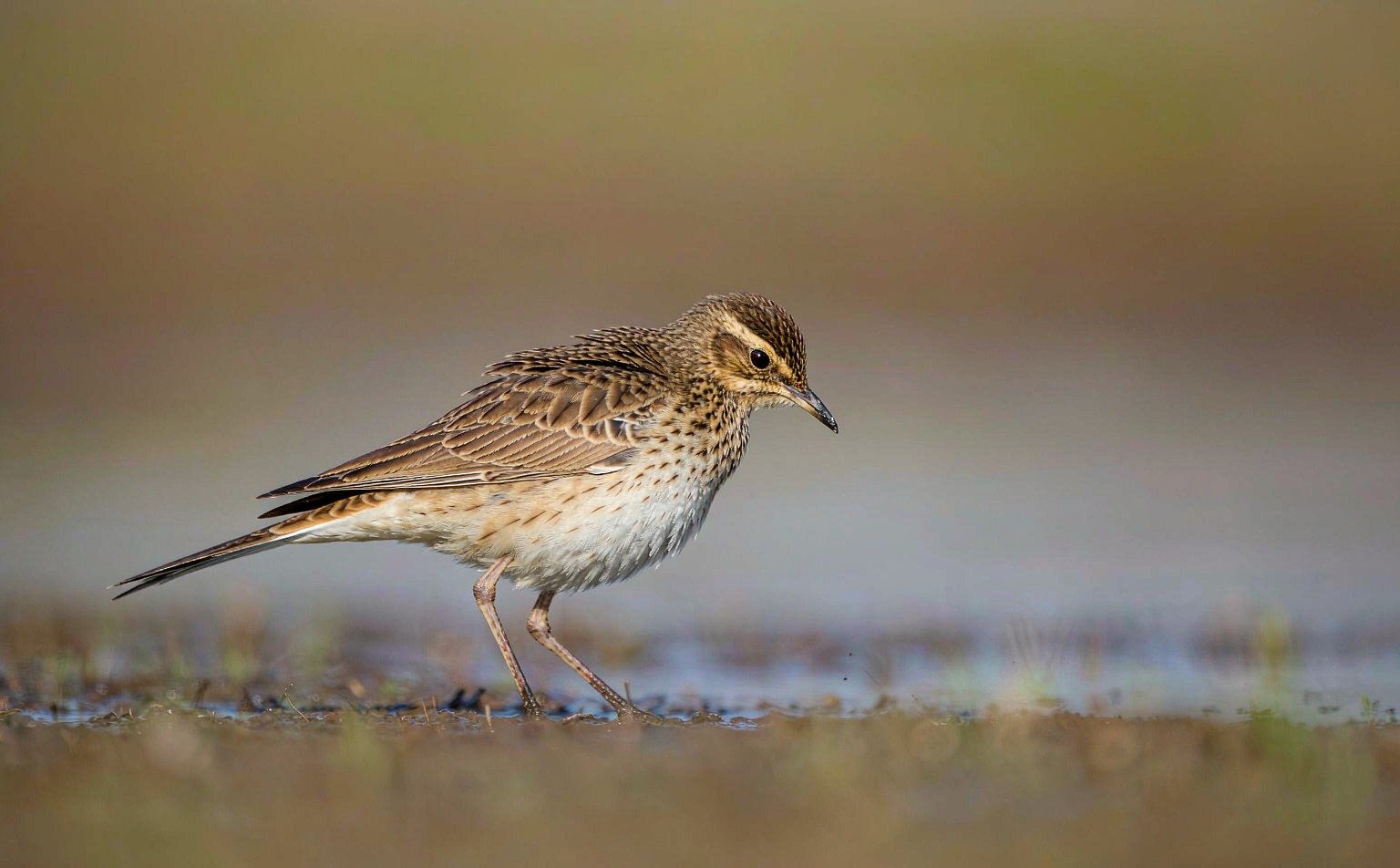
Anthus richardi | Richard’s Pipit
Introduction
Richard’s Pipit (Anthus richardi) is a medium-sized, robust pipit belonging to the family Motacillidae, a group of wagtails and pipits found across the Northern Hemisphere. Measuring approximately 18–21 cm in length with a wingspan of 28–33 cm, this bird is one of the largest pipits in the Old World and is easily recognized by its substantial size, heavy streaking, and relatively long legs. The Richard’s Pipit is strongly associated with open, wet habitats such as marshes, wet meadows, and coastal saltmarshes, where it forages among low herbaceous vegetation.
The species is a long-distance migrant that breeds across central and eastern Asia, migrating to winter quarters in eastern Africa, the Indian subcontinent, and Southeast Asia. Richard’s Pipit is considered a rare vagrant to western Europe, with only a handful of records from the British Isles and continental Europe each decade. These rare appearances have made each sighting a significant event for birdwatchers and ornithologists.
Richard’s Pipit was named after the Russian naturalist and collector Nikolai Richard, who collected the first specimens of the species in the Russian Far East during the 19th century. The bird’s distinctive appearance and rare status in western Europe have made it a target species for dedicated birdwatchers who follow rare bird alerts across the continent.
Taxonomy
Richard’s Pipit was first described by Charles Lucien Bonaparte in 1850, under the binomial name Anthus richardi. The genus Anthus encompasses a diverse group of pipits found across the Old and New Worlds, with the name deriving from Ancient Greek anthos (meaning “flower”), possibly referring to the bird’s preference for flowering meadows and grasslands. The specific epithet richardi honors Nikolai Richard, the Russian naturalist after whom the species is named.
The Richard’s Pipit is recognized as a monotypic species, with no subspecies currently accepted by major taxonomic authorities. Molecular phylogenetic studies have confirmed that the species belongs to the genus Anthus, which is distinct from related genera such as Oenanthe (wheatears) and Certhia (treecreepers). Richard’s Pipit is most closely related to the Meadow Pipit (Anthus pratensis) and the Tree Pipit (Anthus trivialis), though it is significantly larger and more robust than these species.
For contextual comparison, Richard’s Pipit shares open habitats with the Song Thrush (Turdus philomelos), though the two species can be distinguished by their size and plumage, with Richard’s Pipit being significantly larger and more heavily streaked compared to the Song Thrush’s more moderate size and different streaking pattern. Both species are associated with open habitats, but Richard’s Pipit prefers wetter, more herbaceous areas while the Song Thrush favors woodland edges and gardens.
Physical Characteristics
Richard’s Pipit is a large, robust pipit with heavy streaking and relatively long legs. The plumage is predominantly brown with heavy black streaking on the upperparts and underparts. The crown is brown with a weak central streak, and the face is marked with a prominent pale supercilium that extends from the base of the bill above the eye and merges with the buff malar stripe. The wings are brown with two prominent pale wing bars, and the tail is brown with white outer feathers that are visible in flight.
The bill is relatively long, straight, and pointed, with a dusky upper mandible and a paler lower mandible. The legs and feet are dark brown to black, relatively long and adapted for terrestrial foraging. The overall appearance is that of a typical pipit, but significantly larger and more robust than most other European species. In flight, Richard’s Pipit displays broad, rounded wings and a relatively long tail that is often fanned when landing.
Juvenile birds are similar to adults but duller and more heavily streaked on the underparts, with less distinct coloration and a more variable pattern of brown and buff. The plumage of juveniles also tends to be softer and less structured than that of adults, reflecting the more downy texture of their first coat. The overall appearance is deliberately cryptic, providing effective camouflage among the brown and green vegetation of wetland habitats.
Measurements of adult Richard’s Pipits typically include a total length of 180–210 mm, a wing chord of 90–105 mm, a tail length of 75–90 mm, and a bill length of 14–17 mm. Body mass ranges from 35 to 55 grams, making it one of the largest pipits in the Old World. The bird’s substantial size and heavy streaking distinguish it from all other pipit species found in western Europe.
Habitat
Richard’s Pipit is associated with open, wet habitats such as marshes, wet meadows, coastal saltmarshes, and flooded grasslands. The preferred habitat consists of extensive areas of low herbaceous vegetation that provide suitable nesting sites and an abundant supply of insects for foraging. The vegetation must be sufficiently dense to provide cover from predators and suitable material for nest construction, and it must be adjacent to open water or damp ground for foraging.
Richard’s Pipits breed across a vast range that extends from central Asia across Siberia to the Russian Far East and northeastern China. In Asia, the species is found from Kazakhstan and Mongolia eastward through Siberia to the Sea of Okhotsk and the Korean Peninsula. The northern boundary of the breeding range extends into the Arctic tundra, while the southern limit follows mountain ranges and river valleys across central Asia.
During migration and winter, Richard’s Pipit undertakes a long-distance journey to eastern Africa, the Indian subcontinent, and Southeast Asia, where it spends the non-breeding season in wetlands, agricultural fields, and coastal habitats. The migration route takes birds southward through central Asia and the Middle East, with some populations dispersing across the Indian subcontinent and others reaching as far south as eastern Africa.
The conservation status of Richard’s Pipit is generally favorable, reflecting its wide distribution across central and northern Asia. The species is listed as Least Concern on the IUCN Red List, and populations have remained relatively stable across much of its range. However, the species remains dependent on wetland habitats, which have declined in some areas due to drainage and habitat management.
Diet
Richard’s Pipit is an insectivorous species that feeds primarily on insects and other invertebrates during the breeding season. The diet consists of beetles (Coleoptera), flies (Diptera), moths and butterflies (Lepidoptera), grasshoppers and crickets (Orthoptera), spiders (Araneae), and other small invertebrates. The bird forages by walking and hopping through low vegetation, gleaning prey from stems, leaves, and the soil surface. Richard’s Pipit is a ground-foraging specialist, spending much of its time moving through wetland vegetation in search of food.
Foraging behavior in Richard’s Pipit is characterized by a “walk-and-glean” strategy combined with occasional sallies for flying insects. The bird moves steadily through the vegetation, pausing frequently to inspect stems and leaves and turn over small debris. It also makes short flights to catch insects on the wing, particularly during warm weather when flying insects are abundant. The bird’s relatively long legs and strong feet are well-adapted for terrestrial foraging in wet conditions, allowing it to move efficiently through diverse terrain.
Nesting birds have particularly high energy demands, and the parents must capture large quantities of insects to feed themselves and their growing chicks. A nesting pair of Richard’s Pipits may consume thousands of insects during the breeding season, playing an important role in regulating invertebrate populations within wetland ecosystems. The bird’s preference for larger, more nutritious prey items such as caterpillars and beetles ensures efficient energy transfer through the food web.
During migration and winter, Richard’s Pipit supplements its insectivorous diet with seeds and berries from wetland and agricultural plants. This dietary flexibility allows the species to exploit diverse habitats across its extensive range and adjust to seasonal fluctuations in food availability. The bird’s ability to switch between protein-rich insect prey and energy-dense plant material is a key adaptation that supports its successful colonization of habitats across two continents.
Reproduction
Richard’s Pipit is a solitary nester that establishes breeding territories within wetland habitats during spring. Males arrive on breeding grounds in May and June, depending on latitude, and begin singing almost immediately to attract mates and establish territory boundaries. The male’s song is delivered from a conspicuous perch, typically a rock, tuft of vegetation, or low post, and consists of a sweet, warbling melody that is repeated incessantly throughout the day during the breeding season. The song is one of the most distinctive in the Asian avifauna and has been described as one of the most beautiful of all pipits.
Nest construction is undertaken solely by the female, who builds a shallow cup-shaped structure from grass stems, rootlets, and moss, secured in a shallow depression on the ground among low vegetation or in a tussock. The nest is typically placed 0–0.3 meters above the ground, hidden within dense vegetation or among rocks where it is well concealed from predators. The interior of the nest is lined with fine grass, hair, feathers, and rootlets, providing insulation and comfort for the incubating female and subsequent brood.
The typical clutch size is 3–5 eggs, though clutches of 2–6 eggs are not uncommon. The eggs are whitish to pale buff with fine brown or grey speckles concentrated at the broader end, measuring approximately 22–27 mm in length. Incubation lasts 12–15 days and is undertaken solely by the female, who is fed by the male during this period. The chicks are altricial and naked at hatching, with their eyes closed and dependent on parental care for warmth and food.
Both parents feed the chicks, and the nestling period lasts approximately 12–15 days. After fledging, the young remain dependent on their parents for an additional 1–2 weeks while they learn to forage and navigate the wetland environment. Richard’s Pipits are usually univoltine, producing a single brood per season, though second broods are occasionally recorded in favorable years with abundant food resources. The species typically begins breeding in its second year of life, reaching sexual maturity at approximately 12 months of age.
Conservation
The global population of Richard’s Pipit is estimated at 1–2 million breeding pairs, making it a moderately common pipit across its extensive Asian range. The species is listed as Least Concern on the IUCN Red List, reflecting its wide distribution and generally stable population trends across much of its range. However, Richard’s Pipit has experienced population declines in parts of its range due to habitat loss and degradation, particularly in wetland areas that have been drained for agriculture.
The primary threat to Richard’s Pipit populations is the loss and degradation of wetland habitats. Throughout Asia, extensive areas of marsh, fen, and wet meadow have been drained for agriculture, urban development, and forestry, while changes in wetland management practices have reduced the availability of suitable nesting habitat. Climate change poses an additional threat, with altered precipitation patterns potentially affecting wetland hydrology and the timing of insect emergence that breeding birds depend upon.
Conservation efforts for Richard’s Pipit focus on the protection and management of wetland habitats. In Asia, organizations such as Wetlands International and local bird conservation groups work to preserve important wetland areas and promote sustainable water management practices. Across the species’ range, Richard’s Pipits are protected under national wildlife legislation and international agreements such as the Convention on Migratory Species and the African-Eurasian Waterbird Memorandum of Understanding.
The continued abundance of Richard’s Pipit populations depends on maintaining the extensive networks of wetland habitats that support its lifecycle across Asia and Africa. The species’ dependence on wetland habitats makes it an important indicator of wetland ecological health, and its continued presence in a wetland area is often taken as a sign of good habitat quality and diverse invertebrate communities.
Fun Facts
- Richard’s Pipit is one of the largest pipits in the Old World, with a body size significantly larger than the Meadow Pipit or Tree Pipit. The bird’s substantial size and heavy streaking make it easily distinguishable from other pipit species, even at a distance.
- Male Richard’s Pipits are territorial and aggressive during the breeding season, frequently engaging in aerial duels with rival males. These displays involve rapid, undulating flight combined with singing, and the winner typically secures the best territory and attracts the most mates.
- The nest of Richard’s Pipit is one of the most well-concealed ground nests in the Asian avifauna. It is typically built within a shallow depression among low vegetation or in a tussock, and is constructed from coarse grass stems and lined with fine grass, hair, and feathers. The nest is remarkably sturdy and can withstand heavy rain and wind while providing effective insulation for incubating eggs.
- Richard’s Pipits are exceptionally well adapted to life in wetland habitats, with long legs and strong feet that allow them to walk through wet vegetation and soft ground with ease. The bird’s relatively long tail is frequently cocked upright when perched, creating a distinctive silhouette that is easily recognizable.
- Richard’s Pipit is considered a rare vagrant to western Europe, with only a handful of records from the British Isles and continental Europe each decade. These rare appearances have made each sighting a significant event for birdwatchers and ornithologists, who follow rare bird alerts across the continent.