 By st20113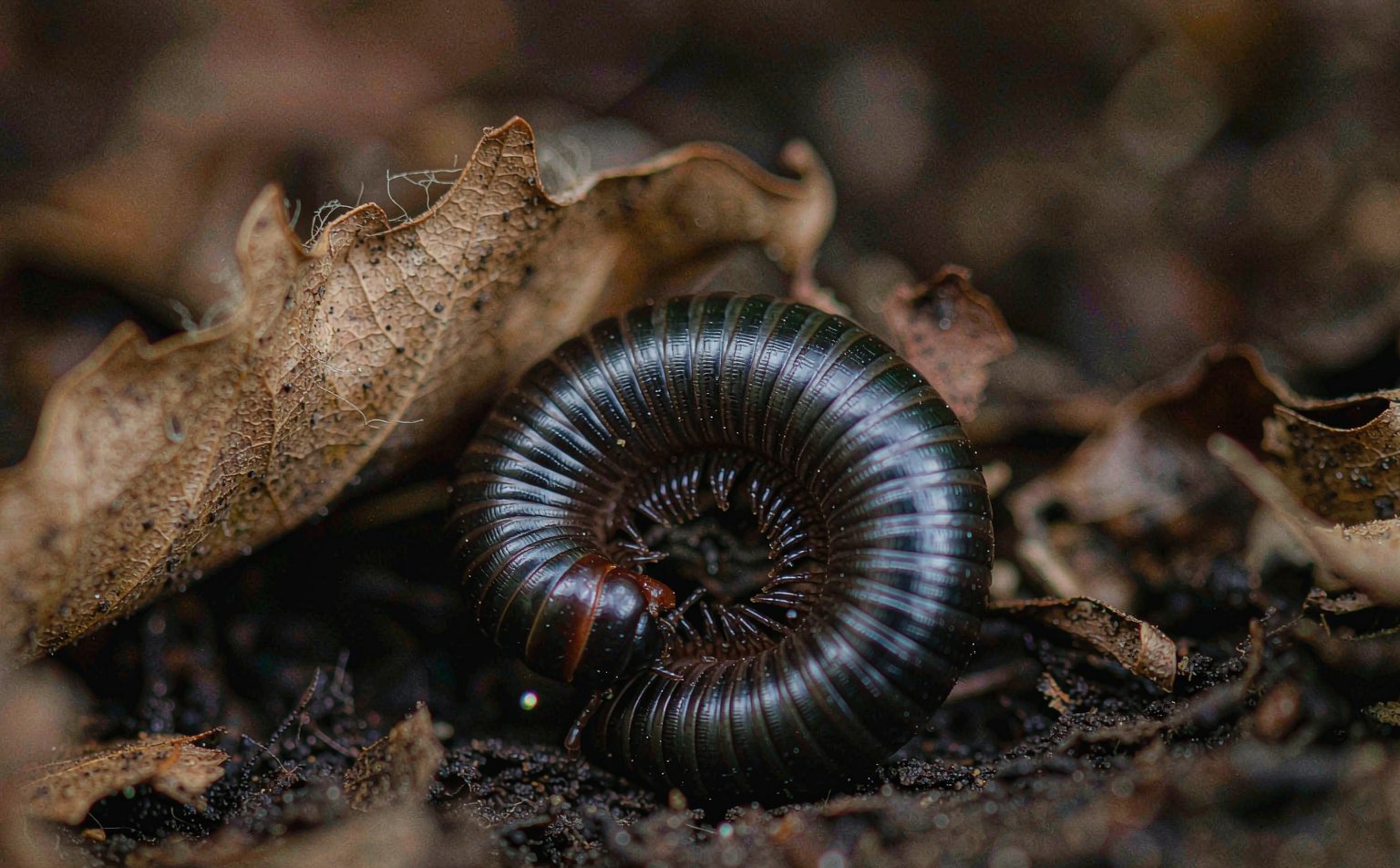
Ommatoiulus sabulosus | Common Black Millipede
Introduction
The Common Black Millipede (Ommatoiulus sabulosus) is the shiny, jet-black, many-legged creature that coils up when disturbed under a stone or in a compost heap. Reaching four centimetres or more in length, it is one of the commonest millipedes of gardens, parks and woodlands across Britain and temperate Europe, and it is the near-opposite of a centipede in both habits and temperament: slow, armoured, plant-eating and entirely harmless.
Where the centipede hunts, the millipede recycles. It spends its life among decaying leaves, rotting wood and the upper soil, grinding up dead plant material and returning its minerals to the earth. To the eye it is a smooth, glistening black rope of interlocking plates, moving with a wave-like ripple of countless legs, and it is a familiar and reassuring sign of a living, functioning soil.
Taxonomy
The Common Black Millipede belongs to the class Diplopoda, the millipedes, and the family Julidae, the snake millipedes. It was described by the German zoologist Carl Ludwig Koch in 1847. Millipedes are distinguished from centipedes by bearing two pairs of legs on most body segments rather than one, and by lacking venom. Like the Lumbricus terrestris and other soil animals, it is a decomposer, but it works on dead plant matter where the earthworm works on it underground.
The genus Ommatoiulus contains several similar black julid millipedes, and telling them apart reliably often needs a microscope to examine the shape of the male reproductive organs. Ommatoiulus sabulosus is the one most often found in gardens and on calcareous soils, where it can be abundant.
Physical Characteristics
The body is a rounded, cylindrical tube of numerous dark, polished segments, each bearing two pairs of short legs, so that a large animal may carry well over a hundred legs in total. The head is small, with short antennae and simple eyes, and the whole cuticle is hard and glossy black, sometimes with a faint bluish sheen. A row of tiny ozopores along the sides marks the openings of defensive glands.
When threatened the millipede does not flee but coils tightly, protecting its soft underside and presenting a smooth, unpalatable sphere. From these glands it can exude a foul-tasting liquid containing quinones, a chemical defence that deters most predators. The legs move in a coordinated wave, giving the animal its characteristic rippling, deliberate crawl.
Ommatoiulus sabulosus | Common Black Millipede
Ommatoiulus sabulosus | Common Black Millipede
Habitat
Common Black Millipedes favour moist, organically rich places: the leaf litter of woodlands, the thatch of rough grassland, compost heaps, rotten logs, and the soil beneath stones and shrubs. They need humidity to keep their bodies from drying out, and they are most active in damp conditions, burrowing into the litter and the topsoil to feed and shelter.
They are widespread across Britain and Europe and tolerate a range of soils, though they are commonest where dead plant material is plentiful. In gardens a healthy compost heap or a mulch of bark and leaves can hold large numbers, and they are frequently found in greenhouses and under pots where the air stays damp.
Diet
The diet is almost entirely dead and decaying plant matter: fallen leaves, rotting wood, soft humus and the finer particles of leaf mould. The millipede chews this material with its mandibles and, like earthworms, passes it through its gut so that the nutrients become available to plants again, making it a key part of the soil’s recycling system.
It will also eat fungus growing on decaying matter and, occasionally, the soft tissues of very ripe fruit or seedlings, but it is not a serious pest. Its role is that of a shredder, breaking coarse litter into smaller pieces that microbes can finish breaking down, and it is a food source in turn for ground beetles, shrews and toads.
Reproduction
Mating is indirect. The male spins a small silk-like web on the ground and deposits a packet of sperm onto it, which the female picks up with her genital opening. She then lays her eggs, usually a few dozen at a time, in a cavity in the soil or in a rotting log, sometimes wrapping them in a protective secretion.
The young hatch as small, pale versions of the adult with only a few segments and three pairs of legs, and they add segments and leg pairs at each moult as they grow. Millipedes may live for several years, moulting repeatedly, and the dark, hardened adult form is reached only after many months of gradual development.
Conservation
The Common Black Millipede is abundant and of no conservation concern, and indeed it benefits from exactly the kind of undisturbed, mulched habitat that a wildlife garden encourages. Its numbers can fall where soils are repeatedly ploughed, paved or sterilised with chemicals, simply because the litter layer and the moisture it needs are removed.
Because it is so numerous and so dependent on dead plant matter, it is one of the invertebrates that most directly ties a garden’s health to its soil. Leaving leaves to rot, building a compost heap and avoiding soil poisons all help keep millipedes, and the recycling they perform, in good supply.
Fun Facts
- It can have well over a hundred legs, two pairs to a segment, yet it is harmless and has no venom at all.
- When alarmed it coils into a tight ball and oozes a bad-tasting liquid from pores along its sides.
- It is a recycler, not a predator, grinding up dead leaves and returning their goodness to the soil.
- The young hatch with only three pairs of legs and add more at every moult as they grow.
- Despite the name, no millipede in Britain truly has a thousand legs; this one manages a little over a hundred.