 By st20113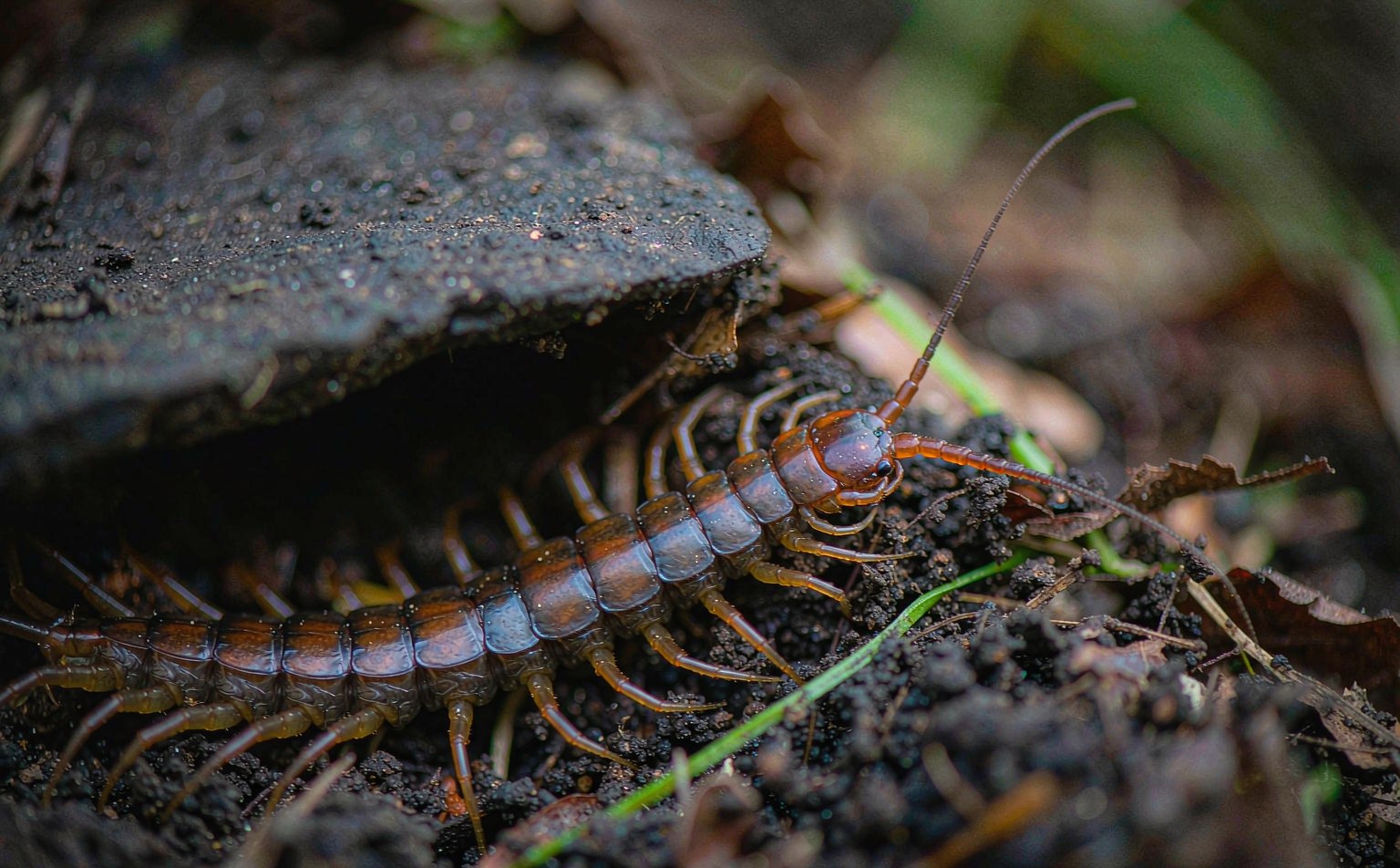
Lithobius forficatus | Common Centipede
Introduction
The Common Centipede (Lithobius forficatus) is the centipede most people meet by turning over a log, a stone or a flowerpot in a British or European garden. A flattened, chestnut-brown animal some 20 to 30 millimetres long, it darts away with startling speed on a fan of many legs, a creature built for hunting in the dark, damp world beneath the soil surface. Despite its fearsome look it is small, harmless to people and one of the most useful predators in the garden floor.
It is active mainly at night, emerging from its retreat to chase the smaller invertebrates that share the leaf litter, and it spends the day hidden where the air is still and moist. To the gardener it is an ally, taking slugs, springtails, larvae and other creatures that might otherwise multiply, and its restless, alert manner is a good illustration of what a centipede is: a swift, venomous, many-legged hunter rather than the slow, harmless millipede it is so often confused with.
Taxonomy
The Common Centipede is a member of the class Chilopoda, the centipedes, and the family Lithobiidae. It was described by the Swedish naturalist Carl Linnaeus in 1758. Unlike the millipedes, centipedes bear a single pair of legs on each body segment and, crucially, a pair of modified venom claws, the forcipules, just behind the head. It shares the soil and leaf litter with decomposers such as the Lumbricus terrestris, but where the earthworm recycles dead plant matter the centipede is an out-and-out predator.
The genus Lithobius holds a number of similar flattened centipedes across the northern temperate zone, and telling them apart usually requires a close look at the last pair of legs and the arrangement of the rear segments. Lithobius forficatus is the commonest and most widespread of the group in gardens and woodlands of the region.
Physical Characteristics
The body is flat and tapering, divided into a head and a chain of trunk segments, and bears fifteen pairs of walking legs, the rear pair noticeably longer and used like antennae to feel behind. The first pair is transformed into the forcipules, stout pincer-like claws linked to venom glands, with which the centipede seizes and poisons its prey. The whole animal is a glossy reddish-brown, with long, sensitive antennae and a pair of compound-looking eyes.
The legs increase in length towards the middle of the body, giving the centipede a nimble, rippling gait, and the cuticle is tough but flexible. Fully grown animals reach about 30 millimetres including the legs, though most encountered are smaller. The young, freshly hatched, have fewer leg-bearing segments and add more as they moult, a pattern typical of centipedes.
Lithobius forficatus | Common Centipede
Lithobius forficatus | Common Centipede
Habitat
Common Centipedes live in the top few centimetres of soil and in the litter layer above it: under stones, logs, bark, decaying wood, flowerpots and the mats of roots at the base of hedges. They need shelter that stays damp and undisturbed, because like all centipedes they breathe through a system of fine trachea and lose water readily in dry air.
They are found across Britain and most of temperate Europe, in gardens, parks, woodland, grassland and even mature dunes, wherever there is cover and a supply of prey. They avoid open, sun-baked ground and will move deeper into the soil during hot, dry weather, returning to the surface litter by night.
Diet
The Common Centipede is a carnivorous hunter of small invertebrates. It takes springtails, mites, small beetles and their larvae, fly larvae, woodlice, young slugs and almost any animal it can overpower, subduing each with a stab of the venom claws. It is an ambush and pursuit predator, sensing prey by vibration and smell through the antennae and the legs, then rushing in.
In the garden this diet makes it broadly beneficial, holding down numbers of creatures that damage roots and seedlings. Birds such as the Turdus philomelos turn the same stones and will take centipedes themselves, so the species sits squarely in the small-predator part of the food web, both hunter and prey.
Reproduction
Mating is indirect: the male lays a small stalked packet of sperm, the spermatophore, on the ground and guides the female over it so she can take it up. The female then lays her eggs, usually a cluster of a few dozen, in a sheltered cavity in the soil or under bark, and she guards them until they hatch, a level of parental care unusual among invertebrates of this size.
The young hatch as miniature centipedes with only seven leg-bearing segments and gain more at each moult until the full fifteen pairs are reached. Development is slow, taking a year or more to maturity, and adults may live for several years, moulting even as adults to renew the cuticle and the legs.
Conservation
The Common Centipede is common and widespread across its range and is of no conservation concern; in fact it benefits from the undisturbed, mulched corners that a wildlife-friendly garden provides. It is sensitive to the heavy use of biocides in the soil, which can remove both its prey and the cover it needs, but in general it thrives wherever leaf litter and dead wood are left to rot.
Its presence is a small sign of a healthy soil community. Leaving logs, stones and a layer of leaf litter in part of the garden sustains centipedes alongside worms, woodlice and the many other creatures that keep the soil turning over.
Fun Facts
- The first pair of legs is not for walking but a pair of venom claws used to stab and paralyse prey.
- It has exactly fifteen pairs of legs, and the young hatch with only seven pairs, adding more as they grow.
- It can move backwards almost as easily as forwards, useful when retreating into a crevice.
- Despite the name, it is not an insect and is more closely related to spiders and scorpions than to earthworms.
- The female stands guard over her eggs until they hatch, a rare piece of care among small soil dwellers.
[…] near relative in build is Common Centipede. Both hunt on many legs and share the wider arthropod branch. The group is ancient, and its members […]