 By st20113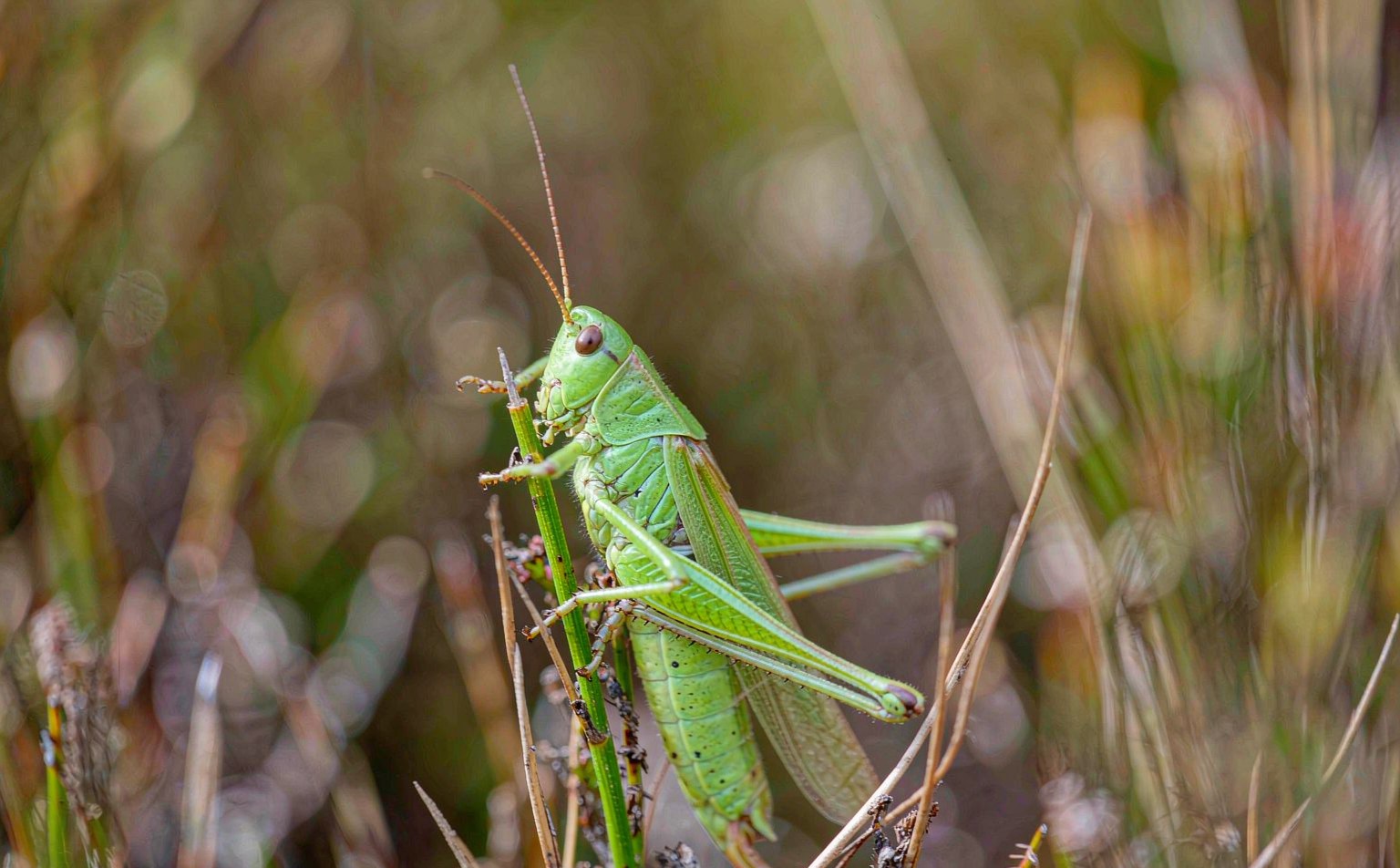
Omocestus viridulus | Common Green Grasshopper
Introduction
The Common Green Grasshopper (Omocestus viridulus) is a bright, slender grasshopper of rough grassland, heath and the grassy edges of moor and woodland, found across Britain, northern and central Europe and into cooler upland regions where few other grasshoppers thrive. Typically 17 to 22 millimetres long, it is one of the most widespread grasshoppers of semi-natural grass and a characteristic sound of summer on heath and hillside.
Though named for its usual green form, it can also appear brown, and it is distinguished less by colour than by its long wings, its habit of singing from an open perch and its loud, sustained, rhythmic song. Where the sward is suitable it can be abundant, and it reaches higher altitudes and latitudes than almost any of its relatives.
Taxonomy
The Common Green Grasshopper is a member of the family Acrididae and the subfamily Gomphocerinae, and it was described by the German naturalist Carl Linnaeus in 1758 under the name Gryllus viridulus before being moved to the genus Omocestus. That genus gathers several slender, winged grasshoppers of open grass, and the species is a near relative of the crickets and grasshoppers of the same ground layer, including the Gryllus campestris of dry, sunny turf, though the two occupy rather different niches.
Its long, fully developed wings set it apart from the shorter-winged members of its family and give it a real ability to fly, an adaptation that helps it colonise the patchy, successional grasslands of heath and clearing where it is most at home.
Physical Characteristics
The body is elongate and most often a clean, leaf green, sometimes with a brown or olive form, and the male is usually a more vivid green than the female. The antennae are short and the head rounded, and the long, narrow wings extend well beyond the tip of the abdomen, lying neatly along the back when at rest.
The song is its clearest field mark: a sustained, mechanical buzzing or “zig-zig” produced by the male rubbing a file on the inner wing against a ridge, repeated in long bouts from an exposed grass stem. The song carries well and has a distinctive, slightly crackling rhythm. The hind legs are strong and banded, and the underside of the body is pale, while the inside of the hind femur is often a clear yellow or red.
Habitat
Common Green Grasshoppers favour rough, moderately tall grassland: heathland with a grassy component, the edges of moor and bog, woodland rides, unimproved pasture and roadside verges. They like ground that is open enough to be warm but grassy enough to give cover, and they tolerate cooler, damper and higher sites than the strictly dry-loving grasshoppers.
They are often one of the first grasshoppers encountered on a walk through heather and grass mosaic, and they extend far up mountainsides and into northern latitudes, a distribution that reflects their tolerance of cooler summers and shorter growing seasons.
Diet
The diet is overwhelmingly grasses, with the insect clipping the blades of fine and coarse species alike as it moves through the sward. It will also take low herbs and, occasionally, the soft parts of flowers, but grasses make up the bulk of its food.
Feeding is by day and close to the ground or within the herbage, and like other grasshoppers it does little harm in natural habitat. In very high density it can trim grass tops, but in the rough grasslands it favours this is rarely noticeable.
Reproduction
Eggs are laid in small clusters in the soil at the base of the sward, typically in late summer, and they pass the winter in the ground. Nymphs hatch in spring and pass through several moults, each stage larger and more winged, reaching adulthood by mid-summer.
The male’s song, delivered from a perch on a grass stem, attracts the female, and mating follows. There is a single generation a year, and the timing of adulthood tracks the warmth of the season, appearing earlier on warm southern heaths and later in the cool north.
Conservation
The Common Green Grasshopper is widespread and common across its range and is not of conservation concern, but it is a useful marker of semi-natural rough grassland and heath. Where such habitats are ploughed, afforested or succeeded to dense scrub, it disappears, and its presence signals a healthy, open grassy mosaic.
Light, rotational management that keeps some grassy ground open — burning or cutting heath in patches, leaving verges uncut until late summer — sustains this grasshopper and the wider open-ground fauna. Because it uses both lowland and upland grassland, it benefits from the same sympathetic management that supports a broad range of declining meadow species.
Fun Facts
- It is one of the few grasshoppers that thrives on cool, high and northern ground where others cannot survive.
- Its long wings give it a true flight, unusual among the shorter-winged grasshoppers of its family.
- The male’s sustained, crackling song is delivered from an exposed grass stem rather than from cover.
- Though usually bright green, it can appear entirely brown and still be the same species.
- Linnaeus himself described it in 1758, originally placing it among the “grasshoppers” of his day.