 By st20113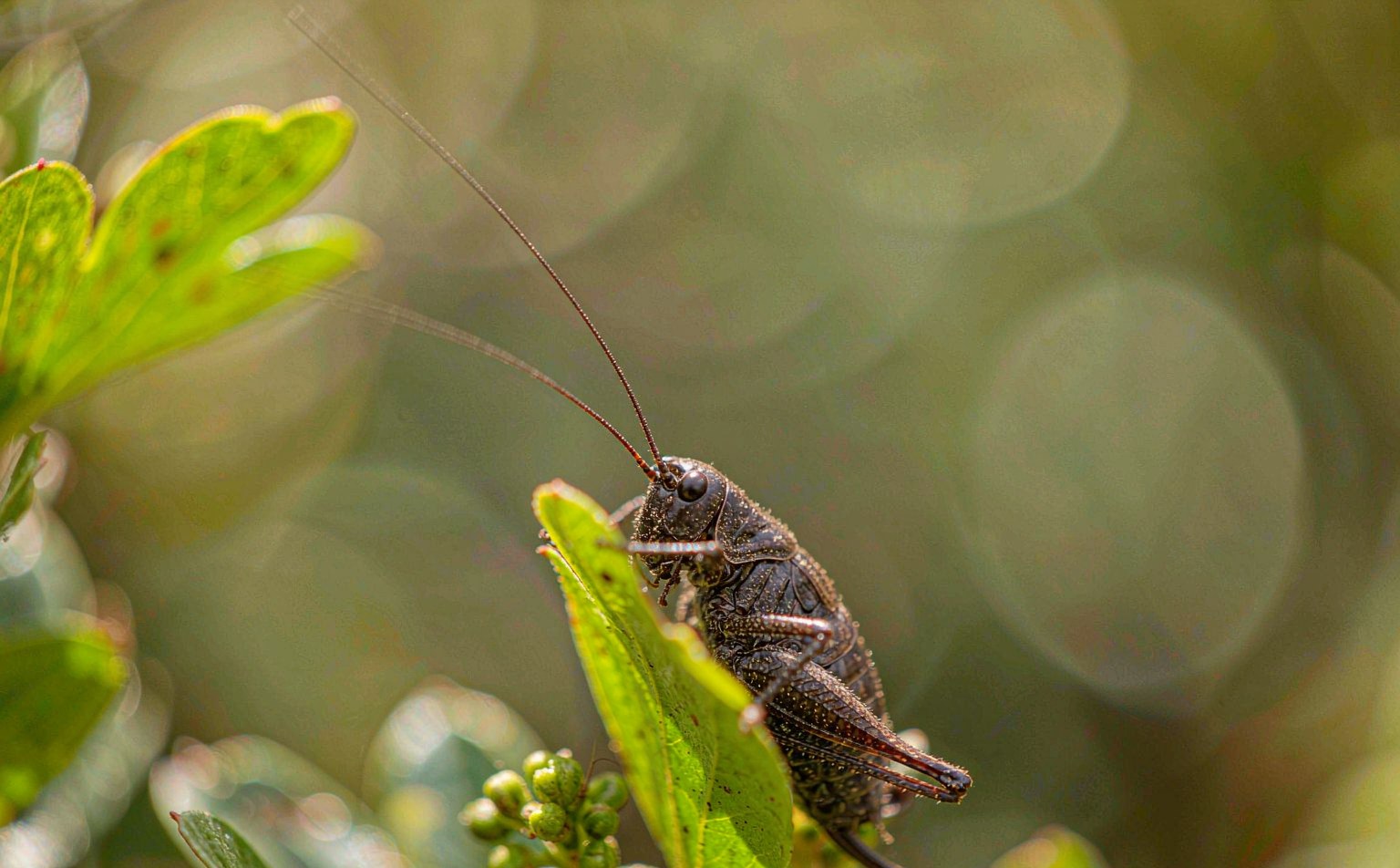
Pholidoptera griseoaptera | Dark Bush-cricket
Introduction
The Dark Bush-cricket (Pholidoptera griseoaptera) is a robust, brown, flightless cricket of hedgerows, rough herbage and garden shrubs across southern and central Britain and through much of temperate Europe. Reaching about 17 to 22 millimetres, the male being the smaller sex, it is a creature of dense, tangled vegetation rather than open grass, and it is best known for its song: a slow, rhythmic rasping repeated from dusk into the night.
Despite the name, a bush-cricket is not a true cricket but a member of the katydid family, and the Dark Bush-cricket is among the commonest of its kind in lowland Britain. It is more often heard than seen, concealed among leaves, and its presence marks the shift from the bright grasshopper song of day to the softer cricket chorus of evening.
Taxonomy
The Dark Bush-cricket belongs to the family Tettigoniidae, the bush-crickets and katydids, and within it to the subfamily Tettigoniinae. It was described by the German entomologist Carl De Geer in 1773. Its genus Pholidoptera contains a handful of rather similar, ground- and low-herbage dwelling bush-crickets of the northern temperate zone, and it is a close relative of the true Gryllus campestris in the broader sense of “cricket”, though the two sit in different families and differ in form and song.
The name “Dark Bush-cricket” reflects its generally sombre brown colour and its habit of living low in bushes and tall herbs rather than in trees. It is sometimes confused with the Speckled Bush-cricket, but the Dark Bush-cricket is uniformly brown and lacks the pale speckling of that species.
Physical Characteristics
The body is stout and a uniform dark brown, sometimes with a slightly reddish or olive tone, and the female bears a long, gently up-curved ovipositor at the tip of the abdomen, used to insert eggs into soil or plant tissue. The wings are much reduced and the insect cannot fly; the male’s wing-cases are short and leathery, held flat over the back.
The antennae are very long, often longer than the body, a hallmark of the katydid family and used to feel through the foliage. The hind legs are strong but less dramatically enlarged than a grasshopper’s, suited to clambering and short leaps. The song is produced by the male rubbing the wing-cases together, a slow, even “re-re-re” rasp given in bouts, most strongly at dusk and after dark.
Habitat
Dark Bush-crickets favour dense, tangled low vegetation: hedgerows, bramble thickets, rough grassland with tall herbs, the edges of woodlands and gardens, and patches of nettle and dock. They like structure and cover at or just above ground level, where the air is still and the leaves give concealment.
They are essentially a lowland and southern species, most abundant on warm, sheltered sites, and they are one of the bush-crickets most likely to turn up in a suburban garden. They avoid open, short, sun-baked turf, which belongs to the grasshoppers, and instead occupy the shadier, more cluttered margins of the landscape.
Diet
Unlike the strictly herbivorous grasshoppers, the Dark Bush-cricket is an omnivore. It feeds on the leaves and flowers of low plants, including bramble, nettle and various herbs, but it also takes other insects and is readily predatory, seizing small caterpillars, aphids and other soft-bodied invertebrates. This mixed diet marks it as a member of the katydid line rather than the grass-chewing Acrididae.
Feeding is mostly by night and dusk, matching the period of peak singing, and the long antennae help it locate both plant and animal food in the gloom of the thicket. As a predator it plays a small but useful part in controlling garden and hedgerow pests.
Reproduction
Females lay their eggs singly or in small groups in the soil or in the pithy stems of low plants, usually in late summer, and the eggs overwinter before hatching the following spring. The nymphs, miniature wingless versions of the adult, grow through several moults and reach adulthood by mid-summer.
The male’s dusk song attracts the female, and mating follows. There is a single generation each year, and the adults persist into early autumn, their song fading as the nights cool. Because the insect cannot fly, populations spread slowly on foot through connected vegetation.
Conservation
The Dark Bush-cricket is common and widespread in suitable habitat across its range and is not of conservation concern, but it is a good indicator of intact hedgerow and rough-herb habitat. Where hedges are flailed to bare stakes, sprayed or removed, and where gardens are kept too tidy, its numbers fall.
Allowing bramble, nettle and tall herbs to persist in margins, leaving hedgerows to grow shaggy and avoiding blanket herbicide use, supports this bush-cricket and the evening chorus it leads. It is one of the species that rewards a slightly less manicured garden with more wild sound after dark.
Fun Facts
- It is a katydid, not a true cricket, and belongs to a different family from the familiar songsters of bare ground.
- The male sings mainly at dusk and after dark, a slow rasping “re-re-re” made by rubbing his wing-cases.
- It is omnivorous, eating both leaves and other insects, unlike the grass-only grasshoppers.
- Females carry a long, curved ovipositor to place eggs into soil and plant stems.
- It cannot fly; the short wings are useless for flight, so it spreads on foot through hedgerows and thickets.