 By st20113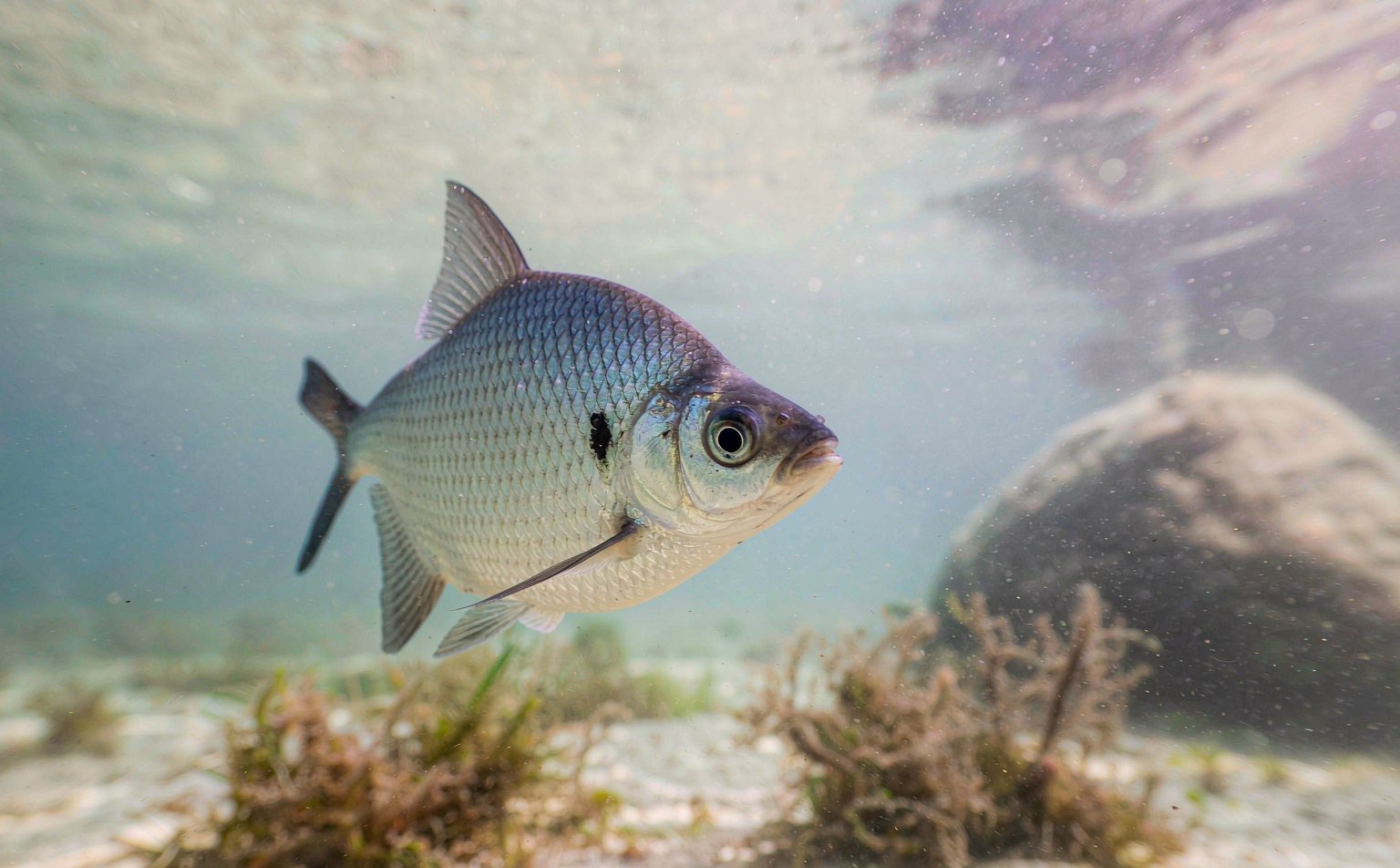
Blicca bjoerkna | Silver Bream
Introduction
The Silver Bream (Blicca bjoerkna) is a slender, deep-bodied freshwater fish of slow rivers, lakes and lowland ponds, easily told from its close relative the Common Roach by its silvery sheen and near-vertical mouth. Reaching about 30 to 40 centimetres, it is a sociable shoaling species that darts in loose groups over open water and along weedy margins. Quiet and unshowy, it nevertheless plays an important role in the food web of productive lowland waters, bridging tiny invertebrates and the larger predators that hunt it. Anglers know it as a willing, if modest, catch and a useful indicator of a healthy, well-vegetated lake.
Taxonomy
Blicca bjoerkna sits in the carp family Cyprinidae, the same large group that holds the true breams, roaches and carps. It is the only member of its genus and is most often confused with the Common Roach and with the Common Bream, from which its smaller scale count and bright eye help separate it. No subspecies are recognised across its European range. Its name reflects the silvery tint that sets it apart from the brassier roach swimming in the same shoals.
Physical Characteristics
Adults are deep-bodied and compressed, with a small head and a markedly oblique, almost vertical mouth suited to picking food from the surface and from plants. The back is greyish-bronze, the flanks bright silver and the belly white, while the fins are pale grey with a faint reddish tint on the pelvic and anal fins in breeding males. The eye is large and silvery, a useful field mark. Scales are relatively large, with 44 to 48 along the lateral line. Typical length is 25 to 35 centimetres, though older fish in rich waters may reach 40 centimetres and weigh around a kilogram.
Habitat
Silver bream favour calm, warm, often slightly turbid lowlands: the sheltered bays of lakes, the backwaters of slow rivers, gravel pits, canals and well-vegetated ponds. They prefer soft bottoms with mud or sand where they can sift for food, and they tolerate lower oxygen better than many cyprinids, which lets them thrive in still waters. They shoal over open water but move to the margins and weed beds to feed. They share these habitats with the Rudd and other cyprinids, often mixing in mixed shoals that puzzle the inexperienced observer.
Diet
The species feeds mainly on small invertebrates taken from the bottom and from vegetation: midge larvae, water fleas, small snails, tiny clams and the larvae of sedges and mosquitoes. It uses its protrusible mouth to pick items from surfaces rather than to grub deeply in the mud like the common bream. In summer it will also rise to take floating insects and, in productive waters, a little plant matter. As both a consumer of nuisance larvae and a prey item for pike and perch, it links the bottom-dwelling invertebrates to the broader lake community.
Reproduction
Spawning runs from late spring into early summer once the water warms above about 17°C. Females shed adhesive eggs among submerged plants and over gravel in shallow, warmed margins, where the males gather and fertilise them. A single female may release tens of thousands of eggs across several bouts. The eggs stick to weeds and hatch in a few days; the young fry school near the surface and grow quickly on plankton before turning to bottom life. There is no parental care, and most adults spawn again each year.
Conservation
Silver bream are widespread and common across much of Europe and are rated of least concern, but they depend on the shallow, vegetated nursery margins that are easily lost to dredging, bank hardening and siltation. They are sensitive to poor water quality and to the loss of connected floodplain waters, and intensive stocking of predatory fish can suppress their numbers. They benefit from leaving reed beds and marginal weeds intact, from reducing nutrient and pesticide runoff, and from restoring gentle, shallow shorelines. Because they use the same margins as many rarer species, protecting their habitat helps a wider freshwater community.
Fun Facts
- Its near-vertical mouth is a quick way to tell it from the slanted-mouthed roach.
- The eye is large and silvery, brighter than in most of its relatives.
- It often schools with roach and rudd, forming mixed, shimmering shoals.
- Breeding males show a faint red flush on the lower fins.
- It can tolerate warmer, lower-oxygen water better than many cyprinids.