 By st20113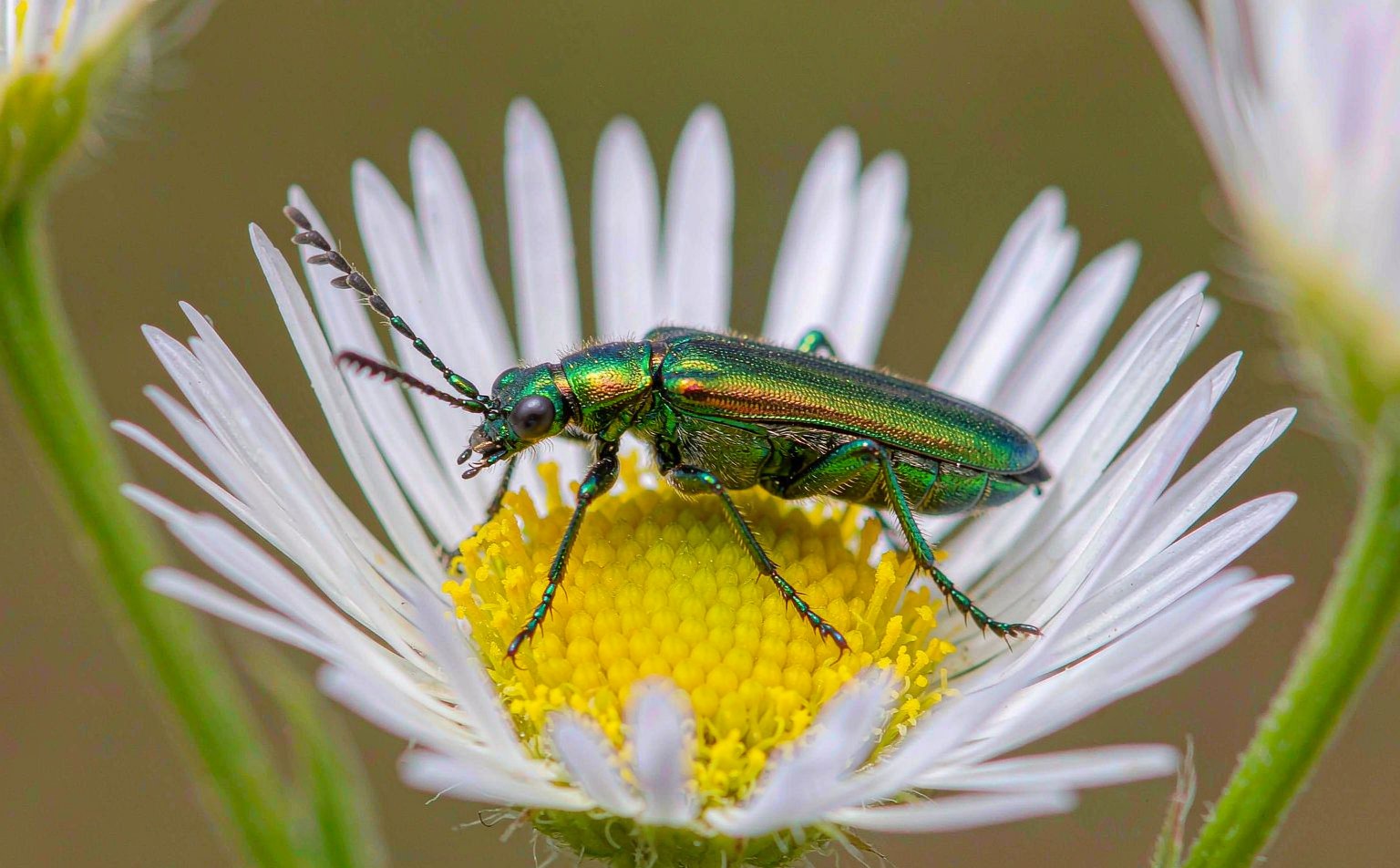
Cetonia aurata | Rose Chafer
Introduction
The Rose Chafer (Cetonia aurata) is one of Europe’s most attractive beetles, a metallic green scarab that shimmers with gold, copper and violet in the right light. A familiar sight in gardens, meadows and orchards from late spring to summer, it floats with a surprising, humming flight among flowers and foliage. Despite its name, it is not a serious pest of roses; adults feed mainly on pollen, nectar and soft fruit, and the grubs live in rotting wood and compost. It is a favourite of gardeners and a pleasing sign of a flower-rich, chemical-light environment.
Taxonomy
Cetonia aurata belongs to the family Scarabaeidae, the scarabs, a huge group that includes dung beetles and chafers, and is placed in the subfamily Cetoniinae, the flower chafers. It is the common European rose chafer and is closely related to other metallic chafers of the genus Cetonia. Among European beetles it is often mentioned alongside the Stag Beetle, another large beetle of broadleaf woodland, and the Seven-spot Ladybird, a garden insect with a very different lifestyle. Several subspecies and colour forms exist across its range, from pure emerald green to bronze and violet, but all are the same species.
Physical Characteristics
Adults are 15 to 20 millimetres long, with a broad, domed body and a smooth, metallic green upper surface that catches the light in shifting gold and copper tones. The underside and legs are a brighter metallic green, and a small reddish-brown scutellum sits between the wing cases. The head bears a short, notched horn-like plate used in the scarab manner for digging. Uniquely among many beetles, the wing cases are fused but the chafer can still fly because the hind wings unfold from beneath a side seam, letting it slip into flight without opening the elytra fully. The antennae end in leaf-like clubs used for smell.
Habitat
Rose chafers favour warm, flower-rich places: gardens, parks, orchards, hedgerows, meadows and open woodland edges. They need loose, organic-rich soil, compost heaps, old tree stumps and rotting wood where the larvae develop, and plenty of blossoms for the adults. They are most common in southern and central Europe and in warmer summers extend northwards. They avoid cold, exposed uplands and heavily managed land without flowering plants or decaying matter, so their presence tracks a healthy supply of both flowers and rot.
Diet
Adults feed on flowers, taking pollen and nectar from roses, hawthorn, elder, daisies and many other blooms, and they will also sip at over-ripe fruit and tree sap. They are generally harmless to gardens and even help pollinate some plants. The larvae, by contrast, are detritivores: pale, C-shaped grubs that live in compost, leaf litter, rotten wood and rich soil, breaking down dead plant material. This dual role—adult pollinator, larval recycler—makes the rose chafer useful in the garden ecosystem rather than a true pest.
Reproduction
Mating happens on flowers or foliage in early summer. Females lay their eggs in soil, compost or rotting wood, and the grubs hatch to spend one or two years feeding and growing underground, passing through several larval stages. They pupate in an earthen cell and the adults emerge in late spring or summer to feed, mate and start the cycle again. There is no parental care. Because the larval stage is long, the number of adults appearing in any year depends on conditions two summers earlier, which can make abundances vary from season to season.
Conservation
The rose chafer is common and rated Least Concern across its range. It is sensitive, however, to the loss of flowering habitat and to heavy pesticide and herbicide use that removes both its food and the rotting matter its larvae need. It benefits from compost heaps, log piles, flowering borders and reduced chemical sprays in gardens and parks. It is not a focus of formal conservation, but its readiness to appear in green spaces makes it a small, visible reward for wildlife-friendly gardening.
Fun Facts
- Its colour is structural as well as pigmented, so it shifts from green to gold as you move it.
- It can fly with its wing cases closed, using hidden side seams.
- The grubs are compost-eaters that help break down garden waste.
- Despite the name, it rarely harms roses and mostly sips pollen.
- In some lights the beetle glows with a surprising violet sheen.
[…] Scarabs are one of the largest insect families on earth. Its best-known British relative is the Rose Chafer. That beetle is a smaller, shiny green beetle. It is also a scarab but lives its own […]