 By st20113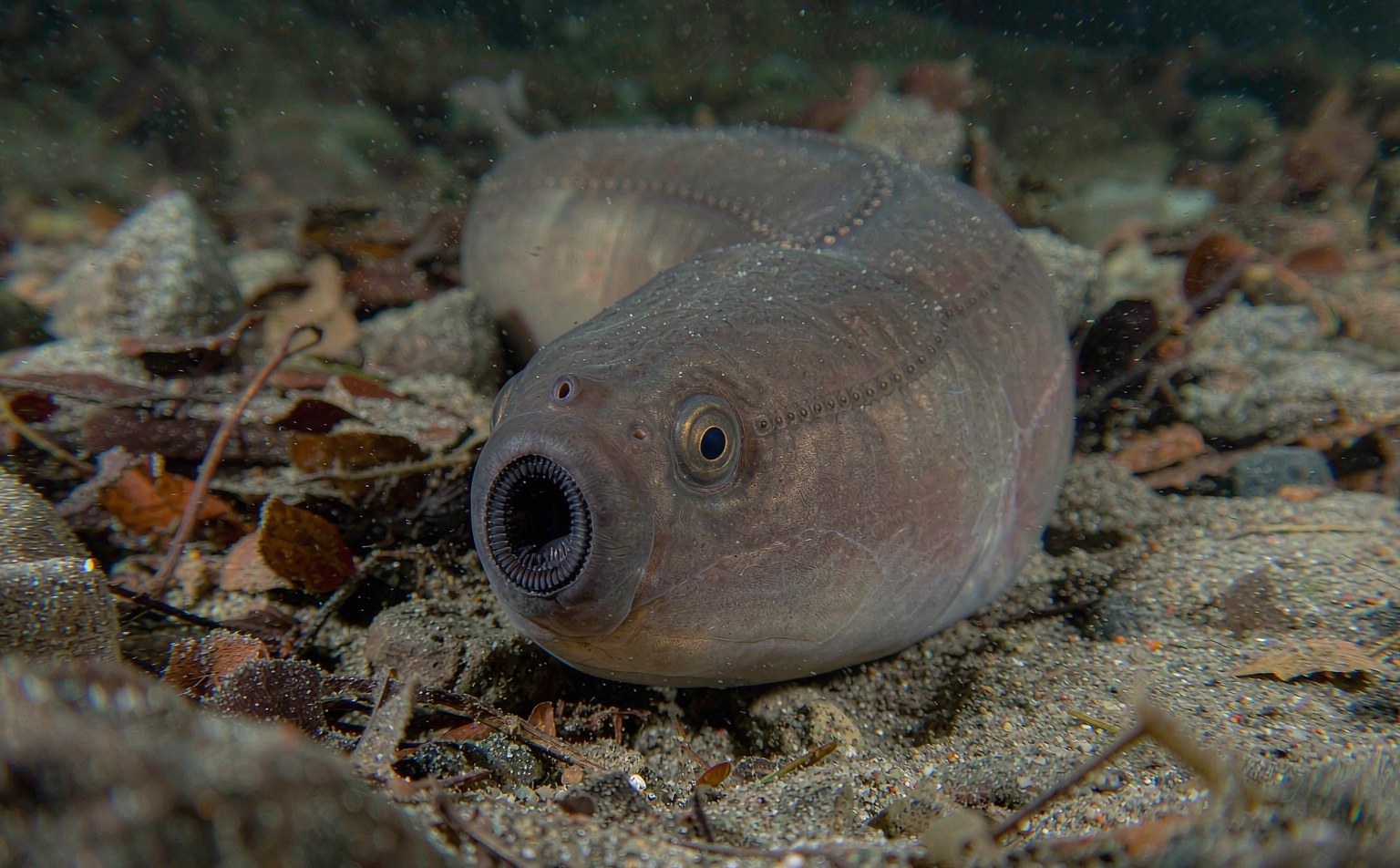
Lampetra planeri | Brook Lamprey
Introduction
The Brook Lamprey (Lampetra planeri) is a small, jawless fish of the lamprey family found in clean streams and rivers of Europe. Unlike its larger marine relatives, it spends its whole life in fresh water and never grows to a predatory adult, yet it is a fascinating survivor of one of the oldest branches of the vertebrate lineage. Adult brook lampreys are easily recognised by their eel-like, finned body and a round, suction-cup mouth lined with soft, horny teeth. They are harmless to people and to other fish, living only long enough to breed before dying. Their presence is a strong marker of unpolluted, well-oxygenated streams.
Taxonomy
Lampetra planeri belongs to the family Petromyzontidae, the lampreys, a group of jawless fishes more closely related to hagfish than to true bony fish. It is the non-feeding, entirely freshwater form of a lineage that also includes the anadromous river lamprey and sea lamprey. It is sometimes confused with the young of larger lampreys, but the brook lamprey is a distinct species that completes its cycle in streams. Among migratory fish it shares clean lowland rivers with the Atlantic Salmon, and its rearing streams overlap those used by the Brown Trout, both of which need the same clear, cool water.
Physical Characteristics
Adults measure 12 to 18 centimetres in length. The body is smooth, slender and eel-like, lacking scales, paired fins and jaws. The mouth is a small circular disc edged with soft, blunt teeth used for clinging rather than biting, and a single nostril sits on top of the head. Two dorsal fins are separated by a small gap, and the tail fin is rounded. The colour is plain grey-brown to olive above and pale below, without the silvery sheen of migratory lampreys. Critically, the adult brook lamprey has poorly developed eyes and a non-functional gut, because it neither feeds nor hunts after maturing; all its energy comes from the stores laid down as a larva.
Habitat
Brook lampreys require clear, permanently flowing streams and rivers with sandy or gravelly beds where the larvae can burrow. They avoid stagnant, polluted or heavily shaded water and are very sensitive to low oxygen and to fine sediment that smothers the riverbed. The adults live in short stretches of suitable stream, often in the same riffles and runs used by trout. After spawning they die, and the tiny larvae—called ammocoetes—drift into silty backwaters and leaf packs where they live buried for several years, filtering fine organic particles from the water.
Diet
Adult brook lampreys do not feed at all; their digestive tract is degenerate and they survive only on reserves accumulated during the larval stage. The larvae, by contrast, are filter feeders, lying half-buried in soft sediment and drawing in water and silt through their mouths, from which they strain microscopic algae, bacteria and detritus. This larval lifestyle links the species to the slow recycling of leaf litter and organic matter on the stream floor. In this way the European Eel-occupied rivers support a hidden, gentle current of lamprey larvae cleaning the water from below.
Reproduction
Spawning takes place in spring, when adults gather on gravel in shallow, fast flows. Using their sucker mouths they cling to stones and build a simple nest by clearing a shallow depression, where females lay clumps of eggs that males fertilise externally. Both sexes then weaken and die within days, having invested everything in a single breeding attempt. The eggs hatch into ammocoetes that burrow into silt and may remain as larvae for three to five years before metamorphosing into the short-lived adult form, which itself lives only a few months.
Conservation
The brook lamprey is rated Least Concern overall, but it has disappeared from many streams damaged by pollution, dams and excessive silt. Because it depends on both clean gravel for spawning and silty nursery habitat for larvae, it is especially vulnerable to the loss of natural river structure. It is protected in several countries and is listed under various regional wildlife laws. Conservation depends on keeping streams open, unpolluted and connected, with a natural mix of riffle and pool so that both larvae and spawning adults can find what they need.
Fun Facts
- Brook lampreys are jawless—descendants of a body plan older than the dinosaurs.
- Adults never eat; they live entirely on fat stored as larvae.
- The larvae can spend up to five years buried in river mud before transforming.
- They use a suction-cup mouth to cling to stones in fast current.
- After spawning, every adult brook lamprey dies, completing its life in one burst.
[…] animal shares the family with the Brook Lamprey. That lamprey never feeds as an adult. It spawns and dies within a few weeks. Our lamprey feeds at […]