 By st20113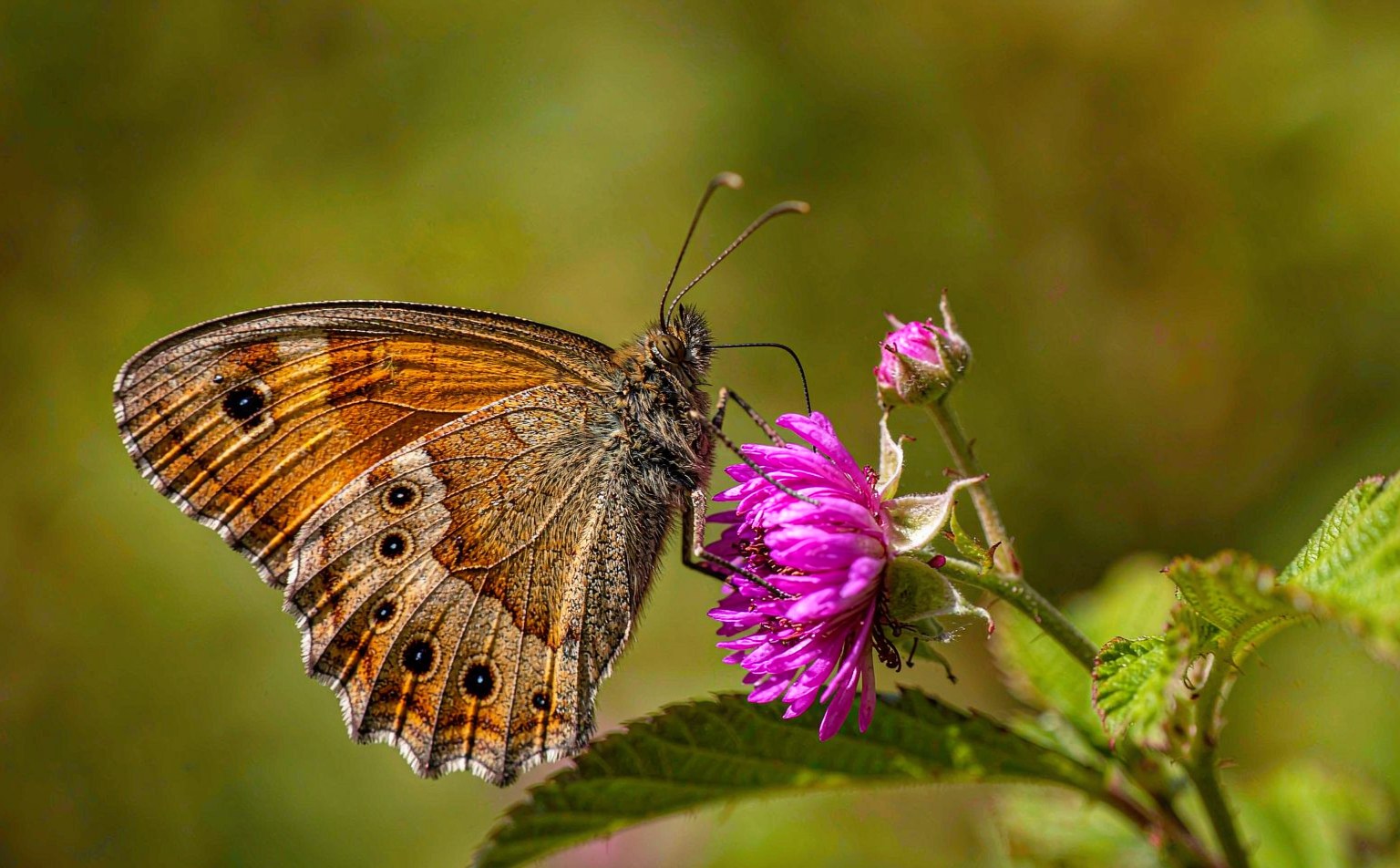
Pyronia tithonus | Gatekeeper
Introduction
The Gatekeeper (Pyronia tithonus), also known as the hedge brown, is a familiar summer butterfly of grassy banks, hedgerows and woodland edges across southern and central Britain and much of Europe. Its warm orange wings, ringed eyespots and gentle, darting flight make it one of the easiest brown butterflies to recognise. At its peak in late July and August it can be extraordinarily abundant, flitting low over flowering verges where it pauses to drink nectar.
Taxonomy
Pyronia tithonus was described by Jacob Hübner in 1803 and sits in the genus Pyronia, a small European group of “brown” butterflies. It belongs to the family Nymphalidae, close to the meadow browns and the Small White in the broader butterfly community of flowery habitats. The Gatekeeper’s nearest relative is the Spanish gatekeeper of the Iberian Peninsula. It is a single, widespread species with no widely accepted subspecies across its main range, though island forms show slight differences in size.
Physical Characteristics
Adults have a wingspan of 35 to 45 millimetres. The upperside is orange-brown with a dark brown border and a single black eyespot on each forewing, the male’s bearing a distinctive dark scent-patch (a stigma) on the forewing. The hindwings are plainer and more uniformly brown. The underside is a soft mottled brown with small eyespots, giving good camouflage when the butterfly rests with wings closed. Males are slightly smaller and more orange than females, and both have a characteristic “gatekeeper” habit of perching on a leaf and darting out at passers-by.
Habitat
The Gatekeeper thrives where grassland meets scrub: field margins, hedgerows, railway embankments, downland tracks, woodland rides and coastal slopes. It needs tall, rank grass for the caterpillars and a supply of nectar flowers nearby, so it is most numerous in lightly managed, flower-rich places. It avoids dense woodland, intensively grazed pasture and arable fields without margins. In Britain it is largely a species of the warmer south and east, becoming scarcer in the cool, wet north and in Ireland.
Diet
Adults feed readily on a wide variety of open flowers, especially bramble, thistles, knapweeds and hemp-agrimony, making them regular visitors to summer verges. The caterpillars are grasses-feeders, eating the blades of coarse grasses such as cock’s-foot, false brome and tufted hair-grass. They feed mainly at night and hide low in the sward by day. Warm, sunny weather greatly increases both nectar-feeding and the butterfly’s low, jinking flight.
Reproduction
Females lay eggs singly or in small batches on or near suitable grass blades, often dropping them loosely among the vegetation rather than fixing them firmly. The young caterpillar hibernates low in the grass tuft through the winter and resumes feeding in spring. It passes through several instars before pupating in a flimsy cocoon among grass stems. Adults fly from early July to late August, with the exact timing shifting later in cooler years and northward localities.
Conservation
The Gatekeeper is generally widespread and not of conservation concern, and its numbers have held up well where flower-rich margins survive. Like many grassland butterflies it suffers from the loss of hedgerows, over-grazing and the removal of roadside and field-edge flowers. Simple measures—leaving uncut verges, planting nectar sources and allowing tussocky grass to persist—let it remain abundant even in intensively farmed landscapes. It is a useful, visible indicator of healthy summer margins.
Fun Facts
- Males perch and dart at almost anything that moves, then return to the same leaf time after time.
- The dark patch on the male’s forewing is a scent scale used to attract females.
- It gets its English name from its habit of “guarding” gateways and hedge gaps.
- Despite its dull underside, a sunlit male can glow bright orange in flight.
- It shares the same season and flowers as the meadow brown, but keeps to shorter, scrubbier ground.