 By st20113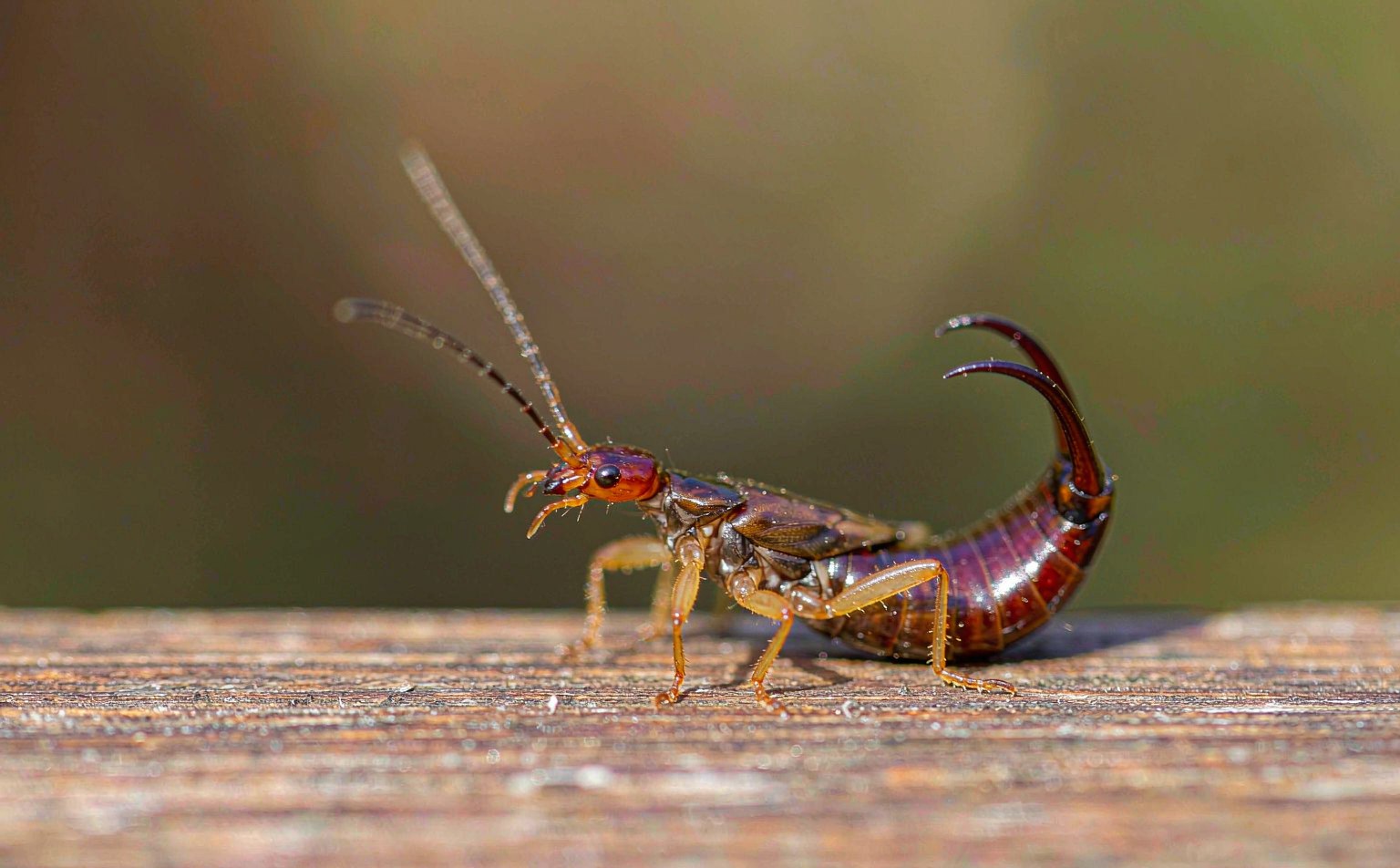
Forficula auricularia | Common Earwig
Introduction
The Common Earwig (Forficula auricularia) is the familiar pincer-tailed insect of gardens and allotments, often found hiding by day under pots, logs and flower heads. Despite the old belief that it crawls into ears, it is harmless to people and is an active, if sometimes troublesome, part of the garden, eating both pests and petals. It is unusual among insects in that the mother cares for her young.
Taxonomy
The Common Earwig is a dermapteran, an order of insects known as the earwigs, and is one of the commonest members of its group in the temperate world. It belongs to the genus Forficula and is found across Europe and in many regions where it has been introduced. It is no relation to beetles such as the [European Stag Beetle](https://www.gloencyc.com/european-stag-beetle-lucanus-cervus/), though both are often found under bark and logs.
Physical Characteristics
Adults are 12 to 20 millimetres long, elongate and flattened, with a chestnut-brown body and a pale, deeply folded pair of hind wings hidden beneath short leathery forewings. The most obvious feature is the pair of hardened forceps, or cerci, at the tip of the abdomen: in males they are broad, curved and clearly toothed, in females slimmer and nearly straight. The head bears thread-like antennae and small compound eyes.
The legs are short and built for running and clinging, and the body is lightly armoured. The forceps are not used to sting but to fold the wings, to grip mates and rivals, and to handle food. The insect can run quickly and squeezes into cracks far narrower than its length, which is why it turns up inside flowers and under loose bark.
Habitat
The Common Earwig lives in almost any disturbed or natural habitat with refuges: gardens, orchards, meadows, hedgerows, compost heaps and urban green spaces. It needs damp, dark daytime hiding places and feeds by night, so it thrives where there are pots, mulch and dense plants. It overwinters as an adult in soil or under debris and is active on mild nights through much of the year.
Diet
Earwigs are omnivorous, eating live and dead insects, aphids, mites and other small invertebrates, as well as petals, leaves, fruit and decaying matter. In gardens they can damage flowers such as dahlia and chrysanthemum and nibble seedlings, but they also eat aphids and caterpillars, giving them a mixed reputation. They forage mainly after dark and return to a shared daytime retreat, often in groups.
Reproduction
In autumn the female digs a short burrow and lays a clutch of twenty to fifty elongated white eggs, which she guards and turns regularly, licking them to keep fungus away. The young hatch as pale nymphs that look like small earwigs without forceps, and the mother feeds and protects them until their first moult. She may raise a second brood in summer; the forceps develop and grow with each moult, and there is normally one or two generations a year.
Conservation
The Common Earwig is abundant and of no conservation concern, and it is in fact a familiar part of healthy garden ecosystems. It can be a minor pest of flowers and crops but is also a natural enemy of aphids, so heavy control is rarely needed. Leaving log piles, mulch and ground cover supports the many birds, frogs and [Garden Snails](https://www.gloencyc.com/garden-snail-cornu-aspersum/) that share its microhabitats, along with the predators that eat earwigs themselves.
Fun Facts
- The mother earwig guards her eggs and young, rare care among insects.
- The tail forceps are for folding wings and wrestling rivals, not for stinging.
- The name comes from a myth that it enters human ears, which it does not.
- It can tuck a second pair of delicate wings under its short outer ones.
- It is both a flower pest and an aphid-eater, a true garden mixed blessing.