 By st20113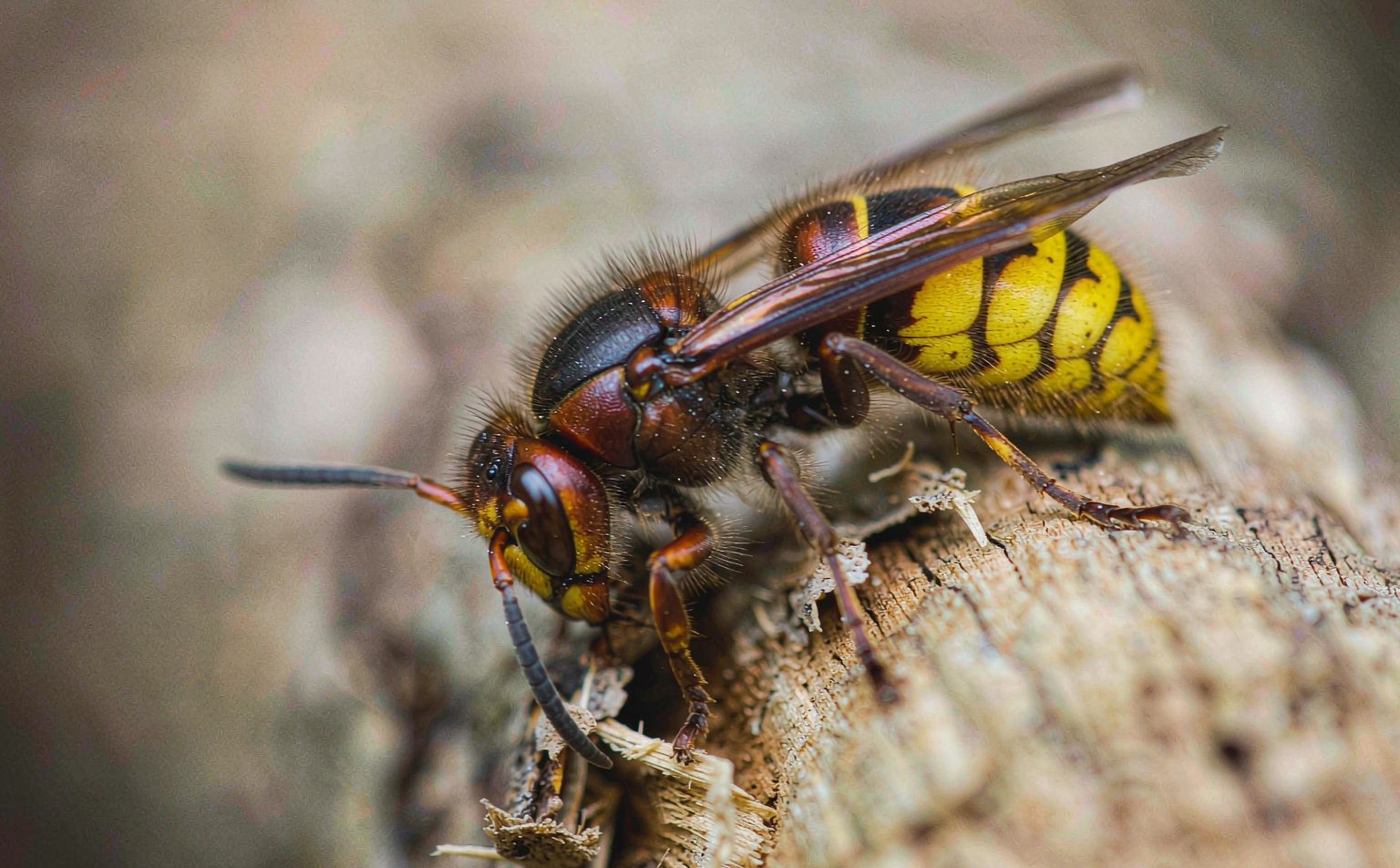
Vespa crabro | European Hornet
Introduction
The European Hornet (Vespa crabro) is the largest social wasp of Europe, a striking insect with a reddish-brown thorax and bold yellow-and-brown banded abdomen. Despite its fearsome look, it is less aggressive than many smaller wasps and plays a useful role as a predator of flies and caterpillars. It is the only true hornet native to Europe, and its nest of chewed wood pulp is a marvel of insect engineering.
Taxonomy
The European Hornet is a vespid wasp in the genus Vespa, the true hornets, and is the type species of that group. It is related to the smaller [Common Wasp](https://www.gloencyc.com/wasp-vespula-vulgaris/) and, like the [European Stag Beetle](https://www.gloencyc.com/european-stag-beetle-lucanus-cervus/), is one of the larger insects of the European summer. It ranges across Europe and into temperate Asia, with introduced populations in North America.
Physical Characteristics
Queens reach 25 to 35 millimetres, workers 18 to 25 millimetres, with a broad head, large compound eyes and strong, folded wings that lie along the body at rest. The thorax and the front of the abdomen are rich chestnut-brown, the rest of the abdomen banded with yellow and dark brown. The waist is narrow, the sting smooth and used mainly in defence.
The jaws are powerful, used to tear prey and strip wood fibre for the nest. The wings are translucent and tinted, and in flight the hornet produces a deep, low buzz quite different from the higher pitch of small wasps. The eyes are reddish, a useful mark separating it from the yellow-eyed Asian hornet now spreading in parts of Europe.
Habitat
The European Hornet occupies woodlands, orchards, parks, gardens and hedgerows, nesting in hollow trees, roof spaces, outbuildings or old burrows. The queen starts a small nest in spring, which grows through summer as workers enlarge the paper combs. It prefers warm, sheltered sites near trees that supply both wood for pulp and prey, and it tolerates human settlements better than many wild insects.
Diet
Adults feed largely on sugary liquids — ripe fruit, tree sap and nectar — while the larvae are fed a protein diet of chewed insects, especially flies, caterpillars and other wasps. Workers hunt live prey and also take carrion, acting as useful controllers of pest insects. The交换 of fluids between adults and larvae ties the colony together, with larvae rewarding workers with saliva rich in sugars.
Reproduction
New nests are founded by a single queen in spring after she has overwintered in a sheltered crevice. She rears the first workers alone, then the colony expands, producing males and new queens in late summer. These mate, and the queens hibernate while the old queen, workers and males die with the cold. The abandoned nest is not reused the next year.
Conservation
The European Hornet is not threatened and is protected by law in some countries because of its ecological value, though it is often unfairly feared. It suffers from nest destruction through misunderstanding and from habitat loss that removes nest sites and prey. Leaving mature trees and avoiding the routine removal of harmless nests helps maintain it, and it poses little risk to people who do not disturb its nest.
Fun Facts
- It is the largest social wasp in Europe and the only true hornet native to the continent.
- Despite its size, it is generally calmer than the much smaller common wasp.
- Its low, throaty buzz in flight is deeper than that of any small wasp.
- Workers feed larvae on chewed caterpillars, helping control garden pests.
- The nest is built from chewed wood mixed with saliva, forming grey paper combs.