 By st20113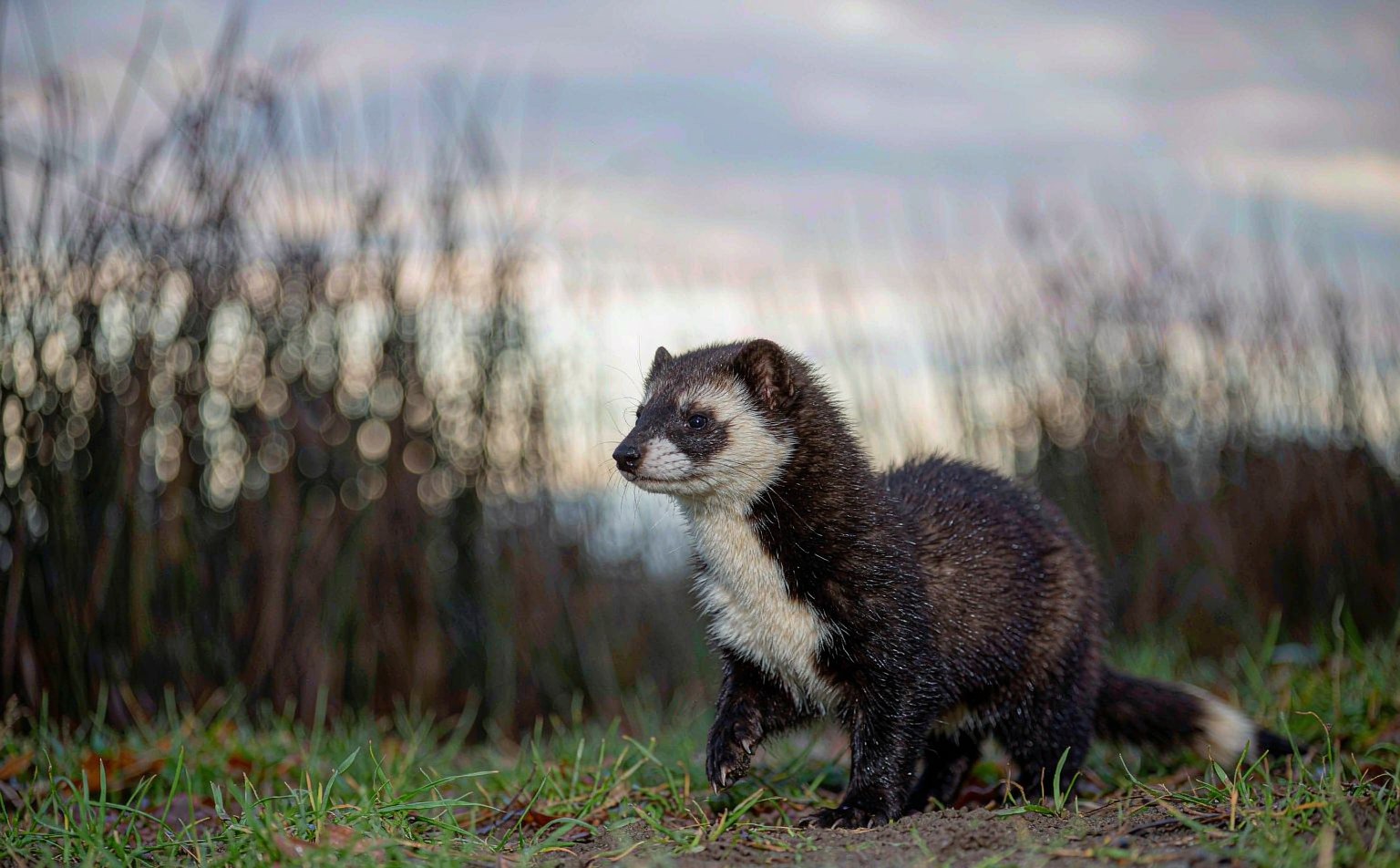
Mustela putorius | European Polecat
Introduction
The European polecat, Mustela putorius, is a medium-sized mustelid native to much of Europe and parts of western Asia. A close relative of the domesticated ferret, it is a secretive, largely nocturnal carnivore that thrives in a mosaic of wetlands, farmland, and woodland edges. Historically persecuted as a poultry raider and fur-bearer, the polecat has recovered across much of its former range over the last century and is now a familiar, if seldom seen, component of European lowland ecosystems.
Adults are solitary and territorial, communicating through scent marks that give the species both its scientific and common names — putorius referring to the pungent anal secretion the animal uses to mark territory and deter rivals. Though shy around people, polecats adapt well to human-modified landscapes provided cover and prey remain abundant.
Taxonomy
Mustela putorius was first formally described by Carl Linnaeus in 1758 within his landmark work Systema Naturae. It belongs to the family Mustelidae, the same group that includes the Least Weasel, stoats, and otters. The domesticated ferret (Mustela putorius furo) is generally treated as a subspecies or domestic form descended from the European polecat, and the two remain capable of interbreeding where ferrets escape into the wild.
Physical Characteristics
The European polecat measures 35–58 cm from head to tail base, with a tail of 12–19 cm, and weighs between 0.7 and 1.7 kg, males being appreciably larger than females. Its coat is dark brown to black on the underside and flanks, contrasting with a cream to yellowish band across the face that gives the appearance of a masked pattern around the eyes and muzzle. The limbs are short and dark, and the body is long and low-slung, an adaptation to hunting in burrows and dense ground cover.
The skull is robust with strong jaws and carnassial teeth suited to killing vertebrate prey. The fur is dense and glossy in winter, providing insulation in cold weather. Like other mustelids, polecats possess well-developed anal scent glands; the musk they produce is conspicuously strong and is used both for territorial marking and for startling predators.
Habitat
Polecats favor lowland landscapes where water, rough grassland, and scattered woodland meet. They are especially common along riverbanks, marshes, reed beds, and the margins of ponds, but they also use hedgerows, scrub, orchard rows, and farm buildings. The availability of abandoned burrows — often those of rabbits or foxes — is a key requirement, as polecats rarely dig their own and rely on ready-made dens for resting and rearing young.
In mountainous regions they are generally absent above about 1,500 m, and they avoid treeless open steppe and intensively cultivated monocultures lacking refuges. Proximity to water appears to be more important than forest cover, linking the species strongly to productive, prey-rich wetland margins.
Diet
The polecat is an opportunistic carnivore whose diet shifts with the seasons and local prey abundance. Small mammals — voles, mice, and young rabbits — form the staple, supplemented by amphibians, reptiles, fish, birds and their eggs, and invertebrates when vertebrates are scarce. In wetland habitats frogs and toads can become an important seasonal food source.
Hunting is predominantly ground-based and crepuscular to nocturnal. Polecats rely on scent and hearing to locate prey in vegetation and burrows, and they kill with a bite to the neck or skull. They are capable of subduing prey considerably larger than themselves, including full-grown rabbits, and will cache surplus food near the den during lean periods.
Reproduction
Breeding begins in late winter to early spring. After a mating that may involve an extended copulatory tie, females undergo a period of delayed implantation, so that although mating occurs in spring, embryonic development does not resume until later in the year, timing births to early summer when food is most plentiful. A single litter of four to six (occasionally up to ten) altricial kits is born in a sheltered burrow lined with grass and fur.
The kits are blind and helpless at birth and are cared for exclusively by the mother. Their eyes open at around five weeks, and they begin to venture outside the den shortly afterward, becoming independent by late summer or autumn. Females typically breed in their first year, while males reach maturity slightly later.
Conservation
Globally the European polecat is classified as Least Concern, and in many countries populations have rebounded following the decline of intensive trapping and the recovery of wetland habitats. However, the species still faces pressures from road traffic, accidental capture in illegal snares set for foxes and rabbits, and the loss of undisturbed denning sites to agricultural intensification.
A particular conservation concern is genetic introgression: in regions where escapee ferrets are common, hybridization with wild polecats can dilute the native gene pool. Monitoring programs in several European countries now track both population trends and the extent of ferret-polecat mixing to guide management. Where habitat connectivity is maintained, the polecat remains a resilient and recovering native predator.
Fun Facts
- The polecat’s name derives from the Middle English pol (fowl) and cat, a reference to its historical reputation as a stealer of poultry.
- Its defensive musk is so potent that the animal can be detected by smell from several metres away.
- The domesticated ferret is essentially a tamed form of the European polecat and shares its masked facial markings.
- Polecats practice delayed implantation, allowing them to mate in spring but give birth months later when prey is abundant.
- They are excellent swimmers and will readily enter water to catch frogs, fish, or to cross streams.