 By Iris
Cerorhinca monocerata | Rhinoceros Auklet
Species Profile · Alcidae
Rhinoceros Auklet
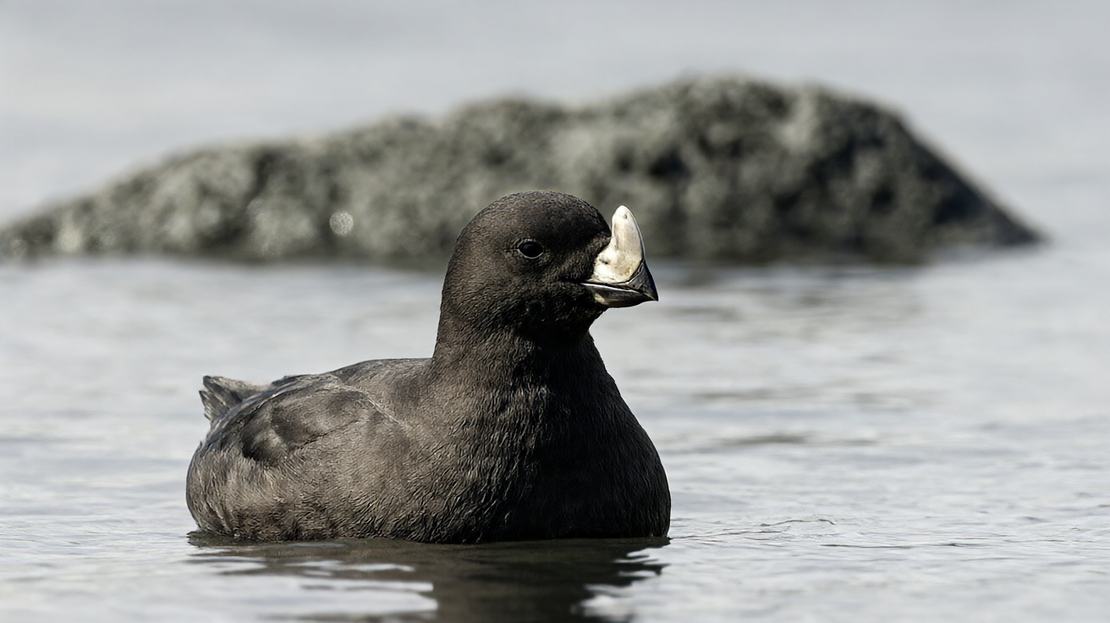
A dark seabird floats on cold water, and a small pale horn rises from its upper bill.
Least Concern
Length
Wingspan
Weight
Egg
Horn
Rating
The Rhinoceros Auklet
A puffin relative with a horn
A dark seabird floats on cold water with a small pale horn on its bill. Its horn gives the species its name, though it grows only for the breeding season. Grey plumage covers the body, while the belly stays pale.
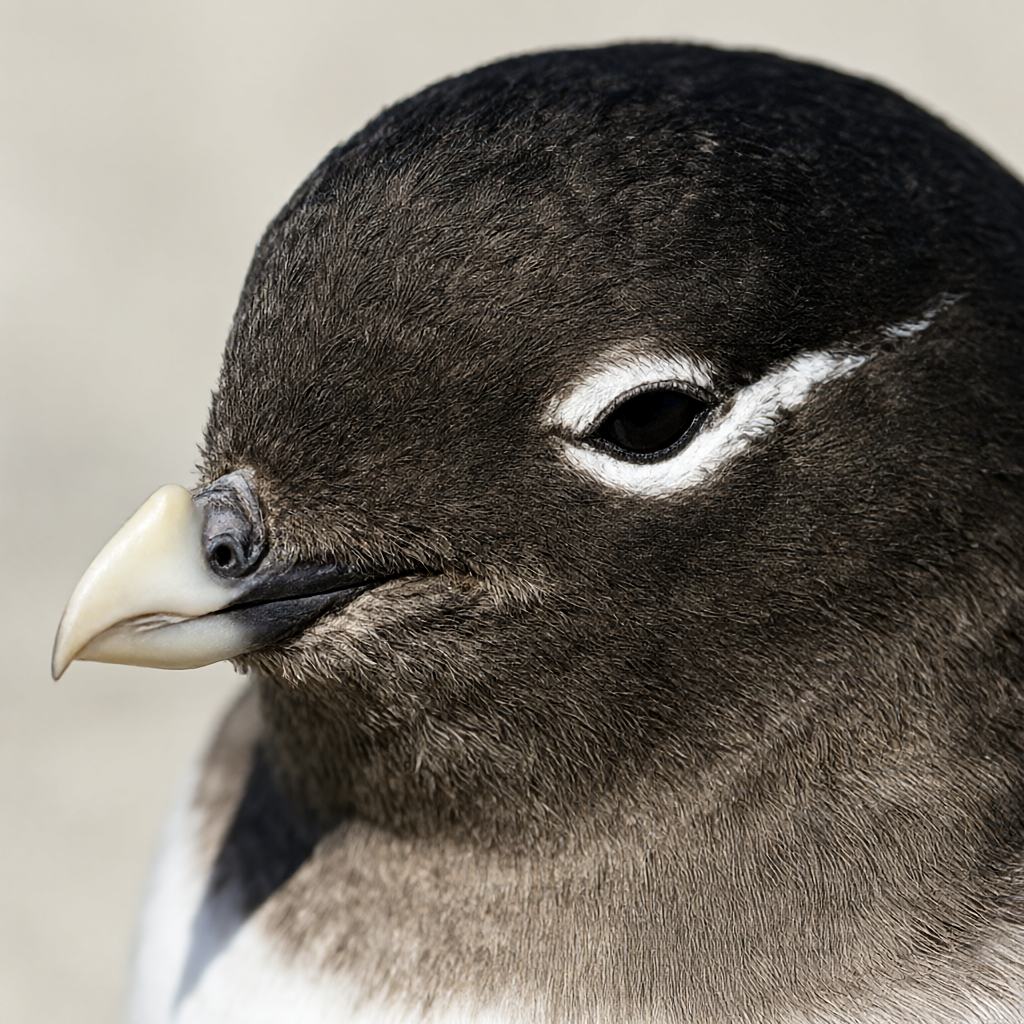
A white stripe runs above each eye, and it shows against the dark head. Because the bird feeds far offshore, most people see it only from a boat. Colonies sit on grassy islands, and the birds arrive there after dark.
Family tree
Alcidae, the auk family
Its proper name is Cerorhinca monocerata, the only member of its genus. The family holds the auks, and every species in it swims rather than wades. An Atlantic Puffin carries a striped bill and nests in a burrow, and both birds fly underwater after fish.
Because the two share the same body plan, the resemblance runs deeper than the colour. Two subspecies are sometimes named, one Asian and one American. Early writers placed the bird with the puffins, which later work moved to a genus of its own.
Horn, bill and eye stripe
How to tell one
Adults reach 35 cm from bill to tail tip. Wingspan runs about 55 cm. Weight falls between 350 and 620 g, though a big male tops that.
The horn rises from the upper bill, and it drops off after the breeding season. Because the wings stay short, the bird swims faster than it flies. Plumage runs sooty above, and the belly stays pale grey.
A white stripe sits above each eye, and thin white plumes rise behind it in summer. Legs sit far back on the body, which pushes the bird forward in water. Males run larger than females, and their bills reach further.
1
2
3
Cold open sea
Where it lives
Cold coastal water holds the species across the north Pacific. Japan, Russia and the Pacific coast all carry colonies. The Asian group is the largest, and it holds most of the birds. It feeds over deep water, and it may travel far from the colony each day.
Because the species needs both open sea and grassy islands, few coastlines suit it. Colonies sit on slopes where soil stays soft enough to dig. A Little Penguin comes ashore on Australian beaches after dark, and both birds nest underground rather than on ledges.
Small fish at depth
What it eats
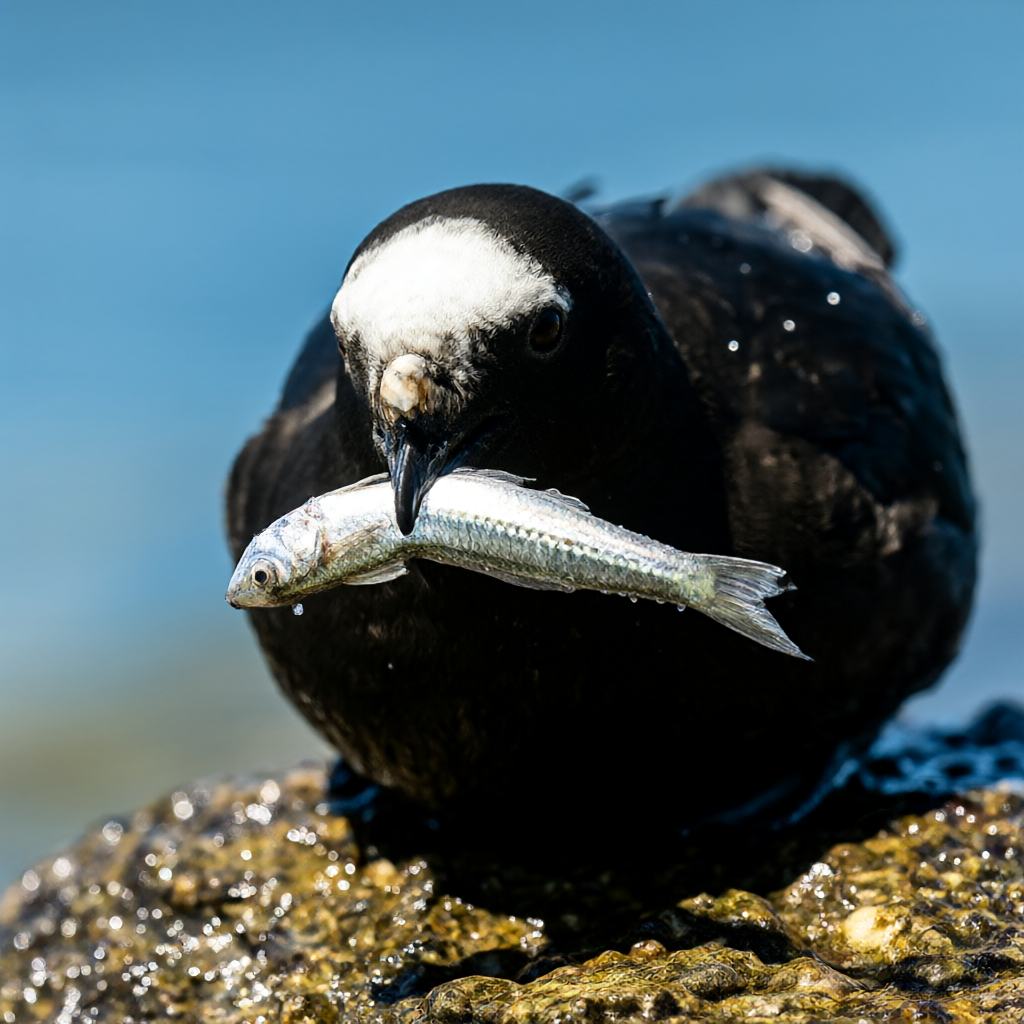
Fish make up most of the food. The bird takes sand lance, anchovy and small squid, since it hunts by pursuit. Because the wings work as paddles, the bird turns inside a school of fish. A parent carries several fish crosswise.
It holds them against the roof of the mouth, and the load stays put. Chicks take whole fish from the first week. Feeding trips run at night, when small fish rise toward the surface.
One egg in a burrow
The breeding cycle
Pairs dig a burrow in soft soil, and the tunnel may run two metres long. The female lays one egg, and both parents incubate. Because the pair arrives after dark, a colony sounds loud at night and stays quiet by day. The chick stays in the burrow for weeks.
It waits for food, and that food arrives only after dark. Parents bring fish every night, and the chick calls from the entrance. Young birds leave the burrow at night, and they fly straight out to sea.
Introduced predators
Conservation
The Red List calls the species Least Concern. Introduced rats and foxes take eggs from the burrows. Because the bird nests underground, a single predator can empty a colony.
Nothing suggests a rapid fall across the range. Oil spills and net fishing kill birds at sea, since the species feeds where tankers pass. Protected islands now run predator control, and the colonies have recovered.
Side by side
How It Compares
| Trait | Rhinoceros Auklet | Atlantic Puffin |
|---|---|---|
| Family | Alcidae | Alcidae |
| Length | 35 cm | 28-30 cm |
| Weight | 350-620 g | 400-500 g |
| Bill | a small pale horn | broad and striped |
| Nest | a two metre burrow | a burrow or a crevice |
| Rating | Least Concern | Vulnerable |
Common misreadings
What People Get Wrong
- Not a puffin. Bill shape separates them. A puffin carries a deep striped bill through the breeding season, while the auklet keeps a narrow dark bill with a single pale horn on the upper half.
- Not a daylight bird. Colonies come alive after dark. Birds arrive at the burrow only at night, and because predators watch the colony by day the auklet avoids the surface until the light goes.
- Not a surface feeder. The bird dives for its food. Sand lance and other small fish get taken well below the surface, and because the wings work underwater the bird chases prey rather than snatching it.
Going further
Sources and Further Reading
Quick hits
Five things to remember
- Its horn grows in summer.
- It nests underground.
- It arrives after dark.
- It carries fish crosswise.
- It flies underwater.