 By Iris
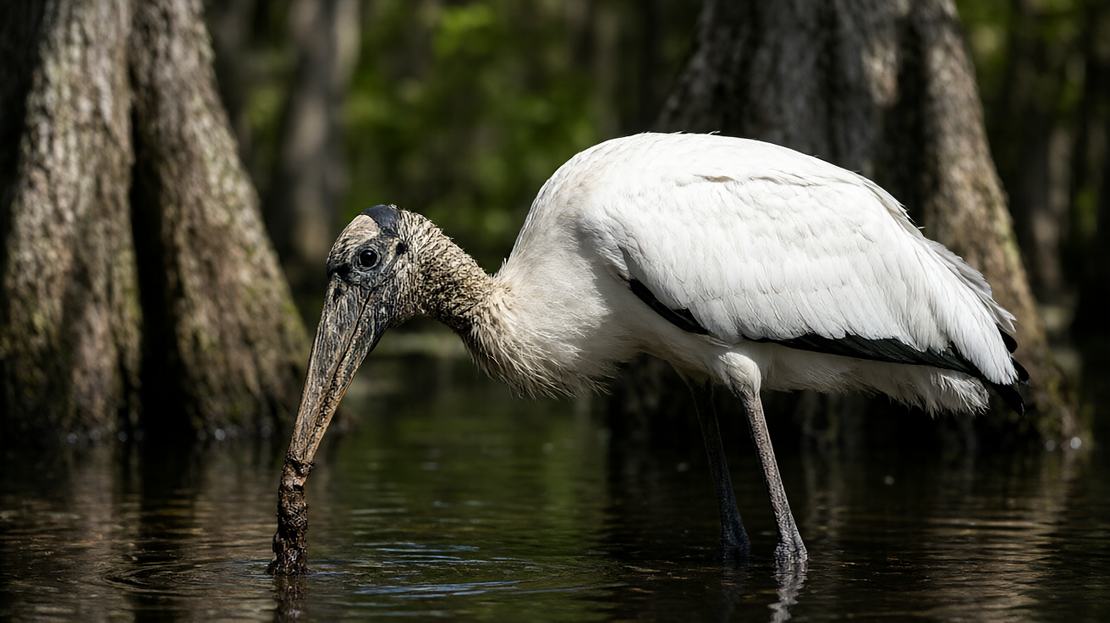
Mycteria americana | Wood Stork
Species Profile · Ciconiidae
Wood Stork
A tall white bird wades a cypress swamp with its heavy grey bill sunk in the mud.
Least Concern
Length
Wingspan
Weight
Bill
Eggs
Rating
The Wood Stork
The stork that fishes by touch
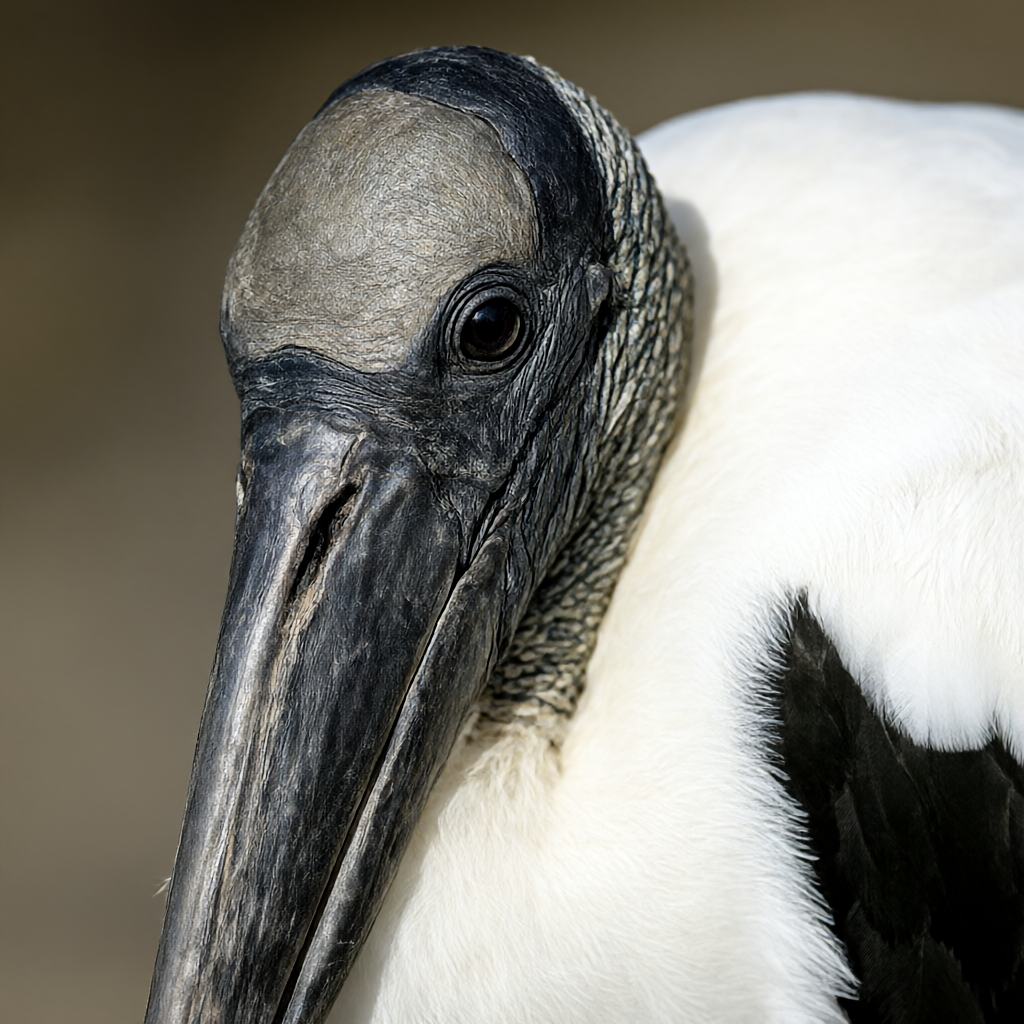
A tall white bird stands in dark water with its bill sunk to the base. Its head carries no feathers, and the bare skin runs dark grey. Because the bird feeds by touch, it does not need to see the fish.
A heavy bill snaps shut the moment something touches it, and the reflex runs faster than sight. Black flight feathers edge the wings, and they show when the bird opens them. Nesting runs in colonies, and a good colony fills a cypress stand with nests.
Family tree
Ciconiidae, closer to the ibises
Its proper name is Mycteria americana, one of four wood storks. Its family holds the storks, and the group sits close to the ibises rather than to the herons. A White Stork nests on European roofs, and both birds soar on warm air rather than flap.
Because the two split long ago, one feeds by sight and the other by touch. No subspecies are named, since the birds move freely across the range. Early writers placed the species with the herons, which later work rejected.
Bill, head and wings
How to tell one
Adults reach 85 to 115 cm from bill to tail tip. Wingspan runs 150 to 175 cm, and weight falls between 2 and 2.5 kg. Its bill curves down at the tip, and it measures about 25 cm.
Bare skin loses heat quickly in cold weather. Cold snaps can kill chicks in the nest, and the colony carries the loss. Bare skin runs dark grey on the head, while it turns black in the breeding season.
Plumage covers the body in white, and black flight feathers mark the trailing edge. Legs stay long and dark, while the toes spread wide in soft mud. Males run larger than females, though the difference stays slight.
1
2
3
Swamp and marsh
Where it lives
Freshwater marsh, cypress swamp and wet pasture hold the species. Florida and Georgia carry the northern groups, and the rest live from Mexico south. Because the bird needs shallow water, a drained wetland loses it at once. Nesting colonies need tall trees, though cypress and mangrove both serve.
It feeds in falling water. Fish crowd into shrinking pools, and a dry season leaves the colony without food. A Grey Heron hunts the same marsh with a spear rather than a trap, and both birds take fish from shallow water.
Fish by feel
What it eats
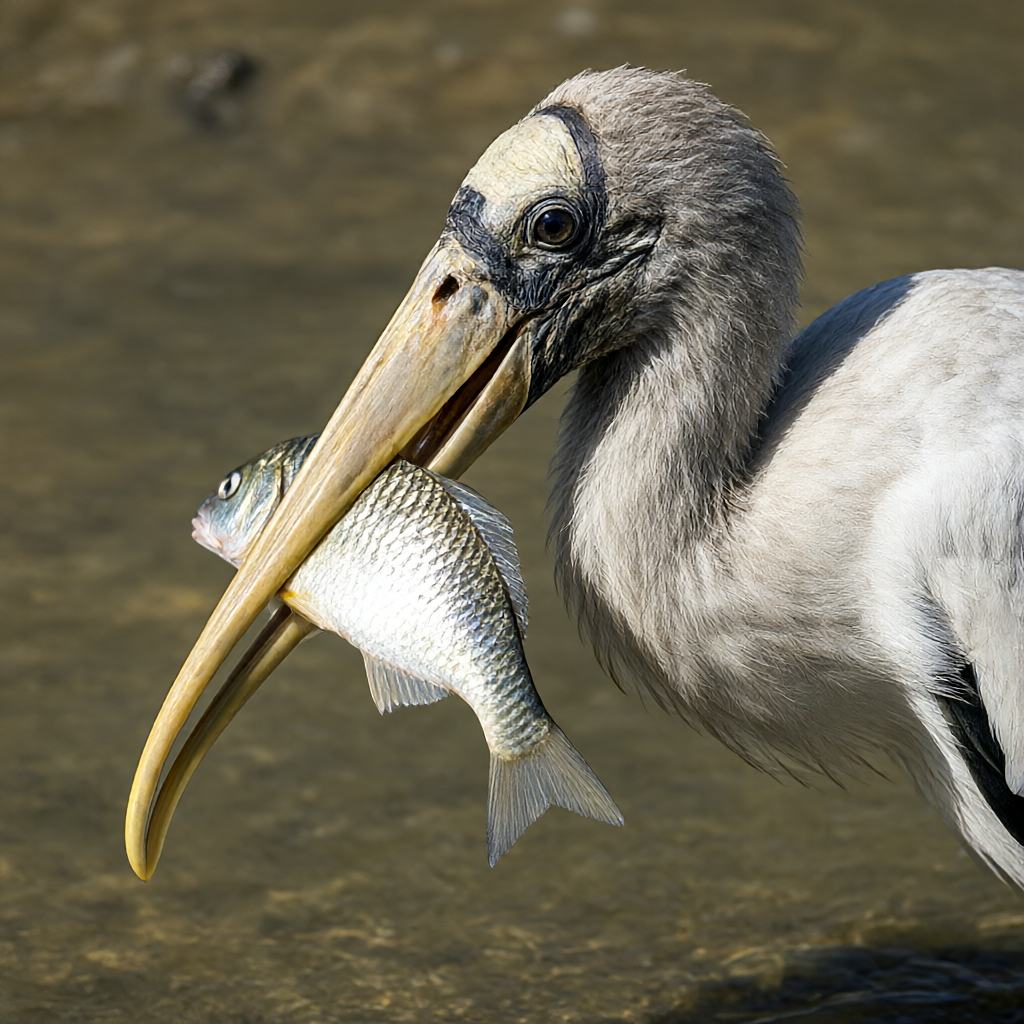
Fish make up most of the food. The bird also takes frogs, crabs, insects and small reptiles. Because the bill works by reflex, the bird can feed in water too dark for sight.
Feeding storks walk forward with the bill open. It snaps shut on contact, and the reflex beats sight. One foot stirs the mud.
Prey that moves gets taken, and the bill does the rest. Chicks take regurgitated fish for the first weeks.
Colonies on trees
The breeding cycle
Colonies gather in late winter, and pairs build nests in tall trees. The female lays two to five eggs, and both parents incubate. Because the nesting season matches falling water, a dry year can end a colony. Chicks fledge after about two months.
They follow the parents to feeding pools, and those pools shrink as the season runs on. Pairs may skip a year when the water fails. Young birds scatter north after the breeding season, and some wander far.
Drained wetlands
Conservation
The Red List calls the species Least Concern. Drainage removed much of the nesting marsh across Florida. Because the bird needs falling water, a managed wetland now keeps colonies alive.
Nothing suggests a rapid fall across the whole range. Northern birds remain few, and they depend on a few colonies. Protected swamps hold the strongest groups, and water managers now time the releases for nesting.
Side by side
How It Compares
| Trait | Wood Stork | White Stork |
|---|---|---|
| Length | 85-115 cm | 100-115 cm |
| Wingspan | 150-175 cm | 155-215 cm |
| Weight | 2-2.5 kg | 3-4 kg |
| Head | bare and dark grey | white and feathered |
| Bill | heavy and down curved | long and straight |
| Rating | Least Concern | Least Concern |
Common misreadings
What People Get Wrong
- Not a heron. Flight holds the neck straight out. A heron folds the neck back in flight, while a stork holds it straight ahead, and the two also differ in the way they take food from water.
- Not a sight hunter. Touch does the work here. The bird sweeps the bill through shallow water and snaps it shut on contact, and because the water stays cloudy that reflex matters more than the eyes.
- Not a northern bird. Most of the population sits in the south. The United States holds a large share of the breeders, and because the nesting season follows falling water a dry year can empty a colony.
Going further
Sources and Further Reading
Quick hits
Five things to remember
- It hunts by touch.
- Its head stays bare.
- It nests in colonies.
- It needs falling water.
- Its bill snaps by reflex.
[…] specialist it shares its waters with many other species, including schooling fish such as whitefish, which form part of the prey base in the lakes and rivers it […]