 By Iris
Lophophorus impejanus | Himalayan Monal
Species Profile · Phasianidae
Himalayan Monal
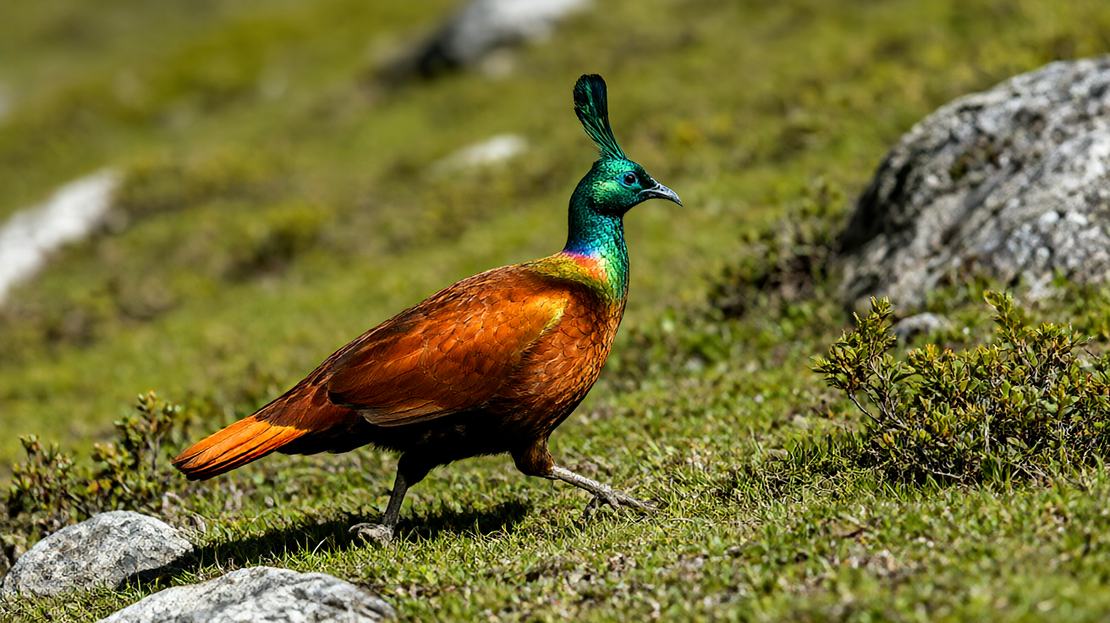
A pheasant walks a grassy slope, and its head shines metallic green under a spoon-shaped crest.
Least Concern
Length
Weight
Eggs
Hatch
Crest
Rating
The Himalayan Monal
The most colourful bird on the slope
A heavy bird walks across alpine turf with its crest lifted. Copper plumage covers the body, and the head shines green. Its crest rises from the crown. It bounces with each step, and it catches the light.
Because the male carries every colour at once, he shows against grey rock. The female sits dull brown nearby, and she blends into the slope. Nepal calls this bird its national animal, since the choice suits a mountain species.
Family tree
Phasianidae, the pheasant family
Its proper name is Lophophorus impejanus, one of three monals. The family holds the pheasants and the partridges, and most of them live in Asia. A Helmeted Guineafowl scratches the same way in African grass, and both birds turn soil with the bill and the feet.
Because the group spread along the Himalaya, each valley now carries a form that differs in size and in sheen. Two subspecies are named, and they differ in the sheen of the plumage. Early writers placed the monals near the peafowl, which later work moved apart.
Crest, colour and bill
How to tell one
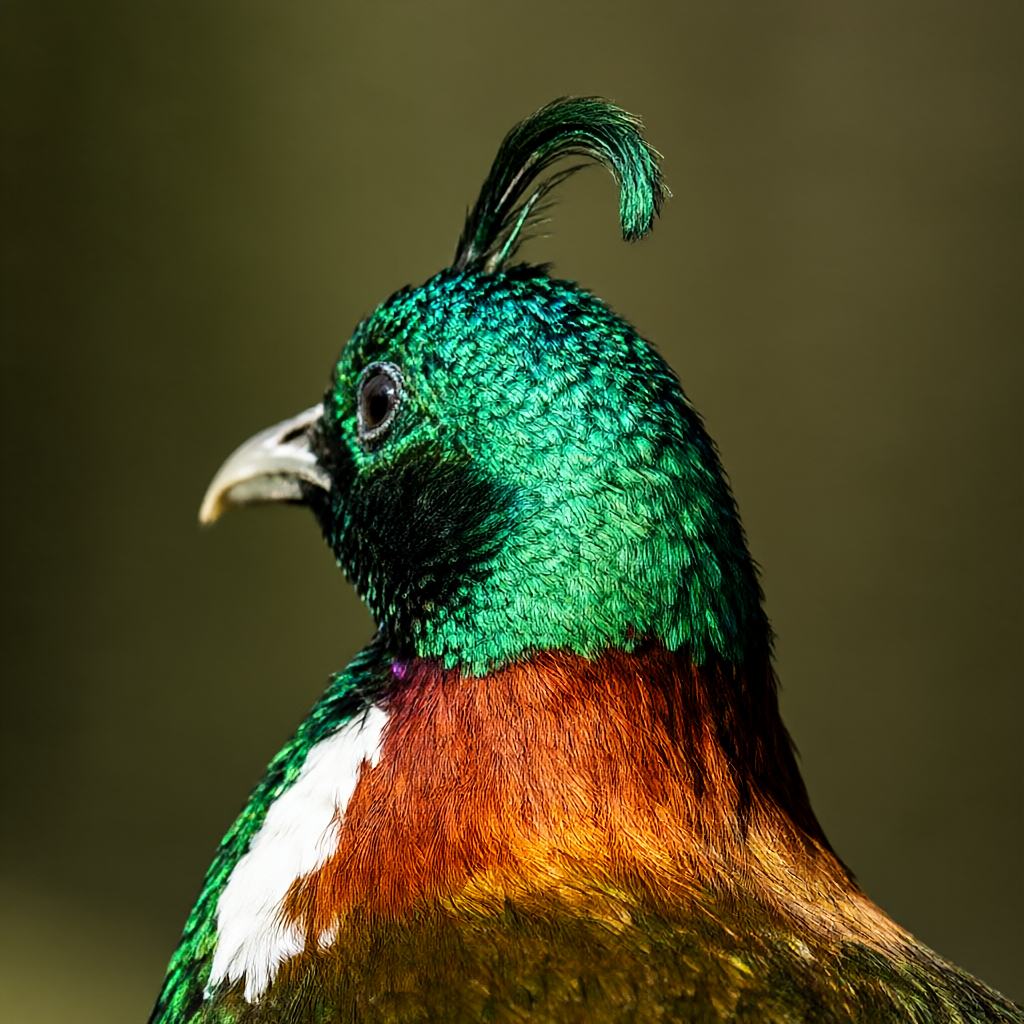
Adults reach 70 cm from bill to tail tip. Males weigh about 2.4 kg, and females run lighter. A metallic green head carries a crest of bare shafts, and the tips spread into small spoons.
Because the plumage bends light rather than carrying pigment, the colour changes with the angle. Pale rump feathers show white, and they spread when the bird flies. Its bill runs long and slightly curved, and the tip wears down from digging.
Legs stay stout, and the claws rake the turf. Females carry brown plumage, and pale bars cross the underparts.
1
2
3
Above the treeline
Where it lives
Alpine meadow and rhododendron scrub hold the species between 2,100 and 4,500 m. It moves downhill in winter, when snow covers the turf. Because the species needs open ground beside cover, a slope with scattered bushes suits it best.
Nepal, Bhutan and northern India make up most of the range. Pairs keep to a small area in summer, and they gather where the snow melts first. A bird that feeds on an open slope keeps one eye on the sky.
It runs rather than flies, since the cover stays thin. An Indian Peafowl displays in warm lowland forest, and both birds belong to the same family despite the gap in habitat.
Grubs and tubers
What it eats
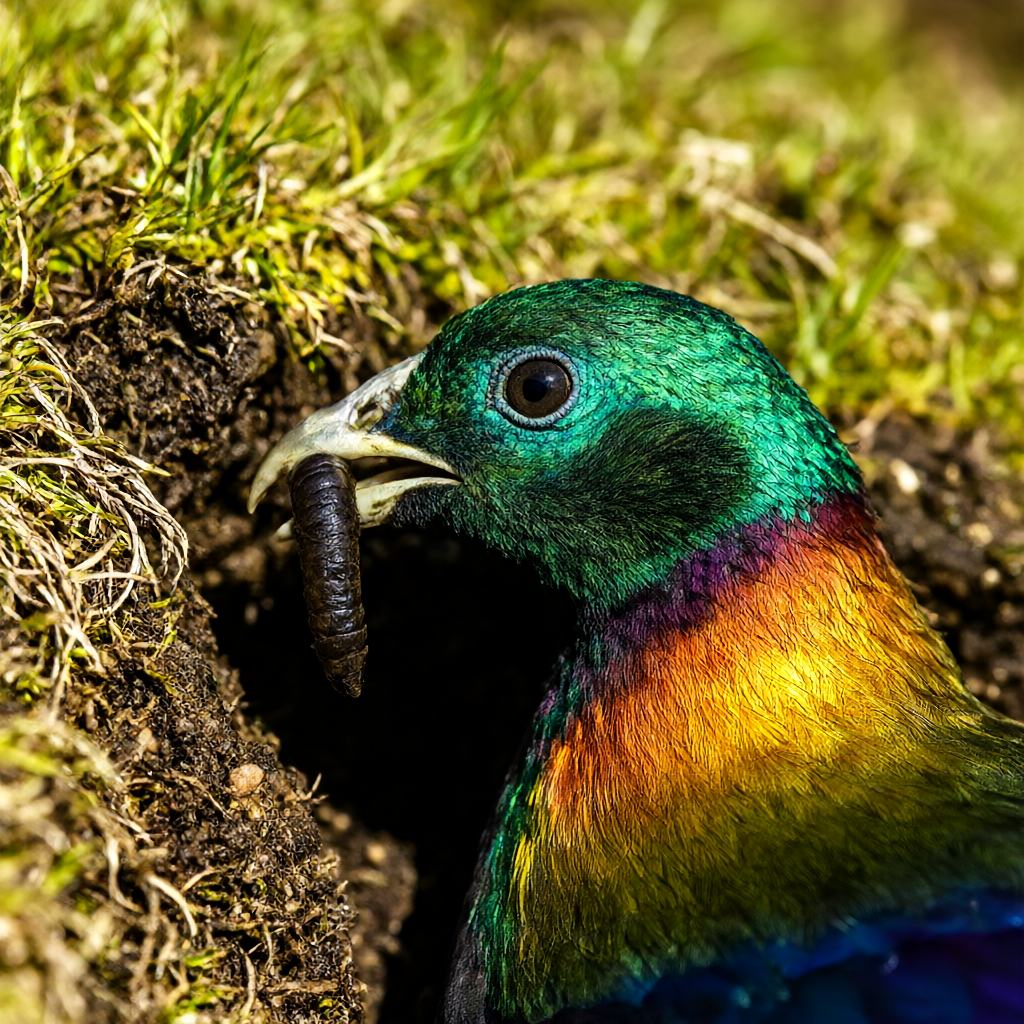
Roots and tubers make up much of the food. It digs with the bill. Turf turns over for bulbs and insects, and the bird follows.
Because snow buries the food for months, the monal works the open patches first. Insects, grubs and seeds fill the rest of the diet, though the bird prefers bulbs. One male scrapes a hole with one foot.
He picks through the loosened soil, and he takes bulbs that frost has pushed up. Chicks take insects almost entirely for the first weeks.
She sits alone
The breeding cycle
A male gathers several females and guards the slope around them. Females scrape a nest in dense cover. They line it with grass, and they sit through the worst weather. Three to five eggs hatch after about four weeks.
Because the male takes no part in incubation, the female sits alone through the worst weather. Chicks can fly within two weeks, and they follow the mother downhill. Pairs may nest again in a good year.
Safe for now
Conservation
The Red List calls the species Least Concern. Hunting takes males for their skins, since the trade runs through mountain markets. Because the bird needs undisturbed turf, grazing pressure removes it from some slopes.
Nothing suggests a rapid fall across the range. Protected areas hold strong groups, and tourism brings income to local villages. Poaching for feathers continues, though the law now covers the species.
Side by side
How It Compares
| Trait | Himalayan Monal | Helmeted Guineafowl |
|---|---|---|
| Family | Phasianidae | Numididae |
| Length | 70 cm | 53-58 cm |
| Weight | about 2.4 kg | about 1.3 kg |
| Head | metallic green | bare and helmeted |
| Eggs | 3-5 | 12-20 |
| Rating | Least Concern | Least Concern |
Common misreadings
What People Get Wrong
- Not a peacock. It carries no eye spotted train. A monal shows a spoon shaped crest and a copper back, while a peacock drags a train of long feathers and fans it against a screen of rival males.
- Not a lowland bird. It lives above the treeline. Summer takes it to alpine turf near the snow, and because the bird digs with a curved bill it finds tubers that stay frozen for most of the year.
- Not a pair bond. The male gathers several females. He guards the slope and takes no part in incubation, and because the female sits alone she carries the whole cost of a failed clutch.
Going further
Sources and Further Reading
Quick hits
Five things to remember
- It is Nepal’s national bird.
- Its crest ends in small spoons.
- Males carry copper plumage.
- It digs for tubers in snow.
- It moves downhill in winter.