 By Iris
Balearica regulorum | Grey Crowned Crane
Species Profile · Gruidae
Grey Crowned Crane
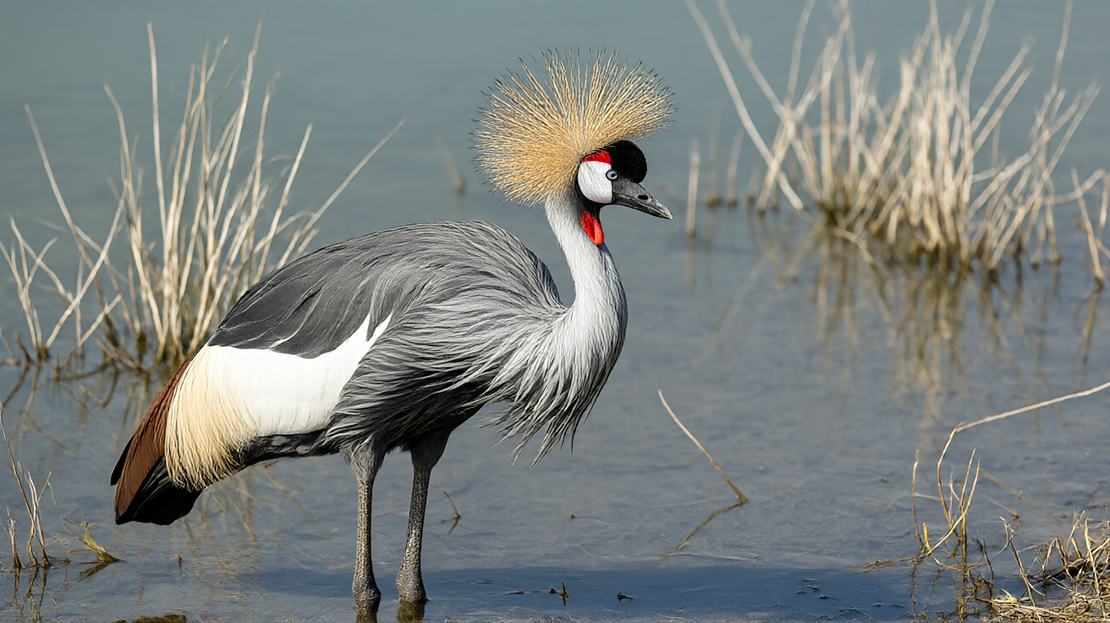
A tall grey bird stands in shallow water with a stiff golden crown fanned over its head.
Endangered
Height
Weight
Eggs
Fledge
Crown
Rating
The Grey Crowned Crane
The crane that dances
A tall grey bird walks through shallow water with a golden crown on its head. The crown stays stiff, and it fans above the face. Red and white patches mark each cheek.
It dances, and the dance involves bows, jumps and lifted wings. Because the species roosts in trees, it differs from every other crane. Uganda put the bird on its flag, and the country still calls it the national bird.
Family tree
Gruidae, the crowned cranes
Its proper name is Balearica regulorum, one of two crowned cranes. The family holds fifteen species, and all of them wade. A Red-crowned Crane winters in Japanese marsh, and both species depend on open water.
Because the crowned cranes kept a long hind toe, they can perch where other cranes cannot. Two subspecies are named, one eastern and one southern. Early writers placed the crowned birds at the base of the crane line, which genetic work supports.
Crown, face and legs
How to tell one
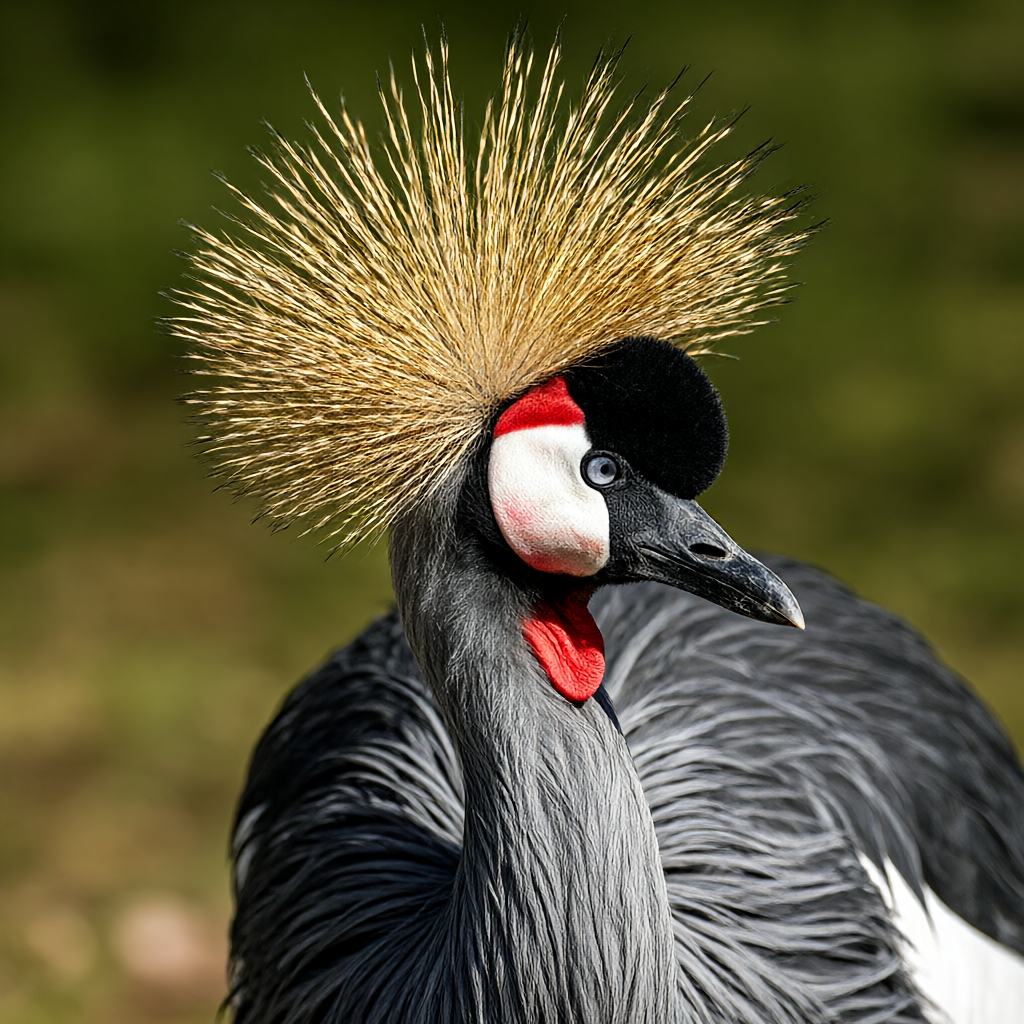
Adults stand about 1 m tall. Weight falls between 3 and 4 kg. The crown carries stiff golden feathers, and each one ends in a small black tip.
A bare red patch covers the cheek, and a white band sits behind it. Because the wind pipe runs long and coiled, the call carries far. Plumage runs pearl grey over the body, and white covers the upper wing.
Legs stay long and black, and the toes spread wide. Its bill runs short and stout, which suits a mixed diet. A crane standing in cold water loses heat through the legs, and because the body stays small, the loss counts for more.
1
2
3
Wetland and pasture
Where it lives
Seasonal wetland and wet grassland hold the species. Kenya, Uganda and Tanzania make up most of the eastern range. The bird nests in marsh, and it feeds in grassland nearby. Because the species needs shallow water, drainage removes it at once.
Trees matter for roosting, and a single dead fig may hold forty birds. Because the birds gather at roosts, one drained marsh can remove a whole flock, and the loss shows only in the next count. A Sarus Crane uses the same wet fields, and both species nest among reeds.
Tubers and insects
What it eats
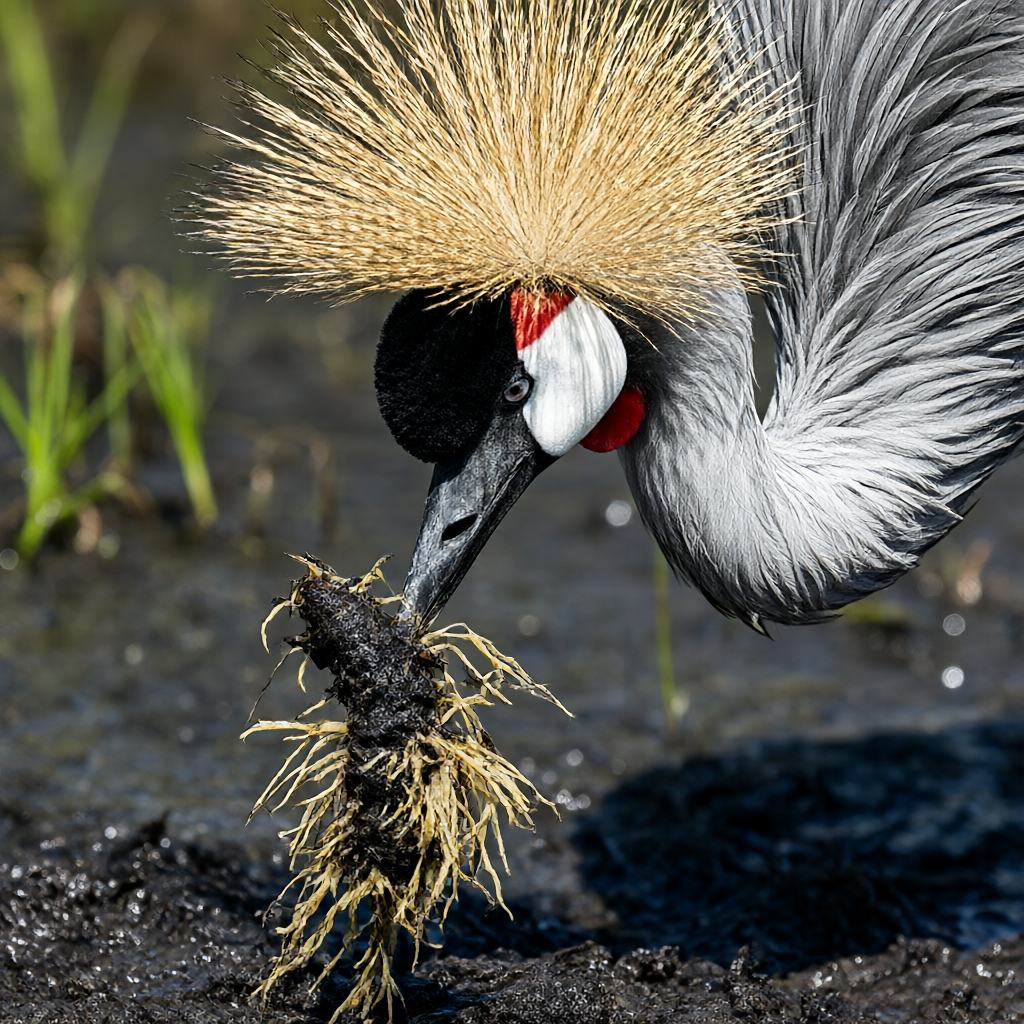
Sedge tubers make up much of the food. The bird also takes grass shoots, insects, frogs and small snakes. Because the bill suits probing, the bird works soft mud for roots. Feeding flocks spread across a field, and each bird keeps a few metres clear.
Grain draws birds to cropland, and farmers lose part of the harvest. A flock that feeds on planted grain can strip a field in days, and because the birds return each season, farmers now guard the crop. Chicks take insects almost entirely.
Two to five eggs
The breeding cycle
Pairs dance through the breeding season, and the bond lasts for years. The female lays two to five eggs in a marsh nest. Both parents incubate, and they swap at intervals.
Because the chicks leave the nest within days, they must walk and swim at once. One chick usually survives to fledge. Young birds stay with the parents for months.
Trapped and drained
Conservation
The Red List calls the species Endangered. Wetland drainage removed much of the nesting ground. Because the bird is beautiful, illegal trade removes chicks for private collections. Power lines kill a number, and collisions happen near roosts.
Nothing suggests the fall has stopped. A pair that loses a nest to a collector rarely tries again that year, and because the species breeds slowly, each loss counts twice. Protected wetlands hold the strongest groups, and community guards now watch nests.
Side by side
How It Compares
| Trait | Grey Crowned Crane | Red-crowned Crane |
|---|---|---|
| Height | about 1 m | 150-158 cm |
| Weight | 3-4 kg | 7-10 kg |
| Crown | golden and stiff | bare red skin |
| Perch | roosts in trees | never perches |
| Eggs | 2-5 | 2 |
| Status | Endangered | Vulnerable |
Common misreadings
What People Get Wrong
- Not a red crown. The bare patch sits on a different bird. A crowned crane carries a stiff golden crest over a small red cheek patch, while the red-crowned crane shows a bare red cap and no crest at all.
- Not a marsh bird only. Flocks feed on dry ground. Crowned cranes take insects and seeds from pasture and cropland, and because they roost in trees they can nest close to farms rather than deep marsh.
- Not secure. Numbers have fallen fast. Wetland drainage and the live bird trade take adults and chicks, and because a pair raises one chick the loss of a nest costs a whole season.
Going further
Sources and Further Reading
Quick hits
Five things to remember
- It roosts in trees.
- It is Uganda’s national bird.
- Its crown is golden.
- It dances in pairs.
- Its windpipe coils like a horn.