 By st20113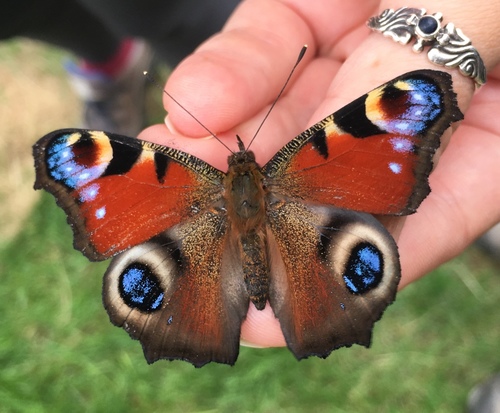
Introduction
The peacock butterfly, scientifically Aglais io, is one of the most striking and familiar butterflies of Europe, instantly recognized by the large eyespot on each wing that resembles a peacock’s feather. Found in gardens, woodlands, and meadows, it is a strong, agile flyer that often hibernates through winter as an adult. Its bold pattern is not merely decorative but a clever defence against hungry birds. On warm days it sails confidently through gardens, yet it can turn still and invisible the moment it closes those wings against bark. Few insects bridge the seasons so visibly, appearing in spring, vanishing in deep cold, and returning with the first sunshine. Its presence is often the sign of a garden rich in the wildflowers and nettles it needs.
Taxonomy
The peacock butterfly belongs to the family Nymphalidae, the brush-footed butterflies, within the genus Aglais. It is related to other colourful garden butterflies and shares flowers with pollinators such as the honey bee, though the butterfly feeds on nectar with a long proboscis rather than collecting pollen like the bee.
Physical Characteristics
Adults have a wingspan of 5 to 6 centimeters. The wings are deep red-brown with a broad yellow border and a single large eyespot on each wing, ringed with blue, black, and yellow. The underside is dark and mottled, providing camouflage when the butterfly rests with wings closed against tree bark. Ragged wing edges further break the outline. The body is slender and furry, an adaptation that helps the adult survive cold weather.
Habitat
Peacock butterflies occupy a wide range of habitats, including woodlands, hedgerows, gardens, parks, and flowery meadows. They need nectar sources for adults and, crucially, stands of stinging nettle for their caterpillars. In autumn they seek cool, dark places such as hollow trees, sheds, or attics to hibernate, emerging on warm winter days to bask. Their flexibility lets them thrive from cities to remote countryside across Europe.
Diet
Adult butterflies feed on nectar from a variety of flowers, favoring buddleia, thistles, and ivy blossom, using a coiled proboscis to sip. The caterpillars, by contrast, are leaf-eaters that live in communal webs on stinging nettle, devouring the foliage until they pupate. As flower visitors, adults contribute to pollination, though less efficiently than bees. Their reliance on nettle makes the humble weed essential to the species’ success. Planting a few nettle patches in an unused corner is one of the easiest ways for a gardener to support this and other butterflies at the same time.
Reproduction
In spring, after emerging from hibernation, females lay rows of pale green eggs on the underside of nettle leaves. The caterpillars hatch and feed together, forming silken nests, before pupating on nearby stems. Adults of the new generation appear in summer and may produce a second brood in warm years. Those that emerge late in the season do not breed immediately but hibernate, mating the following spring after waking. A single female may lay several batches through the warm months, ensuring that even if one group of caterpillars fails, others will still reach adulthood and keep the population steady.
Conservation
The peacock butterfly is abundant and classified as Least Concern across most of its range. It benefits from flowering gardens and untidy corners where nettles are allowed to grow. Pesticide use and the loss of wildflowers can reduce local numbers, but the species remains one of the commonest garden butterflies. Its adaptability and broad diet have protected it from the declines seen in more specialized insects.
Fun Facts
When a bird approaches, the peacock butterfly flashes its wings open to reveal the eyespots, which can startle the predator into retreat. It also produces a faint hissing sound by rubbing its wings together while displaying. After hibernation it may appear on sunny winter afternoons, the first sign of spring for many gardeners. The caterpillars’ joint webs on nettles are easy to spot in early summer. Despite its delicate look, it survives frosts that kill many other insects.
[…] surface. It sits within the family Nymphalidae, alongside familiar garden visitors such as the Peacock Butterfly. The Purple Emperor’s nearest relatives include the lesser purple emperor of southern Europe. […]