 By st20113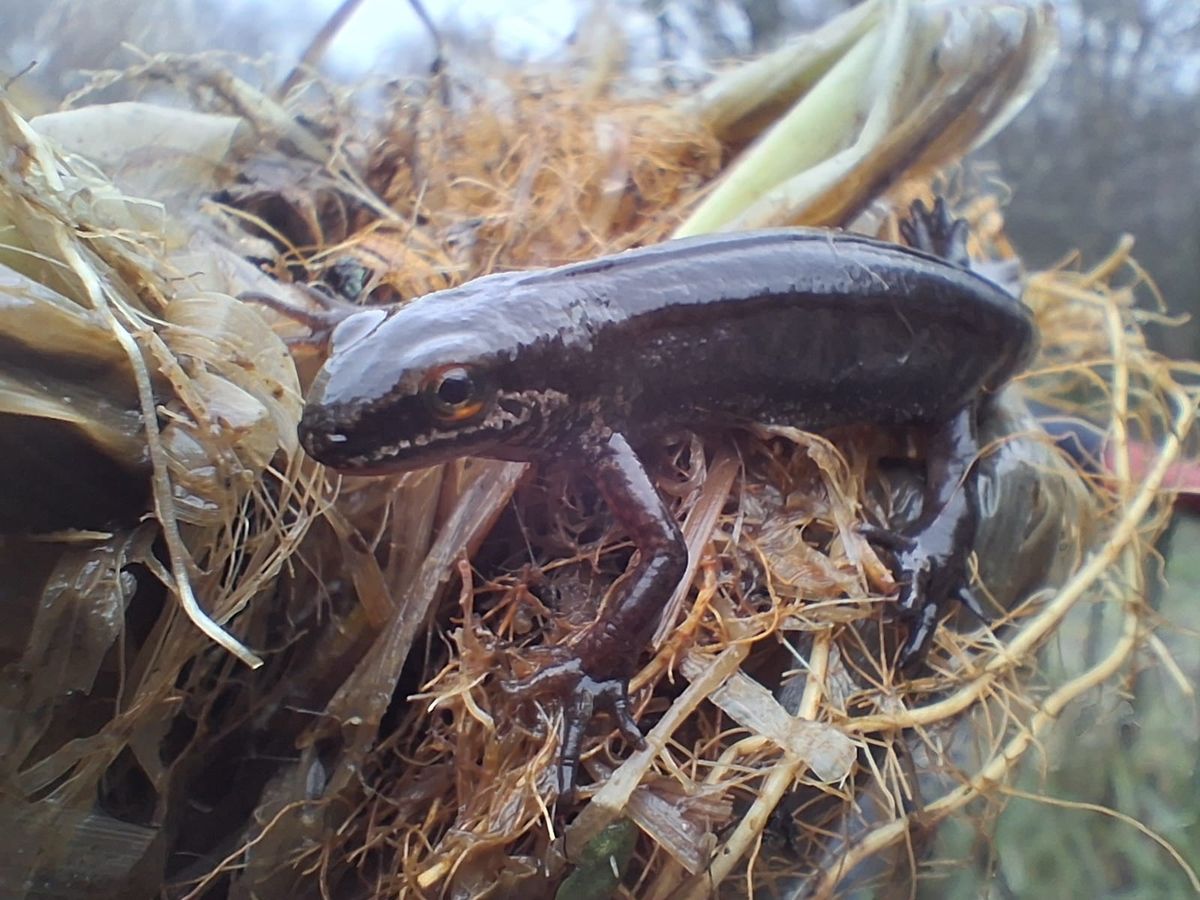
Introduction
The Palmate Newt (Lissotriton helveticus) is one of the smallest newts in Europe, a slender amphibian found across the western and central parts of the continent and throughout the British Isles. Unassuming and easily confused with its close relatives, it spends most of life on land and returns to water only to breed. The breeding male is unmistakable to the trained eye, bearing a low, smooth crest and, most distinctively, broad black webs on the hind feet that give the species its name. Its unassuming nature means it is often overlooked, yet it plays a quiet role in the health of countless small ponds across the countryside.
Taxonomy
Palmate newts belong to the family Salamandridae, the true newts and salamanders. Once grouped with the smooth newt in the genus Triturus, they are now placed in Lissotriton. Described by Razoumovsky in 1789, Lissotriton helveticus is one of several small newts that radiated across European wetlands. Genetic studies separate it clearly from the Smooth Newt, though the two often share the same ponds. Genetic studies continue to refine how these small newts are related across their wide European range.
Physical Characteristics
Adults reach only 7 to 11 centimeters, with females slightly larger than males. The body is olive-brown above with a scattering of small dark spots, fading to a pale, unmarked belly in many individuals, unlike the orange underside of some relatives. This plain coloring helps it vanish among leaf litter when it lives on land between breeding seasons. During the breeding season the male develops a low, velvety crest along the back and a filament at the tail tip, plus the namesake black webbing on the hind toes. Outside the water the newt is a dull, secretive little creature of leaf litter and moss.
Habitat
Palmate newts favor shallow, clean ponds, lakesides, and slow streams, often in acidic or heathland pools where fish are absent. They also use garden ponds, quarry pools, and boggy woodland. In Britain they are especially common in the west and north, including Ireland, where they were likely introduced long ago. Like the Common Frog, they need quiet water free of predatory fish to raise their young successfully. Because it tolerates slightly acidic water better than many relatives, it often occupies peat bogs and heath pools that other amphibians avoid.
Diet
In the water, palmate newts feed on small live prey: water fleas, midge larvae, tiny crustaceans, and the young of insects. On land they take soil invertebrates such as springtails, mites, and small worms. They are active hunters that snap at moving food, and they will eat their own tadpoles or those of other amphibians if opportunity arises, a reminder that even small predators can be opportunistic.
Reproduction
Breeding runs from spring into summer. The male performs a subtle courtship, waving his tail to direct scent toward the female rather than the elaborate displays of larger newts. The female lays single eggs, folding each one carefully into the leaf of an aquatic plant for protection. There is no free-swimming larval stage beyond the typical newt tadpole, which grows legs and leaves the water after a few months.
Conservation
The Palmate Newt is listed as Least Concern, and it remains abundant across suitable habitat. Nevertheless, the drainage of ponds, pollution, and the introduction of fish to breeding sites cause local losses. Because it depends on small, clean water bodies, it benefits directly from pond creation and the removal of invasive fish, simple actions that help many freshwater species at once.
Fun Facts
1. The webbed hind feet of the male are unique among British newts. 2. Outside the breeding season it lives entirely on land, hidden in damp refuges. 3. It can regenerate lost limbs and damaged tails over time. 4. In Ireland it may have arrived with human travelers centuries ago. 5. The male’s crest is so low it is easy to miss without close inspection.