 By st20113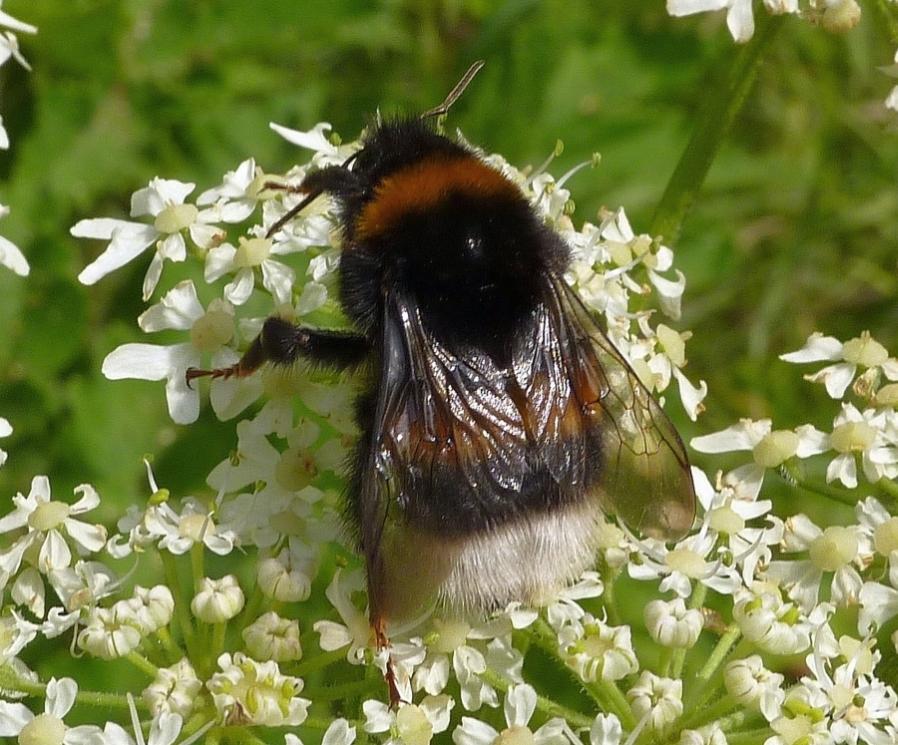
Introduction
The buff-tailed bumblebee (Bombus terrestris) is one of the most common and widespread bumblebees in Europe, easily recognized by the queen’s pale buff-colored tail and the workers’ smaller size. Colonies nest underground in abandoned rodent burrows, compost heaps, or hollows, making them a familiar garden and farmland insect. Like all bumblebees, they are social and gather nectar and pollen from flowers, playing a vital role in pollinating crops and wild plants. Their fuzzy bodies and buzzing flight are hallmarks of summer meadows.
Taxonomy
The buff-tailed bumblebee belongs to the family Apidae, which includes honeybees, carpenter bees, and other bumblebees. Its scientific name Bombus terrestris was assigned by Linnaeus in 1758. It is closely related to the honey bee, though bumblebees live in much smaller annual colonies and do not store large honey reserves. Several subspecies are recognized across its European and introduced ranges, some of which have been moved around the world for greenhouse pollination. The genus Bombus contains roughly 250 species worldwide, almost all in the Northern Hemisphere. Genetic studies help separate the buff-tailed bumblebee from the very similar white-tailed bumblebee.
Physical Characteristics
Buff-tailed bumblebees are large, rounded insects covered in dense hair that traps heat for cold-weather flight. The body is black with two yellow bands, one on the thorax and one on the abdomen, and a tail that is creamy buff in queens and workers, though worn workers may show white. Queens are notably bigger, up to 2.5 centimeters, while workers are smaller. Males have longer antennae and more yellow. Their wings beat so fast they produce the characteristic bumblebee buzz. A long tongue lets them reach nectar in deep flowers. The hairy body accidentally carries pollen between blossoms. Their warning colors and ability to sting deter many predators, though they are not aggressive unless the nest is threatened.
Habitat
These bees occupy gardens, farmland, orchards, meadows, parks, and urban green spaces wherever flowers are abundant. They nest at or below ground level, often in abandoned mouse holes, compost bins, or wall cavities. Unlike honeybees, they do not need a large standing hive and can thrive close to people. They forage across a wide area, visiting many flower species from early spring to late autumn. The availability of continuous bloom, from willow in spring to ivy in autumn, determines how long a colony can survive. Pesticide-free flower patches and undisturbed nesting sites strongly support their numbers.
Diet
Buff-tailed bumblebees feed on nectar for energy and pollen for protein, visiting a broad range of flowering plants. They use “buzz pollination,” vibrating their flight muscles to shake loose pollen that other insects cannot reach, making them especially effective on tomatoes, blueberries, and peas. Workers collect food for the growing larvae and the queen. Unlike many bees, they can fly in cool, dull conditions, extending their foraging day. They also drink water to regulate hive humidity and temperature. Because they are generalists, they support the reproduction of countless wild plants as well as crops. Their appetite links them directly to the health of flowering landscapes across Europe.
Reproduction
A single fertilized queen starts each colony in spring after hibernating underground through winter. She builds a wax honeypot and lays her first eggs, tending the larvae alone until workers emerge. The workers then forage and care for brood while the queen focuses on laying. Later in the season the colony rears males and new queens, which mate and disperse. New queens find hibernation sites and survive alone until the following spring, while the old colony dies off with cold weather. This annual cycle means every colony is founded anew each year. Because a queen may visit thousands of flowers, her mating success and hibernation survival strongly influence local bee abundance.
Conservation
The buff-tailed bumblebee remains widespread and is not currently threatened, but like many pollinators it has suffered where intensive farming has reduced flower abundance and increased pesticide use. Loss of nesting habitat and disease spread from managed colonies also pose risks. Conservation measures include planting continuous flowering margins, reducing neonicotinoid use, and leaving undisturbed ground for nesting and hibernation. Because bumblebees are key pollinators of both wild plants and crops, their decline would ripple through entire ecosystems. Public interest in “bee hotels” and pollinator gardens has helped raise awareness. Monitoring schemes count bumblebee sightings to track population trends across the continent.
Fun Facts
Buff-tailed bumblebees can fly in weather too cold for honeybees, thanks to their furry insulation and heat-generating flight muscles. Their buzz pollination shakes pollen loose from flowers that other bees cannot use. A queen may start a new nest alone in a forgotten mouse burrow. Workers recognize their nest by scent and will chase intruders away. Bumblebees are among the few insects that “play,” sometimes rolling small balls apparently for enjoyment. A single colony can pollinate hundreds of tomato plants in a greenhouse during one season.
[…] observers for centuries, featuring in folklore, art, and scientific illustration across Europe.the buff-tailed bumblebee, the seven-spot ladybird, and the red admiral frequently coexist with the red-tailed bumblebee […]
[…] Bombus pratorum belongs to the family Apidae within the genus Bombus, the true bumblebees, and is one of the short-tongued species that favour open, shallow flowers. It is told from its relatives by its small size, yellow collar and the yellow band at the front of the abdomen, and by the orange tail of the workers. It shares flowers with the Common Carder Bee and the Red-tailed Bumblebee, but it is noticeably earlier and smaller than most. […]