 By st20113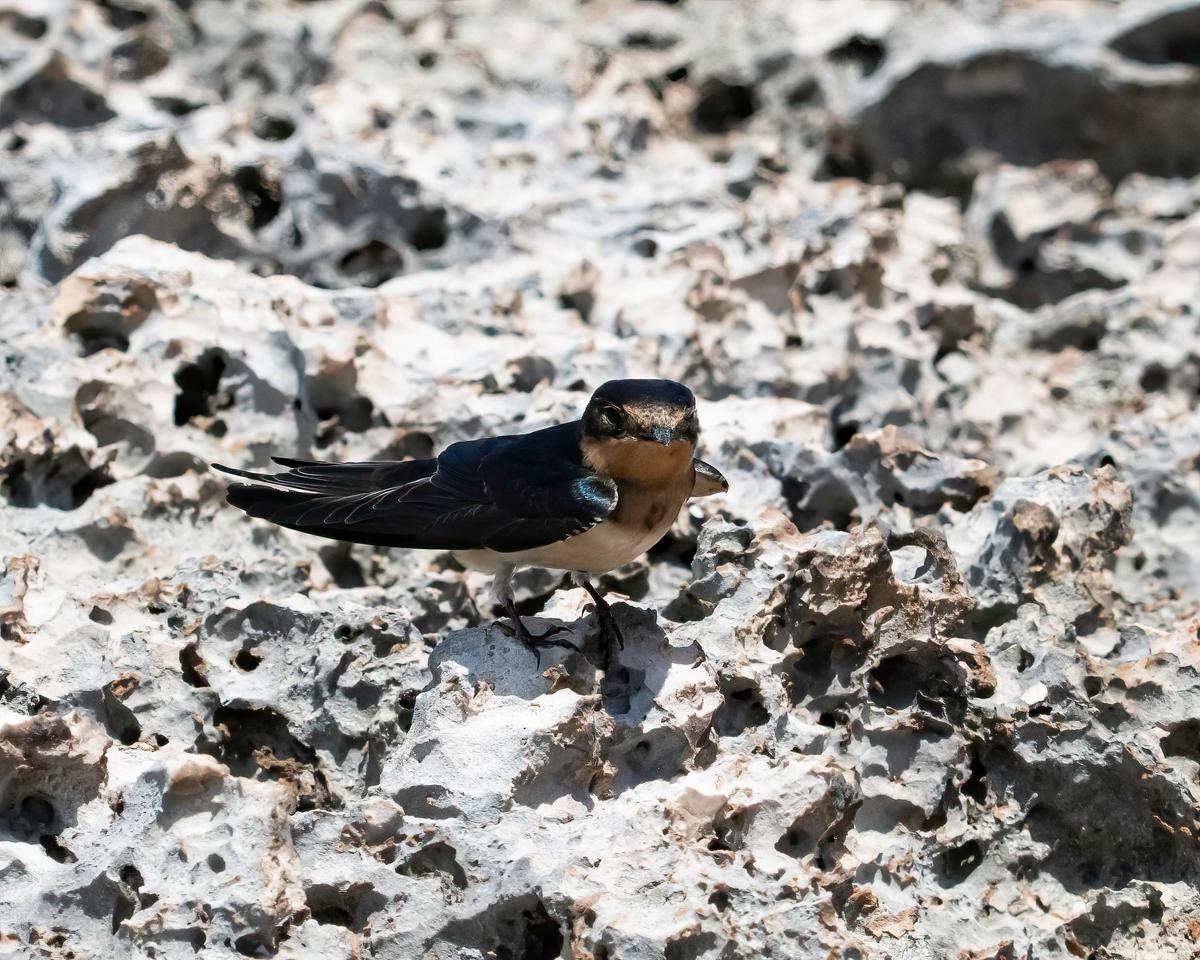
Introduction
The barn swallow (Hirundo rustica) is a slender, agile songbird famous for its deeply forked tail and its close association with human settlements. Measuring about 17 to 19 centimeters, it is one of the most widespread bird species on the planet, breeding across the Northern Hemisphere and wintering in the Southern Hemisphere. Barn swallows are master aerial feeders, catching flying insects on the wing with effortless grace. They build mud-cup nests on beams inside barns, stables, and under bridges, which earned them their name. For centuries farmers have welcomed these birds as a sign of summer and a natural form of pest control. Their annual migrations, sometimes spanning thousands of kilometers, are among the great spectacles of the bird world.
Taxonomy
The barn swallow belongs to the family Hirundinidae, the swallows and martins. Its scientific name Hirundo rustica was assigned by Linnaeus in 1758. Six subspecies are recognized across its global range, varying in the depth of color and the extent of the tail fork. Genetic studies place it among the older lineages of swallows, which evolved powerful flight muscles and wide mouths for catching insects in flight. While it is not closely related to the great white pelican, both are dependent on abundant animal food and open hunting grounds, showing how different birds converge on similar ecological roles.
Physical Characteristics
Barn swallows have glossy steel-blue upperparts, a rufous forehead and throat, and pale underparts. The most striking feature is the long, deeply forked tail with elongated outer feathers, which improves aerial maneuverability. Wings are long and pointed for sustained flight. Adults weigh just 16 to 25 grams. Males typically show a longer tail fork and a richer chestnut throat than females. A narrow dark breast band separates the throat from the belly. Their tiny feet are weak and used mainly for perching, since swallows spend most of their lives airborne. The streamlined body and lightweight bones make them superb fliers.
Habitat
Barn swallows favor open countryside with low vegetation, water bodies, and nearby structures for nesting. They originally nested on cliffs and cave mouths, but today they almost exclusively use human buildings: barns, sheds, porches, and railway tunnels. They need access to mud for nest building, so wetlands, ponds, and moist fields are important. During migration they gather over lakes, reed beds, and grasslands where insects swarm. Unlike many birds, they tolerate close human presence and often nest just meters from people. The availability of flying insects, rather than the nest site itself, usually limits where they can live.
Diet
Barn swallows eat almost exclusively flying insects: flies, beetles, wasps, moths, and aphids. They capture prey in their wide gaping mouth while skimming low over fields, water, or livestock. A single pair and its offspring can consume thousands of insects per day, making them valuable allies to farmers. They drink and even bathe on the wing, scooping water from the surface without landing. In poor weather when insects hide, swallows fly lower and slower, or gather in sheltered spots to wait. Their entire lifestyle is built around the abundance of aerial plankton, which links their fortunes closely to weather and pesticide use.
Reproduction
Barn swallows raise two or three broods per season. The female builds a shallow cup of mud pellets mixed with grass and saliva, often on a ledge or beam indoors. She lays four to five white eggs speckled with brown, and both parents incubate for about two weeks. Nestlings fledge after roughly three weeks but remain fed by the adults for several more days. Pairs are often socially monogamous, though extra-pair mating is common. Males with longer tail forks tend to attract more partners, a classic example of sexual selection. Failed nests are quickly rebuilt, and the birds return to the same sites year after year.
Conservation
Globally the barn swallow remains common and is classified as Least Concern, but populations have declined in parts of Europe and North America because of agricultural intensification, reduced insect abundance, and the loss of nesting sites through building renovation. Encouraging traditional farm buildings, preserving wet areas, and limiting insecticide use all help. In many cultures the swallow is protected by tradition and considered lucky, which has aided its survival near people. Monitoring counts during migration and breeding surveys track its status. Because it feeds entirely on flying insects, the species is an early warning indicator of broader insect decline.
Fun Facts
Barn swallows migrate up to 11,000 kilometers between Europe and southern Africa each year. Their forked tails act like rudders, letting them twist through the air to snatch tiny prey. Ancient Romans believed swallows brought good fortune to a home. A swallow can sleep while flying during long migrations. The mud for one nest may require hundreds of separate trips to a puddle. Parents recognize their own chicks by voice alone among dozens of screaming nestlings.
[…] and is the type species of the genus Delichon. Its nearest relative among familiar birds is the Barn Swallow, which shares the same aerial lifestyle but differs in its deeply forked tail and open-cup […]