 By st20113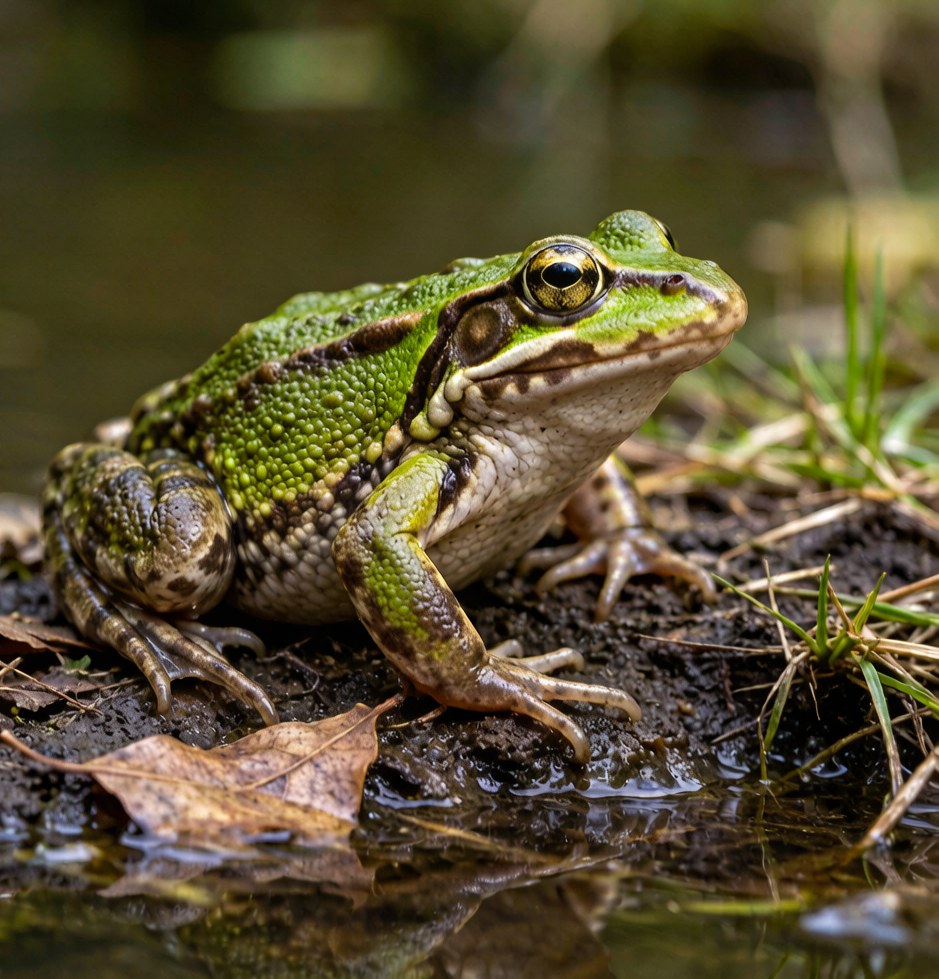
Introduction
The Marsh Frog (Pelophylax ridibundus) is the largest true frog in Europe and one of the most vocal amphibians on the continent, capable of producing calls that register among the loudest of any amphibian. Its explosive, mechanical laughter-like call can be heard from great distances around the lakes, ponds, marshes and slow rivers it inhabits, filling spring nights with an almost industrial sound that is unmistakeable once learned. Originally a species of the steppe regions of Eastern Europe and Central Asia, the
Taxonomy
Scientifically classified as Pelophylax ridibundus within the family Ranidae, the family of true frogs, the Marsh Frog is the type species of the genus Pelophylax, meaning it is the reference point against which other species in the genus are compared. The species name ridibundus means laughing in Latin, a direct and apt reference to its distinctive call that has been compared to human laughter. The genus Pelophylax contains about 20 species of water frogs found across Europe, Asia and North Africa, many
Physical Characteristics
The Marsh Frog is the largest true frog in Europe, with adult females reaching body lengths of 15 cm or more and males typically slightly smaller. It has a robust, muscular body built for powerful swimming, and long, powerful hind legs adapted for both efficient swimming and impressive leaps that can exceed one metre in length. The dorsal colouration is typically bright to olive green with variable darker blotches, and individuals can change colour over hours to days in response to temperature,
Habitat
Marsh Frogs occupy a broad range of freshwater and brackish freshwater habitats, from large lakes and slow rivers to marshes, ponds, irrigation ditches, canals and coastal lagoons. They show a strong preference for permanent water bodies with abundant emergent and floating vegetation that provides cover, basking sites and attachment sites for egg masses. Unlike many amphibian species, Marsh Frogs are relatively tolerant of the presence of fish and therefore can persist in fish-stocked ponds where other amphibian species might be excluded. They
Diet
The Common Toad (common-toad-bufo-bufo) and the Fire Salamander (fire-salamander-salamandra-salamandra) are both frequent vertebrate prey for the voracious Marsh Frog in the marshes they share. The Marsh Frog is an opportunistic and voracious predator with one of the broadest diets of any European amphibian, taking an extraordinary range of prey including insects, spiders, crustaceans, molluscs, worms, fish, frogs including its own species, tadpoles and even small mammals and birds. Its large mouth and aggressive feeding behaviour make it capable of taking surprisingly large
Reproduction
Marsh Frogs begin breeding in early spring as water temperatures rise above approximately 10 degrees Celsius, with peak breeding activity typically occurring from April to June depending on latitude and seasonal weather patterns. Males call from the water, typically while floating at the surface or perched on vegetation at the water’s edge, producing their loud, mechanical, laughter-like call that can be heard from several hundred metres away. Females deposit large egg masses containing thousands of eggs in a floating sheet attached to
Conservation
The Marsh Frog is classified as Least Concern globally due to its wide range and presumably large population, but it is considered threatened or subject to management in some western and northern parts of its range, particularly in Scandinavia and parts of Germany. Like other amphibians, it faces threats from marsh drainage, water pollution, disease including chytrid fungus, and the introduction of predatory fish. In some countries, particularly Turkey and several Balkan states, the Marsh Frog is harvested commercially for human consumption,
Fun Facts
The Marsh Frog’s call is so loud and distinctive that it can be confused with human laughter, mechanical sounds or even distant hammering, and in some countries it has been the subject of folklore and superstition. The Marsh Frog is one of several European amphibians harvested commercially for food, and in some countries it is considered a delicacy served in restaurants across the region. The Marsh Frog has been introduced to many countries outside its native range by humans, either accidentally or