 By st20113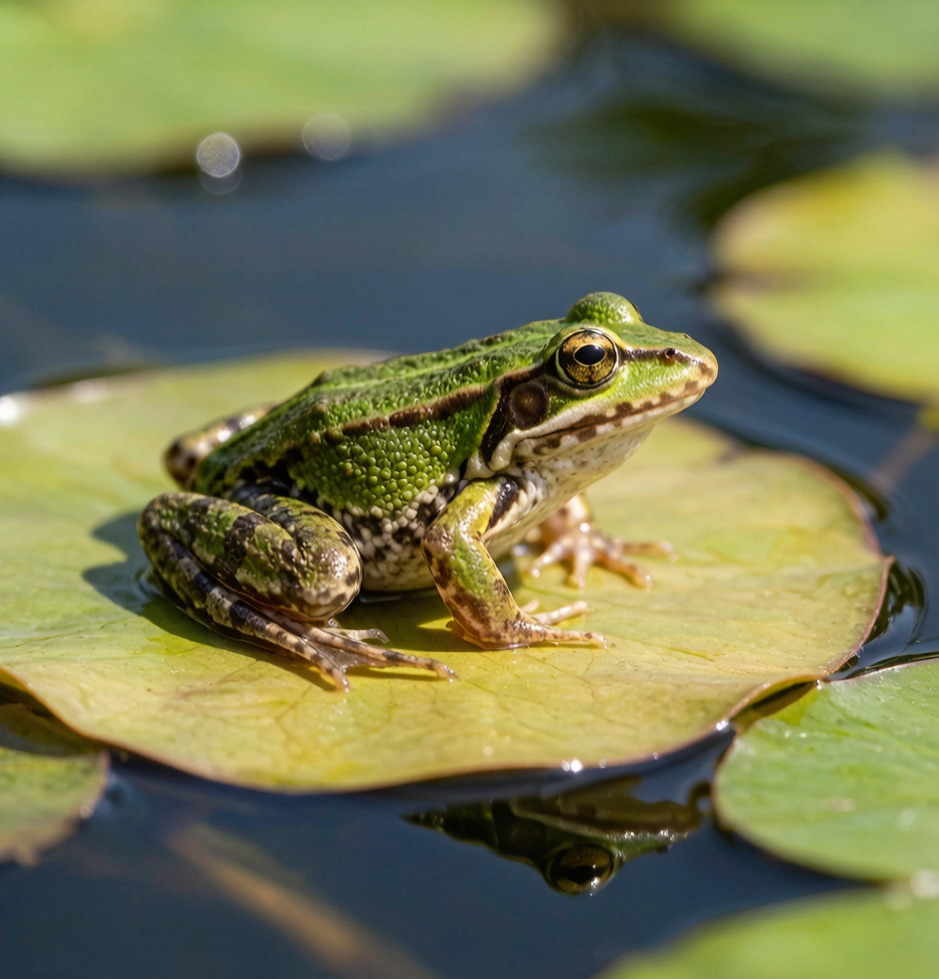
Introduction
The Pool Frog (Pelophylax lessonae) is a small to medium-sized water frog native to northern and eastern Europe and one of the most vocal amphibians across its range. Known for its distinctive loud, chuckling or rattling call that fills the air around ponds, lakes and marshes in spring, this amphibian plays a key role in marsh food webs as both predator of invertebrates and prey for birds, snakes and fish. The Pool Frog was considered extinct in Britain by the early 1990s
Taxonomy
Classified as Pelophylax lessonae within the family Ranidae, the family of true frogs, the Pool Frog is one of the so-called water frogs of Europe that have long puzzled naturalists with their complex taxonomy. The genus Pelophylax contains about 20 species, many of which are difficult to distinguish by appearance alone and hybridise freely where their ranges overlap. The Pool Frog is part of a fascinating genetic system where it often coexists with the edible frog (Pelophylax esculentus), a natural hybrid that
Physical Characteristics
The Pool Frog is a relatively slender water frog, typically measuring 6 to 9 cm in body length, with females generally larger than males. It has a green to brownish-green dorsal coloration, often with darker blotches or spots arranged in irregular rows along the back. A pale mid-dorsal line is sometimes present though it can be indistinct. The hind feet are fully webbed, reflecting its highly aquatic lifestyle, and the tympanum is large and clearly visible. Males can be distinguished from females
Habitat
Pool Frogs are strongly associated with permanent or semi-permanent freshwater bodies such as ponds, lakes, marshes, bogs and slow-moving rivers. They prefer sun-exposed water bodies with abundant floating and emergent vegetation such as reeds, water lilies and pondweeds, which provides both breeding habitat and cover from predators. They are relatively tolerant of human disturbance and can persist in agricultural landscapes where suitable ponds are available. During the summer months, Pool Frogs may disperse away from water into surrounding terrestrial habitats, particularly damp
Diet
The Common Toad (common-toad-bufo-bufo) is the most widespread amphibian sharing the ponds and marshes of northern Europe with the Pool Frog. Pool Frogs are generalist predators of small invertebrates, with a diet dominated by insects, spiders and other arthropods captured in or near the water. They are sit-and-wait predators that lunge at passing prey from a concealed position among aquatic vegetation, typically during the day though they may also forage at night during warm weather. Tadpoles and the eggs of other amphibians
Reproduction
Pool Frogs begin breeding soon after emerging from winter hibernation, with spawning typically occurring from late April to June, depending on latitude and seasonal conditions. Males call from the water’s edge or from positions among emergent vegetation, producing a loud, mechanical rattling or clattering call that can be heard from several hundred metres away on calm spring evenings. Females deposit large egg masses containing up to several thousand eggs, which float on the water surface attached to aquatic vegetation in a characteristic
Conservation
The Pool Frog has undergone significant range contraction across its range, particularly in western and central Europe where many historic populations have been lost. It is classified as Least Concern globally but is considered threatened or endangered in several northern and western European countries. The primary causes of decline include the drainage and pollution of marshes, the introduction of predatory fish such as carp and bass, habitat fragmentation and climate change affecting breeding pond availability. Conservation measures include the creation and restoration
Fun Facts
The Pool Frog is the loudest amphibian in many parts of northern Europe, with its call audible from up to a kilometre away on calm spring evenings. In England, the Pool Frog is associated with the folk tradition of frog hopping contests once held in East Anglia, where frogs were collected and raced as a form of entertainment. The Pool Frog is a surprisingly agile climber and has been observed ascending tall reeds and shrubs to bask and feed at considerable heights