 By st20113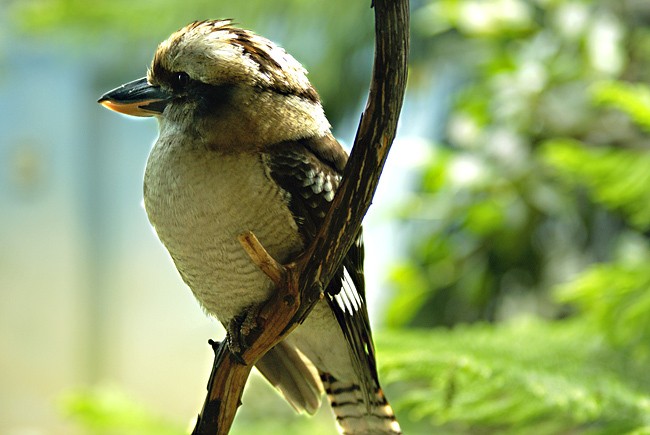
Introduction
The laughing kookaburra (Dacelo novaeguineae) is a large terrestrial kingfisher native to eastern Australia, famous worldwide for its loud, distinctive call that resembles human laughter. The species has become an iconic symbol of the Australian bush and was introduced to parts of western Australia and New Zealand. Kookaburras are social birds that live in family groups, defending year-round territories and cooperatively raising offspring. Though a member of the kingfisher family, the laughing kookaburra rarely fishes, instead favouring terrestrial prey captured on the ground. kingfisher cockatoo
Taxonomy
The laughing kookaburra belongs to the family Alcedinidae, subfamily Halcyoninae, the tree kingfishers. The genus name Dacelo is an anagram of “Alcedo,” reflecting its kingfisher affinities. Described by Hermann in 1783, the species is one of four kookaburra species, all endemic to Australia and New Guinea. The blue-winged kookaburra is its closest relative. Genetic evidence places the kookaburras among the Australasian kingfishers, a radiation that diversified across the region following isolation from northern hemisphere lineages.
Physical Characteristics
Laughing kookaburras are the largest of the kingfishers, measuring 39 to 42 centimetres in length and weighing 196 to 450 grams. They have a robust build with a large square head, a long broad bill, and a short tail. Plumage is predominantly brown and white, with a whitish head and underparts, dark brown wing panels, and a distinctive dark eye stripe. Males and females are similar, though males have a heavier, more rounded bill base. Their strong bill is adapted for seizing and stunning prey, and their zygodactyl feet (two forward, two back) provide a secure grip on branches.
Habitat
Kookaburras inhabit open eucalyptus forests, woodlands, parks, gardens, and farmland fringes across eastern Australia. They favour habitats with scattered trees providing perch sites for hunting and hollows for nesting. Introduced populations in Western Australia and New Zealand occupy similar modified landscapes. They are sedentary, maintaining territories of a few hectares year-round. The presence of large old trees with suitable nesting hollows is a key habitat requirement, making them sensitive to the removal of mature trees in cleared or urbanising areas.
Diet
Although a kingfisher, the laughing kookaburra is primarily a terrestrial predator. Its diet consists mainly of invertebrates such as insects, worms, and crustaceans, supplemented by small vertebrates including lizards, snakes, frogs, rodents, and occasionally small birds. Kookaburras hunt from a perch, swooping down to seize prey and return to a branch to dispatch it by beating against the substrate. Larger prey such as snakes may be killed by dropping from height. They readily exploit human environments, taking scraps and handouts, though a diet overly dependent on unnatural food can be detrimental to chicks.
Reproduction
Kookaburras are socially monogamous and breed cooperatively. The breeding pair is often assisted by offspring from previous years, who help defend territory and feed the nestlings. Nesting occurs in tree hollows, termite mounds, or occasionally burrows, where the female lays two to four white eggs. Both parents and helpers incubate for about 24 to 26 days. Nestlings are altricial and remain in the hollow for roughly 33 to 39 days. Helpers play a crucial role in provisioning the demanding young, increasing fledging success in established family groups.
Conservation
The laughing kookaburra is listed as Least Concern, with a large and stable population across its Australian range. Its adaptability to modified habitats has buffered it against the declines affecting many specialist woodland birds. Local threats include tree removal reducing nest sites and collisions with vehicles. Introduced populations in New Zealand are managed as a non-native species. Conservation of mature eucalyptus with abundant hollows supports healthy kookaburra populations alongside many other hollow-dependent Australian birds and mammals.
Fun Facts
The kookaburra’s famous “laugh” is actually a territorial call, most often heard at dawn and dusk and used to reinforce group boundaries. A chorus of multiple family members calling together creates the rolling, laughter-like effect. Kookaburras have been known to use a branch as an anvil to break apart large prey items. In Aboriginal Australian mythology, the kookaburra’s laugh is said to signal the dawn. Though they appear comical, they are efficient predators capable of subduing snakes longer than themselves.