 By st20113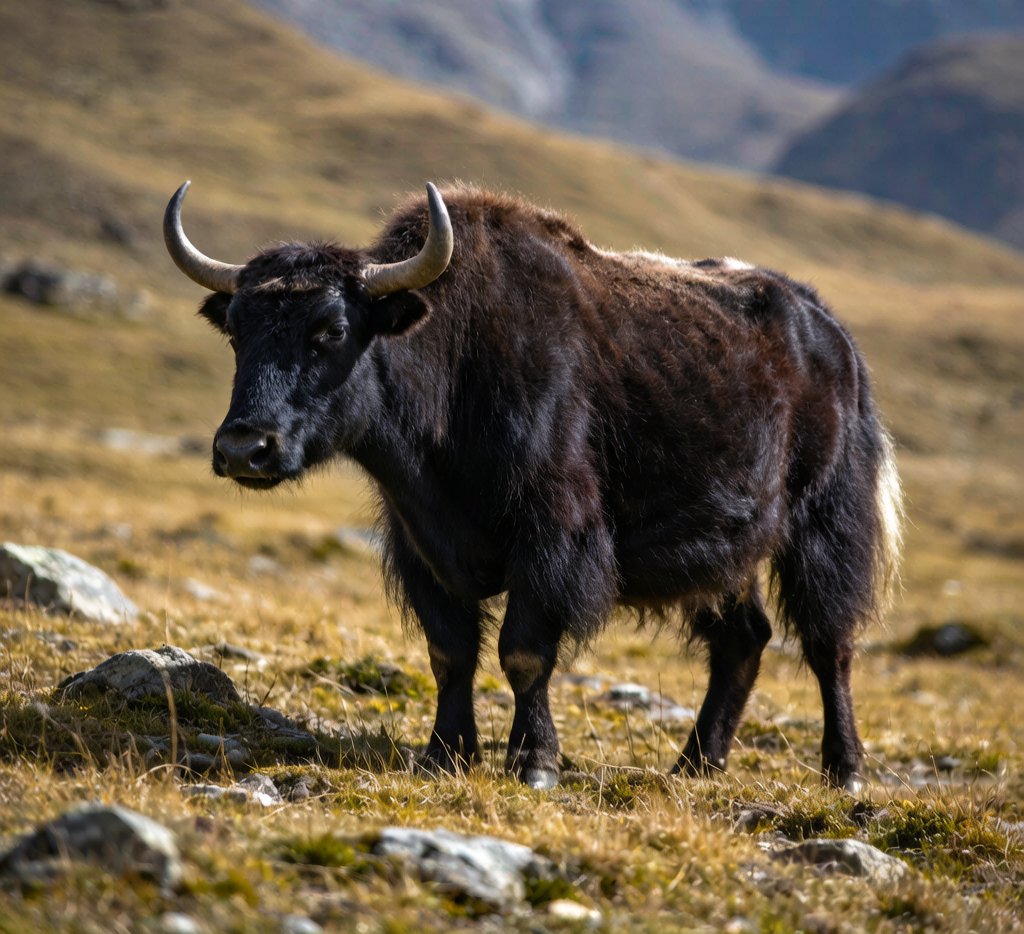
Introduction
The domestic yak is a long-haired bovid native to the high plateaus of the Himalayas and the Tibetan Plateau, where it has sustained mountain peoples for millennia. Adapted to extreme altitude, cold, and thin air, the yak provides milk, meat, fiber, and transport to nomadic herders. Its wild ancestor, the wild yak, still roams remote rangelands in small numbers. The species name grunniens refers to the animal’s characteristic grunting vocalization, a sound heard across highland camps.
Taxonomy
The yak belongs to the genus Bos, the same genus as cattle, and is classified as Bos grunniens in its domestic form. Its closest relatives include the water buffalo and the European bison, though all diverged along separate evolutionary lines within the tribe Bovini. The wild yak is sometimes given the subspecies name Bos grunniens mutus. Genetic evidence places the yak’s domestication roughly four thousand years ago on the Tibetan Plateau, where it remains central to pastoral culture and everyday survival.
Physical Characteristics
Yaks are stocky animals with a bulky frame, short legs, and an extraordinarily dense coat that hangs in fringes nearly to the ground. This woolly underlayer and long outer hair insulate them against temperatures below minus forty degrees Celsius. They possess large lungs and a high red blood cell count that enable efficient oxygen use at altitudes above five thousand meters. Both sexes bear horns that sweep outward and upward, and their broad hooves are well suited to rocky, snowy terrain. Domestic yaks are smaller than their wild counterparts, which can exceed a ton in weight.
Habitat
Yaks inhabit alpine meadows, steppe, and rugged mountain slopes between three thousand and six thousand meters elevation, where air pressure is less than half that at sea level. They graze on sparse, coarse grasses and alpine herbs that few other livestock can digest. In winter they descend to lower valleys to find forage, returning to high summer pastures as snow melts. Their herding lifestyle is inseparable from the domestic sheep and the muskox, both of which occupy cold northern or mountain environments alongside them in pastoral systems.
Diet
Yaks are hardy grazers that subsist on low-quality, high-fiber forage unavailable to most cattle. They clip grasses close to the ground with a wide muzzle and efficiently extract nutrients through a four-chambered stomach. In summer they consume a variety of alpine plants, storing fat for the lean winter months. During harsh seasons they scrape snow with their hooves to reach buried vegetation and may lose significant body mass before spring regrowth. Their ability to thrive on marginal pasture makes them indispensable to highland agriculture and trade.
Reproduction
Yak cows reach maturity at three to four years and typically calve every other year, giving birth to a single calf after a gestation of about nine months. Calves are born in spring when pastures are greenest, allowing rapid growth on rich milk. Bulls become sexually active slightly later and compete for access to females during the brief summer breeding season. In traditional herding, calves stay with their mothers through the first winter, and selective breeding favors animals with calm temperaments and productive milk yields.
Conservation
Domestic yaks are abundant and form the economic backbone of highland communities, so they face no extinction risk. The wild yak, however, is classified as vulnerable, with populations fragmented by hunting and competition with livestock. Conservation reserves in Tibet and neighboring regions protect remaining wild herds and restrict grazing pressure. Efforts to maintain genetic purity include separating wild and domestic animals and monitoring hybridization, which threatens the distinctiveness of the wild population over time.
Fun Facts
A yak’s grunt gave the species its scientific name, and the animals communicate with a range of low, rumbling calls. Their milk is extraordinarily rich, often containing twice the fat of cow milk, and is churned into butter used for tea and lamps. Yaks can carry loads of up to one hundred kilograms across mountain passes impassable to vehicles. Perhaps most remarkable, they thrive where oxygen is scarce enough to incapacitate unacclimated humans, a feat made possible by their uniquely adapted cardiovascular system.