 By st20113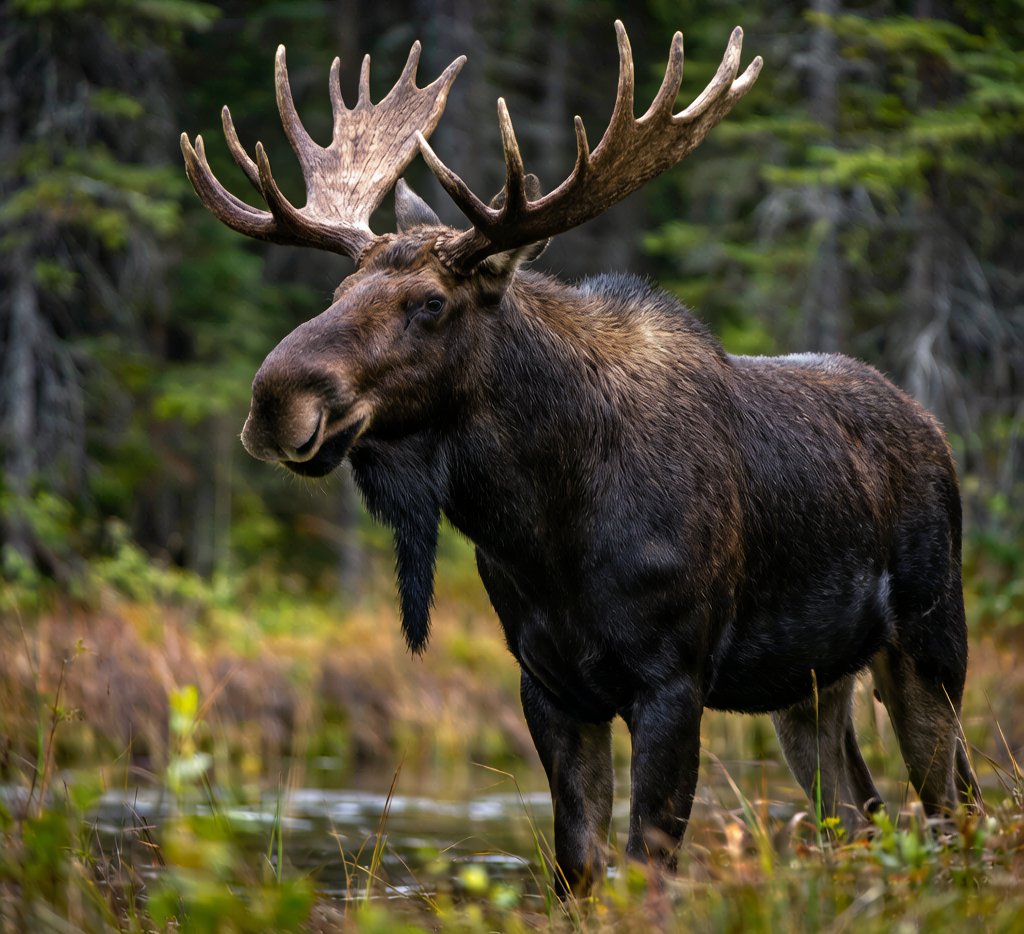
Introduction
The moose is the largest living species of deer and a defining animal of the northern boreal forests. Spanning much of Canada, Alaska, Scandinavia, and Russia, it is instantly recognizable by its towering stature, long legs, and the broad, palmate antlers of mature males. Despite its bulk, the moose is a surprisingly capable swimmer and a browser of twigs and aquatic plants. Its name derives from an Algonquian word meaning twig-eater, a fitting description of its feeding habits.
Taxonomy
Moose belong to the family Cervidae and the genus Alces, of which the living moose is the sole species. Several subspecies are recognized across its Holarctic range, including the Alaska moose, the Shiras moose, and the Eurasian elk of Europe and Asia. The genus Alces is distinct from Cervus, setting the moose apart from the elk and the red deer. Among North American megafauna, the moose shares its range with the American bison and the river otter, though their ecological niches differ greatly.
Physical Characteristics
Bull moose stand as tall as two meters at the shoulder and can weigh over 600 kilograms, making them vastly larger than any other deer. They possess a humped shoulder, a drooping muzzle, and a dewlap of skin called a bell hanging from the throat. Their antlers are broad and flattened rather than branching, spanning up to two meters across in old males. Long legs let them wade through deep snow and stride through wetlands. A dense, insulating coat of hollow guard hairs traps air for buoyancy and warmth in frigid water and subzero winters.
Habitat
Moose favor the edges of boreal and mixed forests where young trees, shrubs, and water coexist. They are strongly associated with lakes, rivers, and marshes, using these habitats for feeding and cooling. In summer they seek shade and water to escape heat, because their thick coats and low surface-to-volume ratio make them vulnerable to overheating. Seasonal movements follow food availability, with animals moving to lower elevations or sheltered valleys when deep snow accumulates. Forest disturbance from fire or logging often creates ideal browse for expanding moose populations.
Diet
Unlike most deer, moose are almost exclusively browsers, stripping leaves, twigs, and bark from willow, aspen, birch, and pine. They also wade into ponds and lakes to consume aquatic plants such as lilies and pondweed, which provide essential sodium lacking in terrestrial forage. A single adult may eat more than twenty kilograms of vegetation daily. Their prehensile upper lip helps grasp branches, and specialized molars crush woody material. In winter, when green browse is buried, moose depend on standing woody shoots and stored fat to survive.
Reproduction
The rut occurs in autumn, when bulls compete for cows through vocal roars, postural displays, and occasional antler clashes. After a gestation of roughly 230 days, cows give birth in spring to one or two calves, which can stand within hours and quickly follow their mother. Calves rely on rich milk and dense cover during their first months, growing rapidly to outpace predators. Young bulls develop small antlers in their second year, with full palmate racks appearing by maturity around age five.
Conservation
Moose populations are generally stable across much of their range, though some southern populations face declines from rising temperatures, tick infestations, and habitat fragmentation. In regions where large predators remain, they take a modest toll on calves. Sustainable hunting and habitat management support healthy numbers, while climate change remains the foremost long-term threat. Conservation efforts emphasize protecting riparian corridors and monitoring disease to preserve this iconic northern species.
Fun Facts
Moose are excellent swimmers and can dive several meters to graze on submerged plants, using their large nostrils to close against water. Despite weighing half a ton, they can run at speeds approaching fifty kilometers per hour. The bell, the flap of skin under the throat, may play a role in heat regulation or courtship, though its exact function remains debated. A moose’s long legs are an adaptation not to running but to walking through deep snow where shorter animals would flounder. Perhaps most surprising, moose have poor eyesight but an extraordinary sense of smell and hearing.