 By Iris
Earth Moon | Moon
Species Profile · Earth I
Moon
A body small enough to sit inside the Pacific, yet it holds the planet steady on its axis and drags the oceans twice a day.
Natural satellite
Diameter
Distance
Gravity
Day
Core
Samples
A neighbour that steers the sea
The one body that shapes this planet
Earth keeps one companion, and that companion has shaped the planet in ways most people never stop to notice. Tidewater rises twice a day because this neighbour drags on the oceans. That drag holds our axis steady.
The poles would wander, and the seasons would drift out of step. One face always turns toward the surface we watch from. The far side stays hidden until a spacecraft swings around behind it.
Maps replaced the old myths. Yet the plain facts still surprise most people who look up. Both grew from one cloud of debris, so Earth and its companion share a long history.
Built from a collision
Origins and the Theia impact
A Mars-sized body named Theia struck the young planet about 4.5 billion years ago, and the wreckage never fell back to the ground. Debris thrown into orbit gathered within months rather than ages. Heat from the collision melted the wreckage into an ocean of magma.
Light rock floated to the top as the melt cooled, and it built a crust of anorthite. That pale rock still covers most of the highlands today. Heavy iron sank inward, though the core it made stayed small.
Iron fills only about 20% of the radius, so the field it makes stays weak. Oxygen isotopes tie the rock to the mantle of our planet, and that match rules out a body caught later. Samples from Apollo settled the case for the impact.
Maria, highlands and dust
What the surface is made of
Dark plains of basalt cover about a third of the near side. Early sky watchers called these dark patches maria, which is simply Latin for seas. They are flood basalts, poured out after giant impacts broke the crust apart. Highlands stand a few km higher.
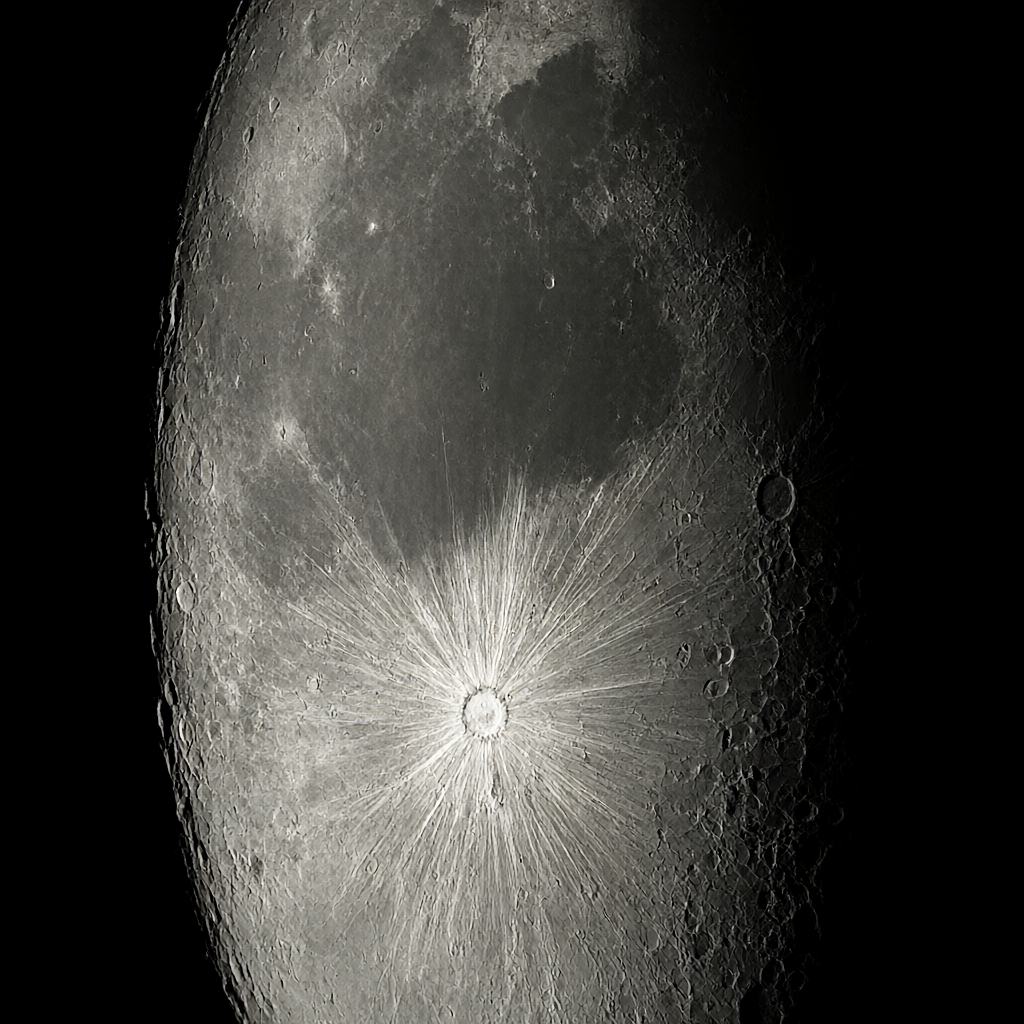
Tycho, near the south edge, throws long pale rays across the highlands. Those streaks are fresh debris, still bright after 100 million years. No wind or rain erodes the ground, since the surface has no air. A fine grey powder called regolith coats the whole surface.
The powder is sharp and gritty, and it clings to suits, lenses and seals. In a close view, dark maria, pale highlands and one rayed crater stand apart clearly.
1
2
3
A locked spin and a widening gap
Orbit, tides and a steady axis
One orbit takes 27.3 days, and one slow spin takes exactly the same time. Tidal friction locked the two rates together long ago. That lock is why the same features face us night after night. Mirrors left by Apollo crews show the gap widening by 39 mm a year.
Days lengthen slowly, because the moon keeps drifting outward. Two bulges of water follow the moon around the planet. Solid ground rises too, although the rock lifts only a few cm at most. Spring tides arrive at new and full phases, when Sun and moon line up.
Neap tides come at the quarters, while the daily range shrinks. Our 23.4 degree tilt holds steady, since the same gravity damps any wobble of the axis. Mars has no large moon, and its axis wanders much further.
Phases, shadows and the Saros clock
How eclipses happen
Sunlight lights one half at all times, and we see a changing share of it. A full cycle from new to new lasts 29.5 days, which runs longer than one orbit because the planet moves too. Crescent, quarter and gibbous come from our angle. Earth’s shadow touches the surface only during a lunar eclipse.
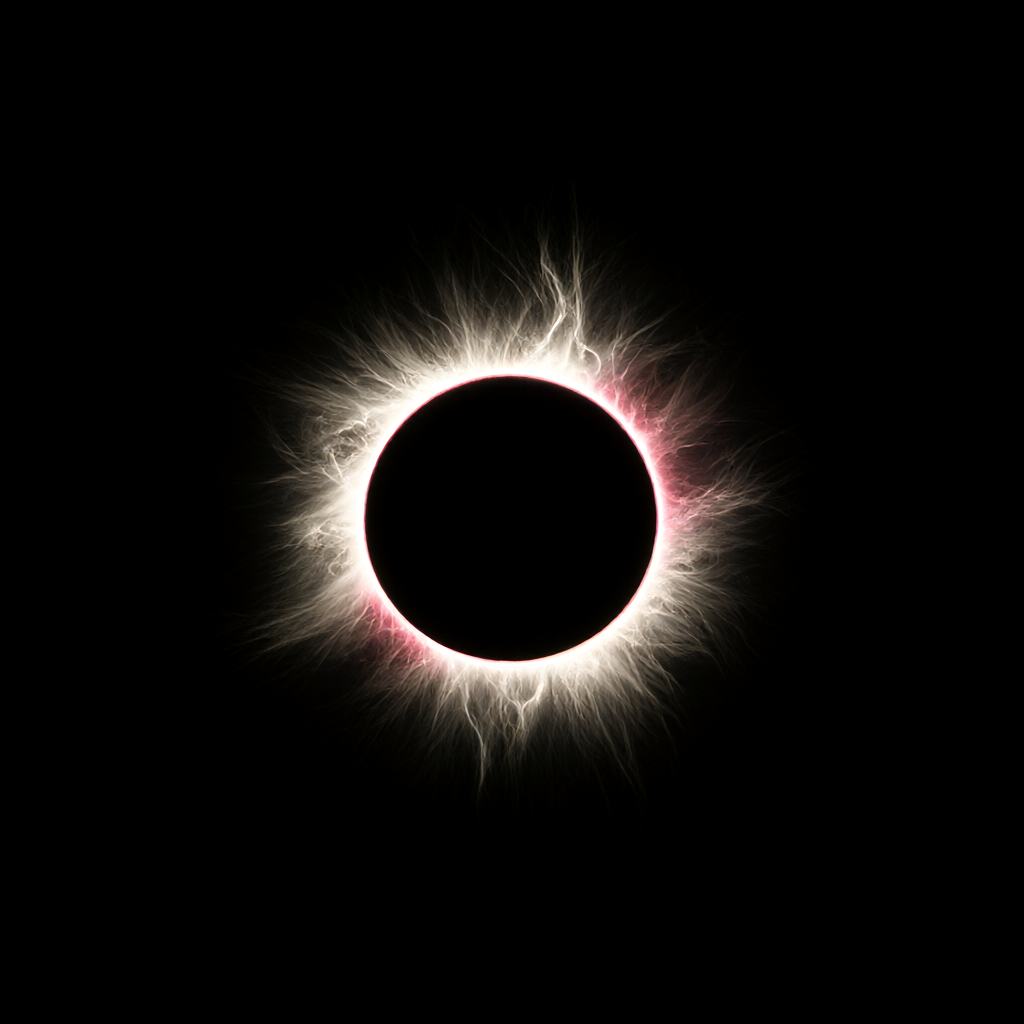
A Solar Eclipse needs the moon to pass almost straight between the Sun and the planet. Our star is covered almost exactly, even though the moon is 400 times smaller. Distance makes up the rest, since it sits about 400 times closer. A blackout shows the corona.
Total eclipses cross the planet every 18 months or so. The old Saros cycle repeats the same geometry every 18 years, 11 days and 8 hours. Ancient observers used that steady rhythm to predict the next darkening.
Twelve boots and a fleet of robots
The record of exploration
Six Apollo crews landed between 1969 and 1972. Twelve people walked on the surface, and all of them came home. They brought back 382 kg of rock.
Robotic landers followed, from the Soviet Union and later from China. Chang’e 5 returned 1.7 kg of young basalt in 2020. Chang’e 4 had set down on the far side a year earlier.
NASA’s Artemis program aims to put crews back on the ground this decade. A small station called Gateway would circle in a wide orbit. Water ice near the poles draws most of the interest, since a base would need it.
Calendars, radio and a future base
Why it still matters
Calendars in many lands began as counts of this cycle. Muslim, Hebrew and Chinese systems still track the phases. Island sailors crossed the open Pacific by reading stars, and they used the moon as a nightly clock. Radio dishes want the far side as a quiet bowl, free of earthly noise.
A permanent base would cut the cost of every launch beyond low orbit, since cargo no longer needs the same shielding or fuel. Ilmenite in the soil could yield oxygen for air and fuel. Polar ice could supply drinking water, and that water splits into air and fuel.
Side by side
How It Compares
| Trait | Moon | Earth |
|---|---|---|
| Diameter | 3,474 km | 12,742 km |
| Gravity | 1.62 m/s2 | 9.81 m/s2 |
| Surface | cratered basalt plains | oceans and moving plates |
| Air | none at all | 78% nitrogen |
| Day | 29.5 Earth days | 24 hours |
| Field | weak and patchy | strong global field |
Common misreadings
What People Get Wrong
- Many people call the far side dark, yet it takes the same sunlight as the near side. It faces away from us, not from the Sun, and half of it stays lit.
- Films suggest the moon drives the tides alone, though the Sun pulls as well. Solar gravity adds roughly half the pull that the moon supplies, so the Sun matters too.
- Popular accounts say eclipses happen every month, yet the orbit tilts about 5 degrees. That tilt usually sends the shadow above or below the planet, so most months pass without one.
Going further
Sources and Further Reading
Five things to remember
Quick hits
- Sunrise to sunrise takes 29.5 Earth days.
- Sunlight reaches the far side as well.
- Moonlight is reflected sunlight, and it carries no warmth.
- Footprints from 1969 may last millions of years.
- It drifts away at fingernail speed.