 By st20113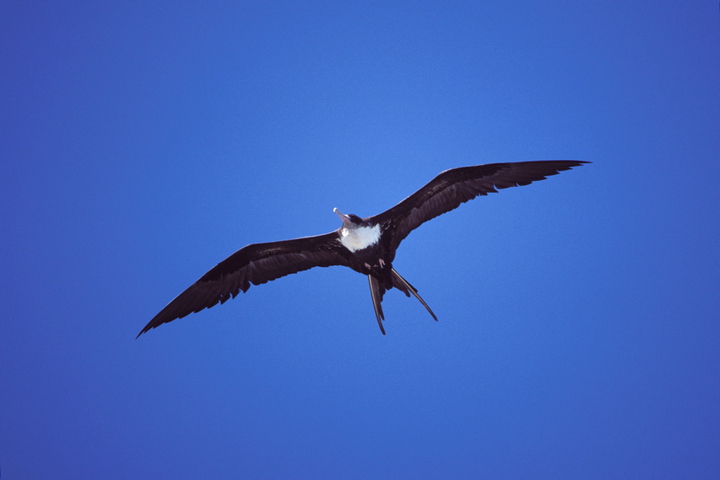
Introduction
The lesser frigatebird is a large tropical seabird renowned for its spectacular aerial skills and piratical feeding habits. With a slender build, deeply forked tail, and long, narrow wings, it glides effortlessly over warm oceans, sometimes remaining aloft for weeks without touching land. Despite its name, it is still a substantial bird, spanning roughly 1.8 meters across the wings while weighing little more than a kilogram. Its mastery of the air rivals that of the wandering albatross, and it is considered one of the most accomplished fliers in the bird world.
Taxonomy
The lesser frigatebird belongs to the family Fregatidae, which contains only the five species of frigatebirds, all placed in the genus Fregata. The species was formally described in 1789 by the German naturalist Johann Friedrich Gmelin. Several subspecies are recognized across its vast tropical range, differing mainly in size and subtle plumage details. Frigatebirds are related to boobies, cormorants, and large waterbirds such as the great white pelican within the order Suliformes, though their lightweight skeleton and endless soaring set them apart from these heavier birds.
Physical Characteristics
Frigatebirds show striking sexual dimorphism. Adult males are entirely glossy black with a bare red throat pouch, while females are larger, with a black head and a white breast and belly. Juveniles have brownish heads and pale underparts. The wings are exceptionally long and pointed, the tail deeply forked, and the bill long and hooked. Uniquely among seabirds, frigatebirds have tiny, poorly webbed feet and cannot swim because their feathers lack waterproofing. They compensate by being masters of the air, possessing the lowest wing loading of any bird, which allows them to soar for hours with barely a wingbeat.
Habitat
The lesser frigatebird is found across tropical and subtropical oceans worldwide, including the Indian, Pacific, and Atlantic Oceans. It is strictly pelagic, spending most of its life far from land, but it must return to remote islands, atolls, and rocky islets to breed and roost. Colonies are often shared with boobies, tropicbirds, and other seabirds. In the Atlantic, significant populations breed on islands such as Ascension and Tristan da Cunha, while enormous colonies exist across the central Pacific, where thousands of birds gather in single nesting trees.
Diet
Frigatebirds are famous kleptoparasites, chasing other seabirds until they drop or regurgitate their catch. While diving seabirds such as the Atlantic puffin plunge underwater, frigatebirds feed exclusively at the surface, snatching flying fish, squid, and jellyfish without landing. They also raid nesting colonies for chicks and eggs, take hatchling sea turtles, and scavenge fish scraps around fishing vessels. Feeding typically occurs at dawn and dusk, when prey is most active near the ocean surface.
Reproduction
Breeding is colonial and highly theatrical. Males inflate their brilliant red gular pouches, rattle their bills, and spread their wings to attract females, a display that may continue for weeks. Once paired, the birds build a flimsy platform nest of sticks in trees or on the ground. A single egg is laid and incubated by both parents for roughly 40 to 55 days. The chick is fed for five to six months and may continue receiving care for more than a year, one of the longest dependency periods of any bird. Consequently, pairs typically breed only every other year.
Conservation
The lesser frigatebird is classified as Least Concern by the IUCN, with a large global population spread over a vast range. However, it faces genuine threats, including accidental capture in fishing gear, predation by introduced rats and cats on nesting islands, and the effects of climate change on ocean food supplies. Disturbance of colonies and the loss of nesting trees also harm local populations. Protecting remote breeding islands is widely considered the most important step for the species’ long-term future, since frigatebirds cannot survive without secure nesting sites.
Fun Facts
Lesser frigatebirds can sleep with one half of their brain at a time while soaring. They cannot take off from flat water and will drown if forced to land on the ocean. Their red throat pouch, inflated only by males during courtship, is the largest of its kind relative to body size. Some individuals follow ships for days, and these “pirates of the sky” are among the few birds that regularly steal food from other species.
[…] to rest each night. A sailor who saw the bird flying home at dusk knew that land lay that way. The lesser frigatebird and other sea birds were, in effect, a living […]