 By st20113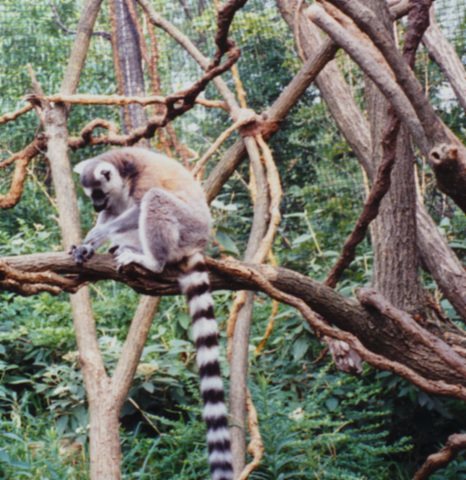
Introduction
The ring-tailed lemur (Lemur catta) is one of the most recognizable primates in the world, celebrated for its long, elegantly banded black-and-white tail. Endemic to the island of Madagascar, it is the only surviving member of its genus and a flagship species for the conservation of the island’s extraordinary wildlife. Unlike many of its relatives, the ring-tailed lemur is largely terrestrial, spending much of its day on the ground in noisy social troops. Its striking appearance and expressive face have made it a familiar symbol of Madagascar in popular culture, yet in the wild it faces mounting pressures from habitat loss.
Taxonomy
The ring-tailed lemur belongs to the family Lemuridae within the order Primates. It was first formally described by Carl Linnaeus in 1758 and remains the sole species in its genus, Lemur. Genetic studies confirm that lemurs are prosimians, an ancient branch of primates that split from the lineage leading to monkeys and apes more than 60 million years ago. The ring-tailed lemur’s closest living relatives include other Madagascar lemurs such as the ruffed lemurs and the reddish-brown varieties found in the island’s forests. This isolation produced a radiation of more than one hundred lemur species found nowhere else on Earth.
Physical Characteristics
Adults measure roughly 39 to 46 centimeters in body length, with a tail of similar or greater length, and weigh between 2.2 and 3.5 kilograms. The most distinctive feature is the tail, ringed with thirteen to twenty-five alternating black and white bands and carried upright like a banner. The face is white with dark patches around the eyes, a black nose, and rounded ears edged in white. A dense, woolly coat provides insulation against cool highland nights. The hands and feet bear nails rather than claws, except for a grooming claw on the hind foot, and the padded digits allow a strong grip on branches and rocks.
Habitat
Ring-tailed lemurs occupy the dry deciduous forests, spiny scrub, and gallery forests of southern and southwestern Madagascar. They are unusually adaptable, also using degraded secondary growth and rocky outcrops known as karst. Troops travel across open ground between forest patches, which makes them more visible than many forest-dwelling relatives. They sleep in trees but forage mainly on the ground, where they move with a characteristic bounding gait. The sacred baobab trees of the region provide important roosting and shading sites.
Diet
These lemurs are primarily herbivorous but highly opportunistic. Their diet centers on fruit, leaves, flowers, bark, and sap, with figs and tamarind playing key seasonal roles. They also consume flowers for nectar and occasionally take insects, small vertebrates, and bird eggs when available. In troops, dominant females usually feed first. Their digestive system handles tannin-rich and fibrous plant material that many mammals avoid, allowing them to exploit resources other species cannot use.
Reproduction
Breeding is strongly seasonal, with mating timed so that infants are born at the start of the warm, rainy season. After a gestation of about 135 days, females usually give birth to a single offspring, though twins occur. Newborns cling to the mother’s belly for the first weeks and then ride on her back. Youngsters are weaned at roughly five months and reach sexual maturity around three years. Females typically remain in their natal troop for life, while males disperse, reducing inbreeding within groups.
Conservation
The International Union for Conservation of Nature lists the ring-tailed lemur as Endangered, with populations falling sharply across recent decades. The principal threat is deforestation driven by slash-and-burn agriculture, charcoal production, and cattle grazing. Hunting and the illegal pet trade further reduce numbers. Several reserves and national parks protect core habitat, and captive breeding programs in zoos provide a safety net. Conservation groups work with local communities to develop alternative livelihoods that reduce pressure on the forest.
Fun Facts
Ring-tailed lemurs communicate with a rich vocabulary of scent marks, using glands on their wrists and chests to label territory and signal status. Males perform a peculiar “stink fight,” waving scent-laden tails at rivals during the breeding season. Troops sunbathe in the mornings, sitting with arms outstretched in a posture that looks like meditation. Their striped tails help keep group members together when moving through tall grass. The native fossa, Madagascar’s largest predator, is their chief natural enemy. Remarkably, the aye-aye shares the island but fills a completely different ecological niche as a nocturnal forager.