 By st20113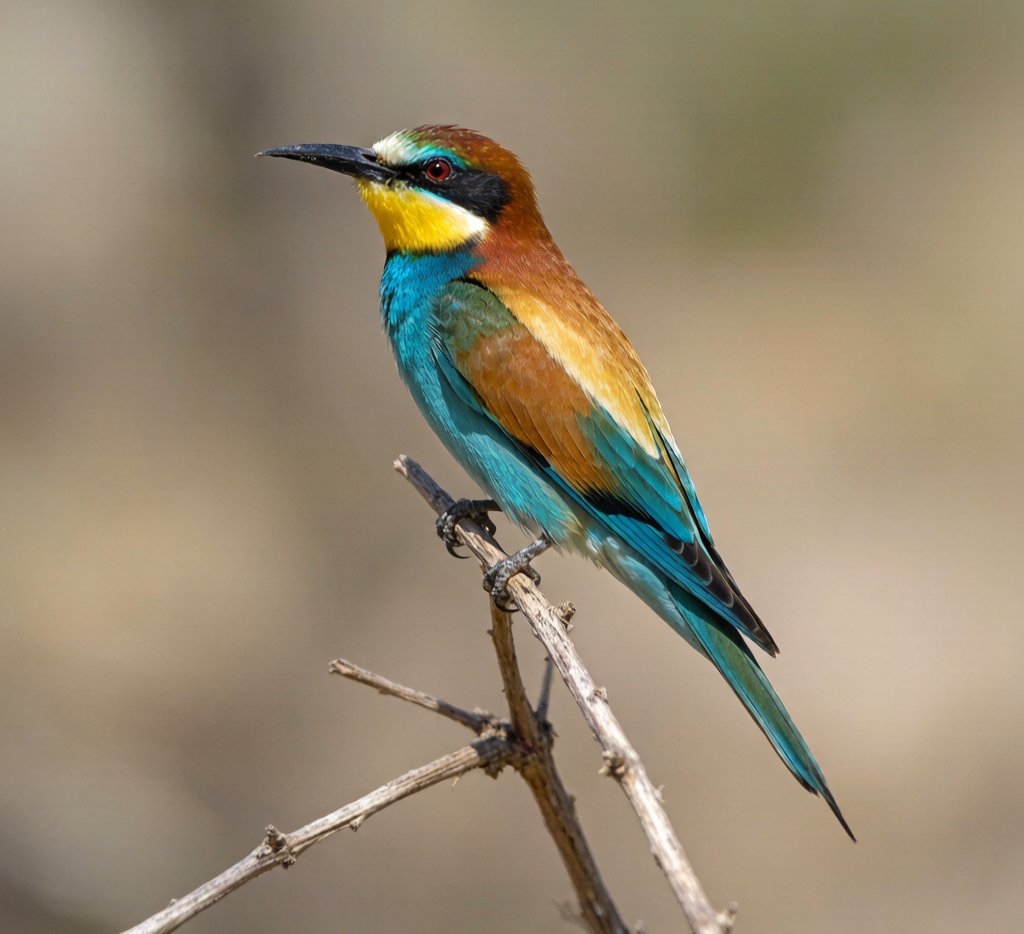
Introduction
The European Bee-eater (Merops apiaster) is arguably the most colourful bird in all of Europe. With plumage combining vivid green, electric blue, golden yellow, and rich chestnut, it looks almost unreal against the summer skies of southern Europe, North Africa, and parts of Asia. This long-distance migrant travels thousands of kilometres each year between its breeding grounds in temperate regions and its wintering grounds in sub-Saharan Africa. The European Bee-eater’s extraordinary beauty, social nature, and fascinating hunting behaviour have made it one of the most admired birds across its vast range.
Taxonomy
The European Bee-eater belongs to the family Meropidae, a group of colourful, slender-billed birds containing approximately 30 species distributed across Africa, Asia, and Australasia. The European Bee-eater is the only member of its genus, Merops, to breed regularly in Europe north of the Mediterranean. The species name apiaster derives from the Latin for “bee-eater,” a direct reference to its preferred prey. Its closest relatives include the Blue-cheeked Bee-eater (Merops persicus) of sub-Saharan Africa and the Carmine Bee-eater (Merops nubicus) of eastern Africa, both sharing a similar ecological niche as specialised aerial insectivores.
Physical Characteristics
The European Bee-eater is a medium-sized bird approximately 27 centimetres long with a wingspan of about 36 centimetres. Its plumage is unmistakable: the upperparts are predominantly green, the wings are chestnut and golden, the throat is bright yellow, and the cheeks and underparts are a striking blue. A chestnut cap tops the head. Its long, curved black bill is perfectly adapted for catching flying insects on the wing. After capturing a bee or wasp, the bird strikes the insect repeatedly against a perch to remove the stinger before consuming it—a behaviour called “handling” that is instinctive and highly efficient. Bee-eaters nest in colonies in sandy riverbanks and cliff faces, excavating burrows up to two metres deep.
Habitat
European Bee-eaters breed across southern Europe from the Iberian Peninsula and Morocco eastwards through Greece, Turkey, and Central Asia to Kazakhstan and northwestern China. They favour open landscapes with scattered trees and bushes that provide hunting perches, and are almost always found near water. They inhabit river valleys, lakeside marshes, coastal dunes, and agricultural areas with suitable nesting sites. Vertical sandy banks for burrow excavation are a critical habitat requirement. During the non-breeding season they migrate to sub-Saharan Africa, where they occupy savannas and open woodlands and often gather in enormous roosts of thousands of individuals.
Diet
The European Bee-eater’s diet consists almost exclusively of flying insects caught mid-air. Bees and wasps make up the majority of its prey, supplemented by dragonflies, butterflies, moths, and beetles. It hunts from an elevated perch—typically a wire, branch, or exposed twig—from which it launches swift, acrobatic pursuits of passing insects. Its accuracy is remarkable: studies show it catches the vast majority of insects it pursues. By consuming large numbers of pest insects, bee-eaters provide a valuable ecological service to nearby agricultural areas and beehives alike.
Reproduction
The European Bee-eater breeds in late spring and summer, nesting in colonies ranging from a handful of pairs to several hundred. Both sexes excavate a horizontal burrow one to two metres long in a sandy bank or cliff face. The female lays five to eight white, oval eggs on the bare floor at the end of the burrow. Both parents share incubation for approximately three weeks until hatching. After hatching, both parents cooperate in feeding the chicks, which are entirely dependent on regurgitated insects. The blue-and-yellow macaw shares with the bee-eater a reliance on pair-bond cooperation for chick-rearing, with both parents contributing to nest maintenance and feeding. Fledging occurs approximately one month after hatching.
Conservation
The European Bee-eater is classified as Least Concern by the IUCN, with a large and relatively stable population distributed across three continents. It is not globally threatened, though local populations can decline where pesticide use reduces insect prey and can cause secondary poisoning when birds consume contaminated insects. Habitat disturbance at nesting colonies can also cause local breeding failures. In the European Union it is protected under wildlife legislation, and monitoring programmes have generally shown stable or slightly increasing numbers over recent decades.
Fun Facts
The European Bee-eater is among the most colourful birds in the world, with at least five distinctly coloured feather tracts creating an almost iridescent effect in sunlight. Individuals making the migration between Europe and sub-Saharan Africa may travel more than 10,000 kilometres round trip each year. A communal roost of European Bee-eaters can contain thousands of birds, creating a deafening chorus at dawn and dusk.
[…] the most distinctive groups of the warm parts of the world. The roller is a close relative of the European Bee-eater (Merops apiaster). The 2 birds share the same order and the same warm and open country. They are alike in their […]