 By st20113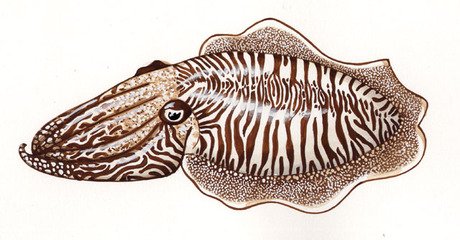
Introduction
The cuttlefish (Sepia officinalis) is a fascinating marine mollusk belonging to the class Cephalopoda. Often called the chameleon of the sea, it can change both color and texture in an instant to confuse predators and prey alike. Despite its name, the cuttlefish is not a fish but a close cousin of the octopus, sharing its soft body, keen intelligence, and boneless anatomy. Its intelligence ranks among the highest of all invertebrates, and it can solve problems that challenge many vertebrates. Aquariums around the world keep them because their shifting colors are endlessly fascinating to visitors.
Taxonomy
Sepia officinalis was described by Linnaeus in 1758. It belongs to the order Sepiida, which includes roughly 120 species of cuttlefish distributed across warm and temperate seas. The group is distinguished from its relatives by the presence of a rigid internal shell called a cuttlebone. Its nearest kin among the cephalopods include the squids and the octopuses, but it is more distantly related to the enormous giant squid that lurks in the deep ocean. Fossil relatives show that cuttlefish-like animals have existed for more than a hundred million years.
Physical Characteristics
A mature cuttlefish typically reaches twenty to thirty centimeters in length, though larger individuals exceed this. Its most striking feature is the cuttlebone, a porous internal structure that helps control buoyancy. Surrounding the mouth are eight arms and two longer tentacles tipped with toothed clubs for grabbing prey. Specialized skin cells called chromatophores let the animal flash vivid patterns, a skill unmatched even by the camouflaged coral polyps that blend into the reef. The animal can also squirt a cloud of dark ink to confuse attackers and make a quick escape.
Habitat
Cuttlefish prefer shallow coastal waters, estuaries, and seagrass beds where they can hunt and hide. They are found throughout the Mediterranean Sea and along the eastern Atlantic coast from Scandinavia to West Africa. During the day they often rest partially buried in sand, becoming nearly invisible to passing fish. At night they emerge to roam the same reefs where the delicate seahorse clings to seagrass blades. They sometimes enter brackish lagoons and harbor mouths where food is abundant and shelter is close.
Diet
Cuttlefish are active predators that feed mainly on small crustaceans, fish, and mollusks. They stalk their prey using stealth and then strike with lightning speed, immobilizing victims with a powerful beak. Their excellent vision, including the ability to see polarized light, gives them an edge in murky water. They must, however, remain wary of larger hunters such as the fearsome great white shark that patrols coastal shallows. In captivity they learn to open jars and unscrew lids, displaying remarkable curiosity and memory.
Reproduction
Mating occurs in spring and summer when adults migrate to shallow spawning grounds. Males display elaborate color signals to attract females and to deter rivals. Females lay clusters of eggs on sheltered surfaces, where they develop for several weeks before hatching as miniature adults. The parents provide no care after laying, and most adults die shortly after the breeding season ends. Hatchlings are independent from the moment they emerge and must avoid predators without any parental help.
Conservation
Cuttlefish are not currently considered threatened, and their populations remain healthy across much of their range. They are heavily fished for food and for the cuttlebone sold to pet birds. Because they grow and reproduce quickly, they can withstand moderate fishing pressure better than slower species. Still, rising ocean temperatures and acidification may affect the small crustaceans they depend on for food. Some fisheries now use cuttlefish as a sustainable alternative to overfished finfish species.
Fun Facts
Cuttlefish have three hearts and blue-green blood powered by copper-based hemocyanin. Their cuttlebone has been used for centuries in medicine and polishing. They can produce hypnotic displays of moving stripes to stun prey before striking. Scientists study their extraordinary eyesight to design better underwater cameras. A cuttlefish can even match the background pattern of a checkerboard within seconds. They can count and remember the number of rewards in experiments, a sign of true numerical sense, and researchers believe their complex brain evolved to handle the demands of camouflage and hunting.
[…] that rapidly expand and contract to produce an extraordinary range of colors and patterns. Like the cuttlefish, the common octopus can change both color and skin texture simultaneously, enabling near-invisible […]