 By st20113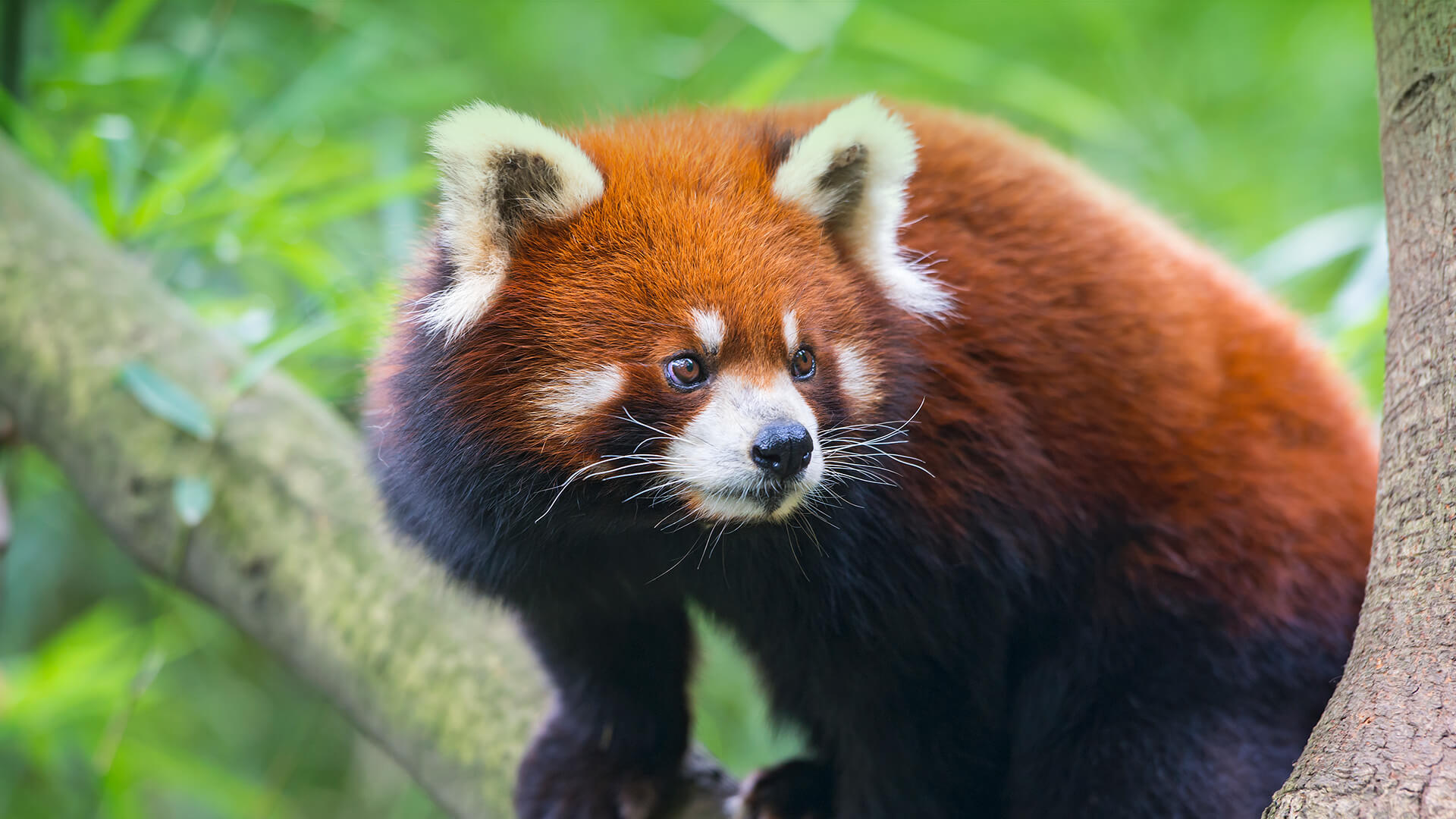
Introduction
The Red Panda (Ailurus fulgens) is a small, elusive mammal native to the cool temperate forests of the eastern Himalayas and southwestern China, where bamboo forms the dominant understory vegetation. Roughly the size of a domestic cat, the red panda is instantly recognizable by its rust-red fur, white facial markings, and long, ringed tail. Though it shares a name and a fondness for bamboo with the Giant Panda, the red panda belongs to its own unique family, Ailuridae, and is not closely related to giant pandas at all. It is an important indicator of forest ecosystem health.
Taxonomy
The red panda’s taxonomic history is unusually complex. Originally placed in the raccoon family (Procyonidae), then reassigned to the bear family (Ursidae), it was ultimately resolved by molecular biology into its own separate family, Ailuridae, within the superfamily Musteloidea, which also includes weasels, otters, and skunks. This independent lineage diverged from other musteloids approximately 25 to 30 million years ago, making the red panda a highly distinctive evolutionary survivor. Two subspecies are currently recognized: the Himalayan Red Panda (A. f. fulgens) and the Chinese Red Panda (A. f. styani), which became reproductively isolated roughly 220,000 years ago due to geological changes in the Himalayas.
Physical Characteristics
The red panda measures 50 to 64 centimeters in body length, with a bushy tail adding an additional 28 to 48 centimeters. Adults weigh between 3 and 6 kilograms. Its coat is a brilliant reddish-brown on the back, darkening to near-black on the legs, with a cream-colored underside and inner ears. The face bears distinctive white patches around the eyes and cheeks, crossed by a dark stripe from each eye to the corner of the mouth – a marking pattern convergent with that of the Raccoon. The species possesses semi-retractable claws and a remarkable false thumb, an enlarged radial sesamoid bone that allows it to grip bamboo stalks with exceptional precision.
Habitat
Red pandas inhabit montane forests at elevations between 2,200 and 4,800 meters, where cool temperatures and abundant rainfall support dense bamboo thickets. Their range extends across Nepal, Bhutan, northern India, Myanmar, and southern China, with the highest population densities found in Sikkim and Yunnan. The forests they inhabit are characterized by an understory of bamboo and broadleaf trees that provide both food and protective cover. Red pandas are almost entirely arboreal, spending the majority of their time in the forest canopy.
Diet
Despite being classified within the order Carnivora, approximately 95 percent of the red panda diet consists of bamboo, making it one of the most bamboo-specialized mammals on Earth. Red pandas consume bamboo leaves, shoots, and stems, selecting young leaves whenever available due to their higher protein content. Because red pandas cannot efficiently digest cellulose, they must consume large quantities of food relative to their body size to meet their energy requirements. Red pandas supplement their bamboo intake with berries, flowers, maple leaves, acorns, bird eggs, and occasionally small vertebrates. The species is a crepuscular forager, feeding primarily in the early morning and late afternoon.
Reproduction
Red pandas are largely solitary except during the breeding season, which peaks between January and March. After a gestation period of approximately 114 to 145 days, the female gives birth to one to four cubs in a nest built inside a tree hollow or rock crevice, lined with moss, leaves, and grass. Newborn cubs are blind and almost completely helpless, weighing just 110 to 130 grams at birth. They open their eyes at around 18 days and begin venturing from the nest at approximately 90 days. The mother raises her young alone, nursing them for 18 to 22 weeks.
Conservation
The red panda is classified as Endangered on the IUCN Red List, with wild population estimates ranging from 2,500 to 10,000 individuals, reflecting a decline of approximately 50 percent over the past two decades. Primary threats are habitat loss from deforestation and forest fragmentation, poaching for the illegal wildlife trade, and accidental trapping in snares set for other species. Climate change adds additional pressure by degrading the bamboo forests that form the cornerstone of red panda habitat. Conservation programs across Nepal, India, China, and Myanmar focus on protecting forest corridors and maintaining captive breeding populations in zoos worldwide.
Fun Facts
The red panda was formally described to Western science in 1821, nearly 50 years before the giant panda received its scientific name – meaning the red panda was the original panda all along. Red pandas communicate through vocalizations including distinctive twittering and bleating sounds, as well as body language such as head bobbing and tail positioning. In captivity, red pandas have been observed engaging in play behavior that researchers believe serves important social and stress-relief functions. The Red Fox shares parts of the Himalayan range and faces similar pressures from habitat loss, illustrating the broader conservation challenges facing small mammals in mountain forests.