 By st20113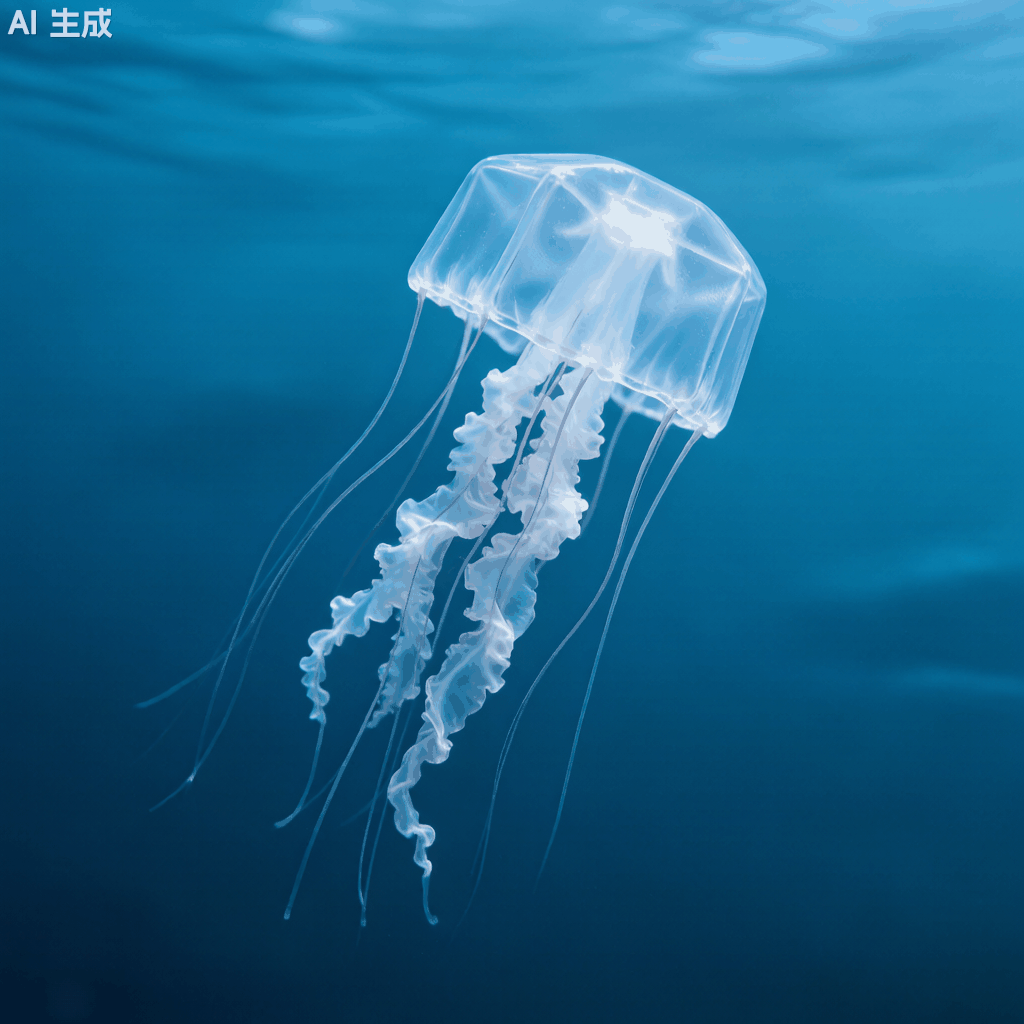
Introduction
The box jellyfish, scientifically known as Chironex fleckeri, is widely regarded as one of the most dangerous marine animals on Earth. Unlike most jellyfish that drift passively with ocean currents, the box jellyfish is an active, powerful swimmer capable of pursuing prey and directing its movements through the water column. Found primarily in the coastal waters of northern Australia and throughout the Indo-Pacific region, this remarkable creature possesses one of the most potent venoms in the animal kingdom. A single full-grown box jellyfish carries enough venom to kill more than 60 adult humans, and encounters with swimmers in its territory can prove fatal within minutes. Despite its fearsome reputation, the box jellyfish is a fascinating and complex organism with advanced sensory systems, remarkable hunting strategies, and a life cycle intricately tied to the tropical coastal environment it calls home.
The box jellyfish belongs to a distinctive group of jellyfish known as cubozoans, named for their cube-shaped bell, which sets them apart from the dome-shaped medusae of true jellyfish in the class Scyphozoa. This anatomical difference is more than superficial — the box jellyfish has evolved a sophisticated visual and nervous system that is unmatched among cnidarians. With 24 eyes of four different types arranged in clusters on each of its four sides, the box jellyfish has the most complex eyes of any jellyfish species and is among the most visually advanced of all invertebrate animals. This combination of potent venom, active hunting behavior, and sophisticated sensory equipment makes Chironex fleckeri a truly exceptional marine organism that continues to fascinate marine biologists and toxicologists alike.
Taxonomy
Chironex fleckeri belongs to the phylum Cnidaria, a diverse group of animals that also includes corals, sea anemones, hydroids, and true jellyfish. Within Cnidaria, the box jellyfish is classified in the class Cubozoa, the order Chirodropida, and the family Chirodropidae. The species name fleckeri honors Dr. Hugo Flecker, an Australian physician and marine biologist who was instrumental in early research into the jellyfish’s venom and whose work led to the development of life-saving antivenom treatments.
The genus Chironex includes several species of large, dangerous box jellyfish, but Chironex fleckeri is by far the most medically significant. It is the largest of the cubozoan jellyfish, with some specimens reaching a bell diameter of over 30 centimeters and trailing tentacles up to 3 meters in length. Other closely related species within the Cubozoa class include the smaller but still dangerous Morbella species found in Australian waters and the infamous Irukandji jellyfish, which is much smaller but produces a venom that causes severe systemic symptoms known as Irukandji syndrome. Each of these species represents a distinct evolutionary branch within the cubozoan lineage, adapted to different ecological niches and geographic ranges.
Physical Characteristics
The box jellyfish has a distinctive appearance that immediately sets it apart from other jellyfish. Its bell is roughly cube-shaped, measuring up to 30 centimeters across in adult specimens, and is translucent with a faint blue or pinkish coloration that makes it difficult to spot in the water, especially near the surface. The bell’s margins are lined with clusters of up to 15 tentacles per corner, each of which can extend to lengths of 3 meters or more when fully stretched. These tentacles are equipped with millions of specialized stinging cells called nematocysts, which are among the most complex and efficient venom delivery systems in the natural world.
Each nematocyst contains a coiled, barbed thread that can be fired at accelerations of over 5 million times the force of gravity, making it one of the fastest biological mechanisms known. The venom contained within each nematocyst is a complex mixture of proteins and toxins that attacks the cardiovascular system, nervous system, and skin cells simultaneously. One of the most remarkable features of the box jellyfish’s nematocysts is that they are activated by contact with the chemical compounds found on human skin, meaning that even a brief brush against a tentacle can result in the simultaneous firing of thousands of venom capsules. The box jellyfish’s four-sided bell structure also allows it to contract and swim more efficiently than most jellyfish, propelling itself through the water at speeds of up to 4 knots with powerful, rhythmic pulsations.
Habitat and Distribution
Chironex fleckeri is found primarily in the coastal waters of northern Australia, from Exmouth in Western Australia across the Northern Territory to Gladstone in Queensland. Its distribution also extends throughout the Indo-Pacific region, including the waters of Papua New Guinea, the Philippines, Vietnam, and other Southeast Asian countries. The box jellyfish has a strong preference for shallow, calm, tropical coastal waters, and is most commonly encountered near river mouths, estuaries, and coastal bays where nutrient levels are high and water conditions are favorable.
The box jellyfish is a seasonal visitor to many of its known habitats, appearing in large numbers during the warmer months between approximately October and May. During this period, juvenile box jellyfish are commonly found in shallow tidal pools and along sandy beaches where they grow rapidly before moving into deeper coastal waters as adults. The seasonal appearance of box jellyfish is closely linked to the life cycle of the species, as post-larval polyps develop into juvenile medusae during the wet season when water temperatures rise and salinity levels fluctuate. The species is rarely found in waters south of its primary range, and its presence in southern Australian waters is extremely unusual.
Diet and Behavior
The box jellyfish is an active predator that hunts a variety of small marine animals, including small fish, crustaceans, and other gelatinous zooplankton. Unlike many jellyfish that simply drift through the water with their tentacles extended, waiting for prey to blunder into them, the box jellyfish actively pursues prey using its well-developed muscular system and sensory capabilities. The species has been observed changing direction while swimming, pursuing prey items, and exhibiting complex swimming behaviors that suggest a level of behavioral sophistication unusual for a cnidarian.
The hunting strategy of Chironex fleckeri relies on the rapid deployment of its tentacles, which can be extended and contracted in a matter of seconds. When a tentacle contacts prey, the nematocysts fire, injecting a potent paralytic venom that immediately immobilizes the catch. The tentacle then contracts to bring the prey toward the bell, where additional tentacles assist in moving the food toward the mouth located at the center of the bell’s underside. This active hunting approach requires significant energy and explains the box jellyfish’s relatively high metabolic rate compared to other jellyfish. The venom is so potent that a single tentacle contact can deliver enough toxin to kill or incapacitate a small fish almost instantly.
Reproduction
The life cycle of Chironex fleckeri follows the typical cubozoan pattern, which includes both sexual and asexual phases. The adult medusa, the form most commonly encountered by swimmers, is the sexual phase of the life cycle. Adult box jellyfish are sexually mature and reproduce through broadcast spawning, in which males and females release their gametes into the open water where fertilization occurs. The fertilized eggs develop into planula larvae, which then settle on the seafloor and metamorphose into polyps.
The polyp stage is a sedentary phase during which the juvenile box jellyfish develops as a small, attached organism on the seafloor, mangrove roots, or other hard substrates. After a period of growth and asexual reproduction through budding, the polyps undergo a process called strobilation, in which they segment and release juvenile medusae called ephyrae. These ephyrae develop into fully grown medusae over the course of several months, reaching their full size and venom potency by the time they appear in coastal waters during the summer season. The entire life cycle from egg to adult medusa takes approximately one year to complete in tropical Australian waters, though the duration can vary with environmental conditions such as water temperature and food availability.
Conservation Status
The conservation status of Chironex fleckeri is not formally assessed by the International Union for Conservation of Nature (IUCN), as it is a species that is not currently considered threatened. The box jellyfish appears to be abundant within its natural range and is not subject to any significant commercial exploitation or targeted conservation programs. However, the species faces some indirect threats related to changes in coastal marine environments, including water quality degradation, coastal development, and climate change, all of which can alter the temperature, salinity, and nutrient conditions of its preferred habitats.
Human interactions with the box jellyfish are a significant public health concern in northern Australia, where beach nets, warning signs, and seasonal beach closures are used to minimize the risk of envenomation. Public education campaigns and the availability of antivenom have significantly reduced the number of fatalities from box jellyfish stings in Australia over the past several decades, though deaths still occur occasionally, particularly among tourists unfamiliar with the risks. From an ecological perspective, the box jellyfish plays an important role as a top predator in tropical coastal food webs, helping to regulate populations of small fish and crustaceans. Changes in box jellyfish populations could therefore have cascading effects on the broader marine ecosystem.
Fun Facts
The box jellyfish has a disproportionately large number of eyes for a cnidarian, with 24 eyes distributed across four sensory clusters located on each side of its cube-shaped bell. These eyes come in four different types, including two that are considered true image-forming eyes similar to those found in vertebrates. Scientists believe the box jellyfish uses its sophisticated visual system to navigate toward the surface during the day, where it hunts small fish that are attracted to sunlight, and to detect obstacles and the edges of mangrove channels during active swimming.
The venom of Chironex fleckeri is among the most complex and potent in the animal kingdom, yet researchers have found that some of its components may have beneficial applications in medicine. A compound derived from box jellyfish venom is being investigated for its potential to accelerate the delivery of drugs through the skin, which could be useful in the development of painless transdermal patches. Additionally, scientists studying the box jellyfish’s extraordinary visual system hope that understanding how such a simple nervous system can process visual information may provide insights into the evolution of vision and neural processing in more complex animals.