 By Iris
Hemiprocne comata | Whiskered Treeswift
Species Profile · Hemiprocnidae
Whiskered Treeswift
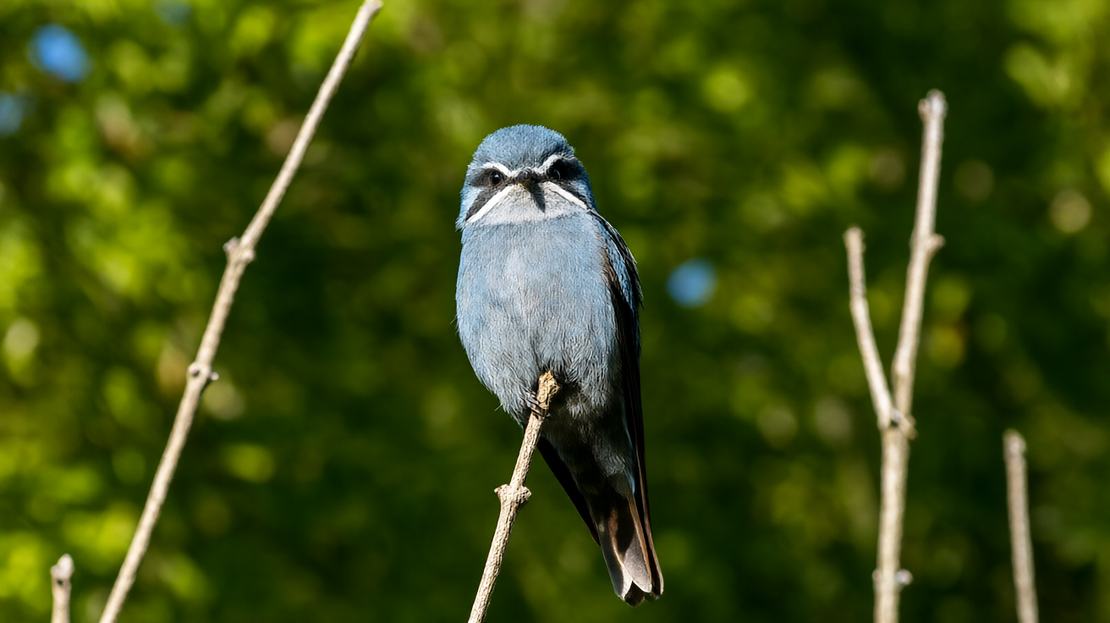
A small bird sits upright on a bare branch and looks like a carved ornament.
Least Concern
Length
Weight
Nest
Clutch
Incubation
Rating
The Whiskered Treeswift
A swift that can sit down
A small bird sits upright on a bare branch and looks like a carved ornament. Its tail forks, and a crest rises from the crown. White stripes curve back from the bill like whiskers.
The whiskered treeswift is not a true swift, though it hunts the same way. It catches insects on the wing, high above the canopy. Between flights it returns to the same exposed perch.
Family tree
Hemiprocnidae, four species only
Its proper name is Hemiprocne comata, and it belongs to the treeswift family. Hemiprocnidae holds four species, all in one genus and all in southern Asia. A Common Swift shares the aerial hunting style, yet it cannot perch on a branch at all. That difference in the foot separates the two families.
True swifts carry tiny feet and spend their lives in the air. Treeswifts keep a strong hind toe, so they can grip and sit upright for hours. Because the two groups split tens of millions of years ago, the shared hunting style is convergence rather than kinship.
A hind toe that grips
How to tell one
Length runs 15 to 17 cm, and the tail adds a long fork. Weight sits near 25 g. The upperparts are glossy blue-black, and the underparts are pale grey, so the bird reads as a dark cross against the sky.
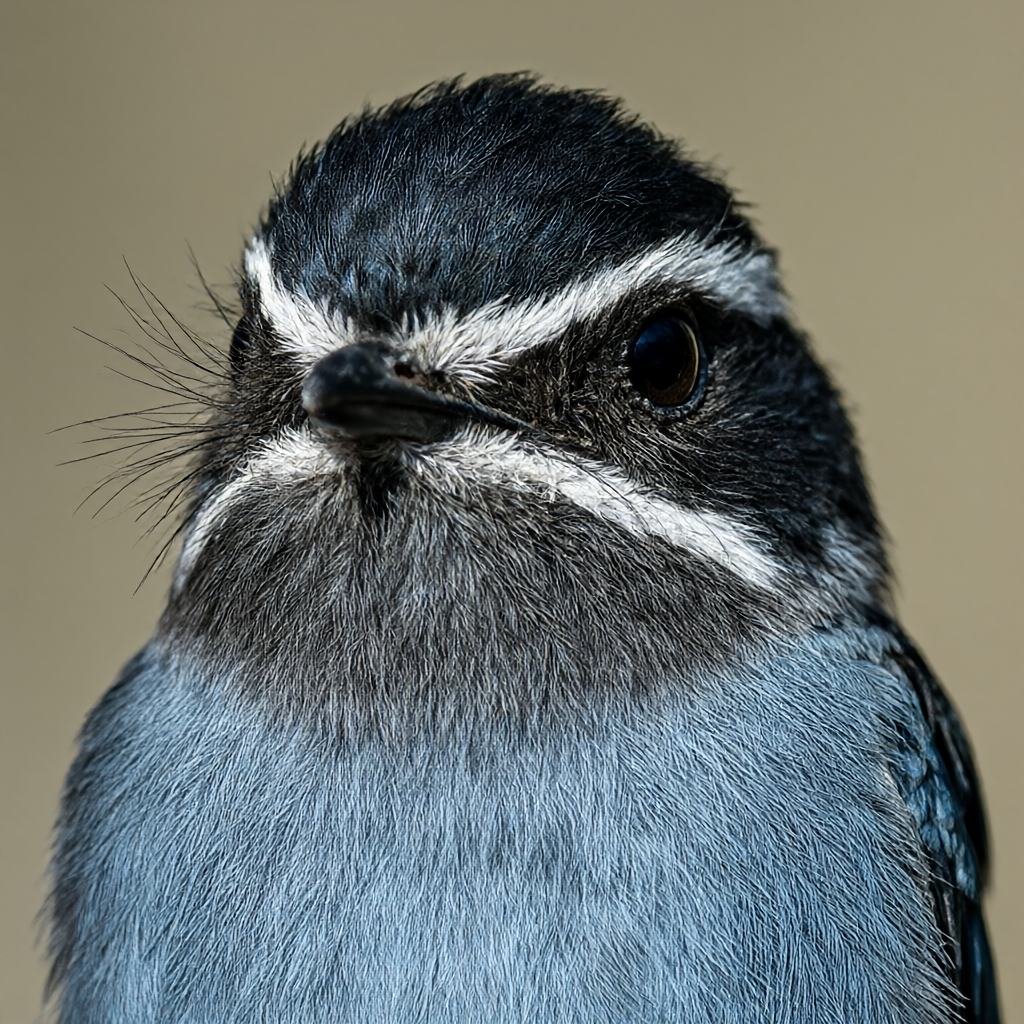
A short crest stands above the crown. White stripes run from the gape back along the cheek. Because the wings are long and pointed, the bird can turn in a tight arc, and the tail steers the change.
Its bill is tiny, and the mouth opens very wide. The legs are feathered, and the feet grip hard.
1
2
3
Open air below
Where it lives
Forest edge and clearings hold the species across Southeast Asia. Its range covers the Malay Peninsula, Sumatra, Borneo and Palawan. Tall trees with exposed dead branches matter most. Because the bird needs open air below its perch, it favours gaps and river margins where insects gather.
It stays below about 1,200 m in most of the range. Where logging opens the canopy, the bird often moves in. The species avoids dense closed forest with no gaps.
Insects, taken in flight
What it eats
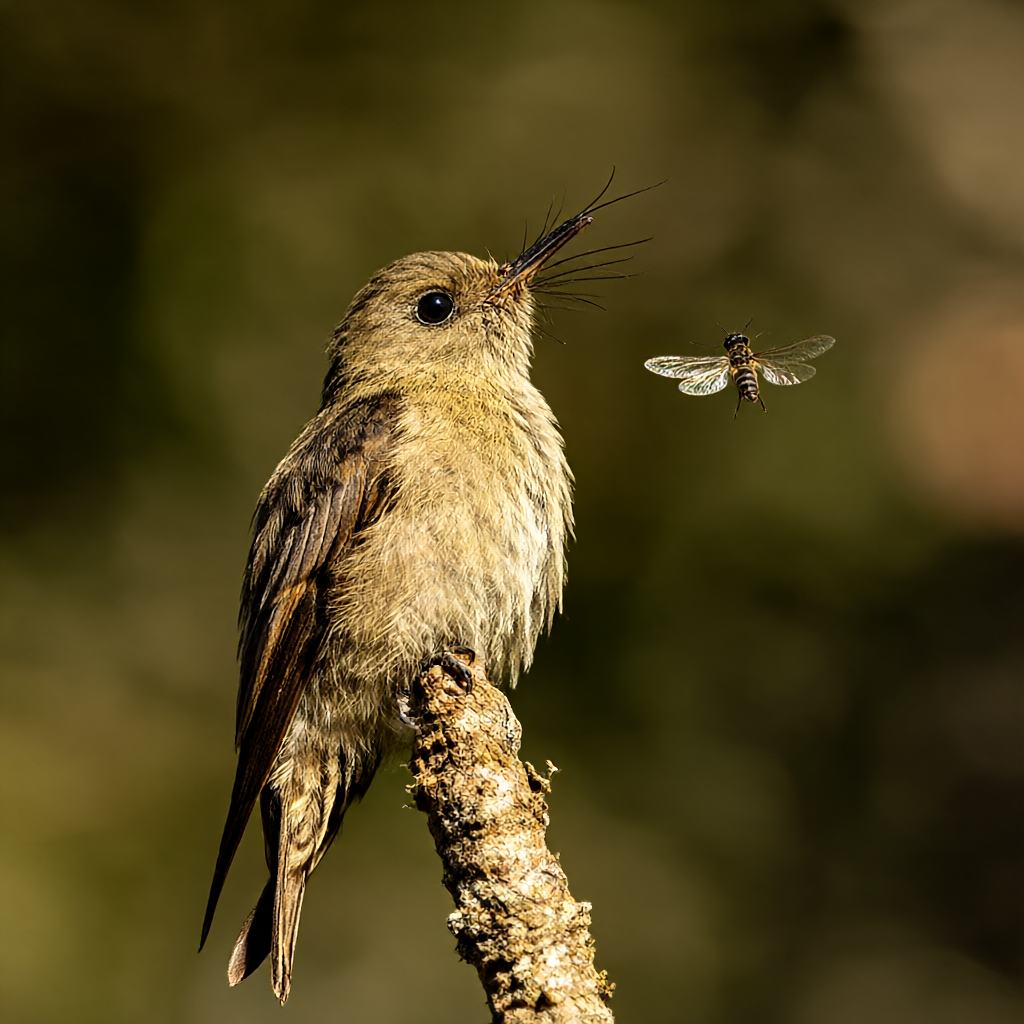
Flying insects make up the whole diet. Beetles, wasps and small flies are taken in the air. Because the bird hunts from a fixed perch, it sallies out after each insect and returns to the same spot. That habit makes it easy to watch.
It feeds in short bursts through the day. Nothing is taken from leaves or from the ground. Its water comes from the insects it eats.
One egg, glued down
The breeding cycle
The nest is a tiny cup, no wider than a thumb. Because saliva glues the cup to a thin branch, the structure holds through wind and rain. One egg goes into it, and that egg is glued down as well.
Both adults incubate, taking turns through the day. Incubation runs about three weeks. The chick stays in the cup for roughly four weeks.
Because the nest looks like a knot on the branch, predators rarely find it. Nothing about the site is hidden, and yet it works.
Least Concern
Conservation
Red List status is Least Concern. Its range stays large and the population appears steady. Because the bird uses forest edge, it survives some logging. Clearance for oil palm removes the tall trees it needs.
Collection for the cage trade takes a few birds, though the species rarely survives captivity. Fires in dry forest destroy nest branches. Surveys remain thin, so the estimate rests on range maps.
Side by side
How It Compares
| Trait | Whiskered Treeswift | Common Swift |
|---|---|---|
| Family | Hemiprocnidae | Apodidae |
| Feet | strong hind toe | tiny, all toes forward |
| Perch | sits upright for hours | never lands |
| Nest | saliva cup on a branch | glued into a cavity |
| Range | Southeast Asia | Europe to East Asia |
| Rating | Least Concern | Least Concern |
Common misreadings
What People Get Wrong
- Not a swift that lost its grip. The hind toe works. Treeswifts kept a foot that can hold a branch, which lets them sit upright for hours while true swifts stay airborne.
- Not a bird that builds a deep cup. A thumb-wide dish. Saliva glues the nest to a thin branch, and the single egg is fixed in place so wind cannot roll it out.
- Not a species that lands for water. Rain does the job. The bird bathes by flying through light rain, and it takes most of its moisture from the insects it catches.
Going further
Sources and Further Reading
Quick hits
Five things to remember
- The white whiskers are stiff feathers, and nobody has proved what they are for.
- A treeswift can perch upright because it kept a working hind toe, and true swifts lost theirs.
- The nest is smaller than a walnut shell, and the single egg fills most of it.
- Both parents sit on that one egg in shifts, and the changeover takes only seconds.
- It bathes by flying through light rain rather than landing at water.