 By st20113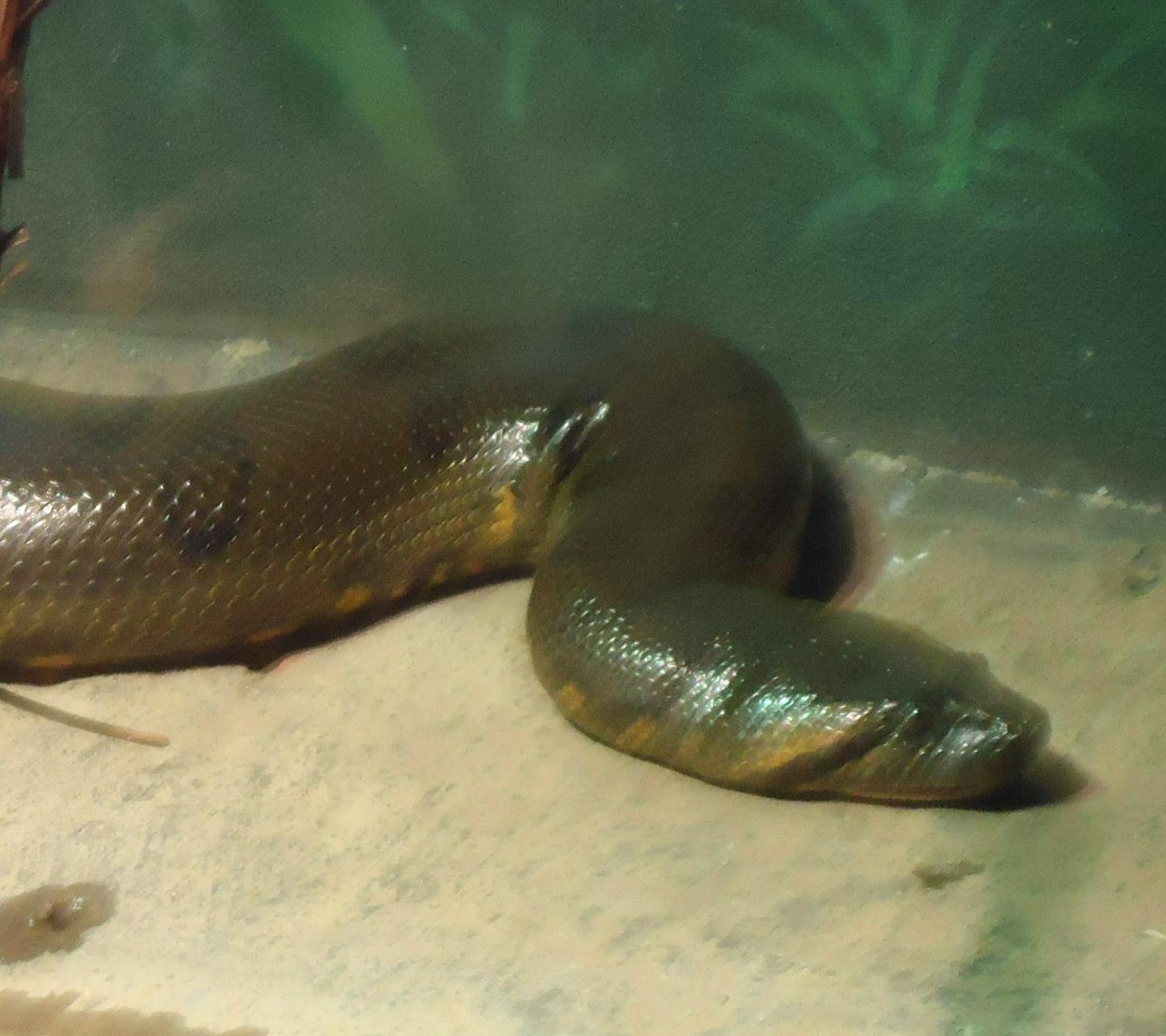
Introduction
The Green Anaconda (Eunectes murinus) is the heaviest snake in the world and one of the longest, a massive constrictor that rules the rivers, swamps, and marshes of tropical South America. Thick-bodied and supremely powerful, it can exceed 5 meters in length and weigh well over 100 kilograms, though reports of giant 9-meter specimens remain unverified. Its olive-green skin marked with black oval spots provides perfect camouflage in murky water.
Largely aquatic, the green anaconda spends most of its life near or in water, ambushing capybaras, caimans, deer, and fish. As a constrictor, it shares a broad lifestyle with the ball python of Africa, though the anaconda dwarfs its smaller cousin and relies on water to support its enormous bulk.
Taxonomy and Classification
The Green Anaconda belongs to the family Pythonidae in the broader booid group and the genus Eunectes, a name meaning good swimmer. Its scientific name, Eunectes murinus, refers to its mouse-like prey and aquatic skill. It is one of four anaconda species in South America.
Anacondas are boas rather than true pythons, giving live birth instead of laying eggs. They are most closely related to other New World constrictors, distinct from the American rattlesnake and other venomous vipers of the region.
Physical Characteristics
Green anacondas are built for power: females are significantly larger than males, a rare reversal of typical snake size. Their heads are narrow with eyes and nostrils set high, allowing them to see and breathe while nearly submerged. The body is girthy, with loose, olive-green skin banded by darker spots.
Their muscular coils can exert enormous pressure. Unlike many snakes, they rarely leave water except to bask or breed, and their eyes’ position lets them lurk with only the top of the head exposed.
Habitat and Distribution
These snakes inhabit the Amazon and Orinoco basins, the Guianas, and parts of Brazil, Venezuela, Colombia, and Trinidad. They favor slow-moving rivers, swamps, marshes, and flooded forests, where they can remain hidden and cool.
They are poor climbers but excellent swimmers, using the water both for hunting and for escaping threats. During dry seasons they may aestivate in mud to survive low water and heat.
Diet and Behavior
Green anacondas are apex predators that take almost anything they can overpower: fish, birds, turtles, capybaras, caimans, and occasionally larger mammals. They are ambush hunters, waiting partly submerged before seizing prey and constricting it, often dragging the catch into water to drown it.
After large meals they may not eat for weeks or months. Despite their size, they are generally shy around humans and tend to flee, though females guarding young can be defensive.
Reproduction and Life Cycle
Anacondas are ovoviviparous, giving birth to live young. After a gestation of about six to seven months, a female produces 20 to 40 live babies, each roughly 70 centimeters long and immediately independent.
Mating often occurs in water, with multiple males forming a breeding ball around a single female. Young anacondas grow quickly, feeding on small fish and amphibians, and may reach several meters within a few years.
Conservation Status
The Green Anaconda is listed as Least Concern, though local populations face threats from hunting, skin trade, and habitat degradation. In some areas it is killed out of fear or captured for the exotic pet and zoo markets.
Wetland protection is essential for its survival. As a top predator, it helps regulate populations of mid-sized mammals and reptiles, supporting healthy aquatic ecosystems.
Fun Facts
Female green anacondas can be more than five times heavier than males, one of the most extreme size differences among snakes. They can hold their breath underwater for up to ten minutes while stalking prey.
The species’ constricting method is shared by other non-venomous snakes worldwide. In North American deserts, the ecological role of a powerful ambush constrictor is played instead by the rattlesnake‘s larger cousins, though rattlesnakes use venom rather than constriction, and the small, calm ball python of Africa represents the gentler end of the constrictor spectrum.
[…] | Crotalus atrox Ball Python | Python regius Great Blue Heron | Ardea herodias Green Anaconda | Eunectes murinus American Robin | Turdus migratorius Northern Cardinal | Cardinalis cardinalis Blue Jay | […]